viernes, 14 de enero de 2022

Asonancias / Assonances (XLI) - Cuadros y pelis / Pictures and Movies (II)

Nuevo post con similitudes, imitaciones, recreaciones, interpretaciones y coincidencias más o menos casuales que dan como resultado paralelismos siempre interesantes en el mundo del arte.
Segunda parte de una miniserie dedicada a la visión cinematográfica de la pintura. Infinidad de directores han representado obras pictóricas a través de imágenes en movimiento, y en otros casos, de forma más o menos deliberada, esta maravillosa intersección de las artes ha dado lugar a significativas analogías visuales. Aquí les dejo algunos ejemplos.

New post with similarities, imitations, recreations, interpretations and more or less casual coincidences that result in always interesting parallels in the art world.
Second part of a mini-series dedicated to the cinematographic vision of painting. Countless directors have represented pictorial works through moving images, and in other cases, more or less deliberately, this wonderful intersection of the arts has given rise to significant visual analogies. Here you have some examples.
____________________________________________________

Sandro Botticelli
(Firenze / Florencia, Italia / Florence, Italy, 1445 - 1510)

"Nascita di Venere / El nacimiento de Venus / The Birth of Venus"
Témpera sobre panel / tempera on panel, 278,5  x 172,5 cm., 1483-85. 
Galería Uffizi (Florencia, Italia / Florence, Italy)

Sandro Botticelli en "El Hurgador" / in this blog: [Todos los enlaces / All links]

"Las aventuras del Barón Muchausen / The Adventures of Baron Munchausen"

Terry Gilliam en "El Hurgador" / in this blog[Allan Amato (Fotografía)], [Asonancias (XLII)]
_______________________________________________________________________

John C. Kacere
(Walker, Iowa, EE.UU./ IA, USA, 1920 - Cedar Rapids, 1999)

John C. Kacere fue un artista estadounidense, nacido en una familia libanesa de Iowa en 1920.
Obtuvo su licenciatura y su máster en la Universidad de Iowa en 1949 y 1950 respectivamente. Inicialmente expresionista abstracto, Kacere adoptó un estilo fotorrealista en 1963.
En 1969 pintó su primer cuadro fotorrealista con la sección media inferior de una mujer vestida con lencería. Era más de tres veces el tamaño natural. En 1978 uno de sus cuadros se utilizó como portada del primer álbum del músico Jorge Santana (el hermano menor del famoso Carlos Santana). Kacere continuó con este tipo de pintura durante el resto de su carrera, convirtiéndola en un icono del movimiento fotorrealista. A principios de la década de 1980 se alejó de este tema e incluyó el cuerpo entero de una mujer en lencería, pero volvió a su sección media original del cuerpo femenino en 1988. Los cuadros de Kacere son figurativos, pero pueden considerarse naturaleza muerta o incluso paisajes.
Murió en 1999.

"Jutta", óleo sobre lienzo / oil on canvas, 53 x 78,5 cm., 1973

John Kacere en "El Hurgador" / in this blog[Recolección (IX)]

John C. Kacere was an American artist, born to a Lebanese-American family in Iowa in 1920.
He earned his B.F.A. and his M.F.A. from the University of Iowa in 1949 and 1950 respectively. Originally an abstract expressionist, Kacere adopted a photorealist style in 1963.
Kacere painted his first photorealist painting in 1969 involving the midsection of a woman dressed in lingerie. It was over three times life size. In 1978 one of his paintings was used as the cover of musician Jorge Santana's first album (Jorge Santana is the younger brother of famous Carlos Santana). Kacere continued this type of painting throughout the rest of his career, making it an icon of the photorealism movement. In the early 1980s, Kacere branched away from this theme and included the entire body of a woman in lingerie, but returned to his original midsection of the female body in 1988. Kacere's paintings are figurative but can be considered still lifes or even landscapes.
He died in 1999.

"Lost in Translation", Sofia Coppola, 2003. Filmaffinity, Imdb

Sofia Coppola en "El Hurgador" / in this blog[Aniversarios Fotografía (CLXXI)], [Asonancias (XL)], [Victor Grasso (II, Pintura)]
_______________________________________________________________________

Jean-Auguste-Dominique Ingres
(Montauban, Francia / France, 1780 - París, 1867)

"La petite baigneuse. Intérieur de harem / La pequeña bañista. Interior de un harén /
Small Bather. Interior of a Harem", óleo sobre lienzo / oil on canvas, 35 x 27 cm., 1828
Musée du Louvre (París, Francia / France)

Jean-Auguste-Dominique Ingres en "El Hurgador" / in this blog: [Todos los enlaces / All links]

"Pasión / Godard's Passion", Jean-Luc Godard, 1982. Filmaffinity, Imdb


Jean-Luc Godard en "El Hurgador" / in this blog[Aniversarios Fotografía (CLXXXVII)]
_______________________________________________________________________

Jean-Hippolyte Flandrin
(Lyon, Francia / France, 1809 - Roma, Italia / Rome, Italy, 1864)

"Joven desnudo sentado junto al mar. Estudio de figura / 
Nude Youth Sitting by the Sea. Figure Study", 98 x 124 cm., 1836
Museo del Louvre (París, Francia / France)

Jean-Hippolyte Flandrin en "El Hurgador" / in this blog:

"Pozos de ambición / There Will Be Blood", Paul Thomas Anderson, 2007. Filmaffinity, Imdb
_______________________________________________________________________

Maria Kreyn
Мария Крейн
(Россия / Rusia / Russia, 1987-)
en EE.UU./ at USA

Maria Kreyn es una artista nacida en Rusia, formada en la Universidad de Chicago (en matemáticas y filosofía), y autodidacta en pintura. Su obra ha sido expuesta en numerosas galerías de Estados Unidos y Europa, y ha viajado a múltiples museos de China. El cuadro "Alone Together" de María encabezó la trama del programa The Catch de la cadena ABC. Sus obras públicas incluyen una colección de 8 cuadros basados en Shakespeare, encargados por Andrew Lloyd Webber, que ahora se exponen de forma permanente en el vestíbulo del histórico Theater Royal Drury Lane de Londres, abierto al público diariamente. 

"Alone Together", óleo sobre lino / oil on linen, 69,9 × 124,5 cm., 2012. Artsy

Maria Kreyn is a Russian born artist, educated at the University of Chicago (in math and philosophy), and self-taught in painting. Her work has been exhibited in numerous galleries in the United States and Europe, and has traveled to multiple museums in China. Maria’s painting Alone Together led the plot of ABC’s The Catch. Her public works feature a collection of 8 paintings based on Shakespeare, commissioned by Andrew Lloyd Webber, now on permanent display in the lobby of London’s historic Theater Royal Drury Lane, open to the public daily. 

"La vie d'Adele / La vida de Adèle / Blue Is the Warmest Colour", Abdellatif Kechiche, 2013. Filmaffinity, Imdb

Más sobre / More about Maria Kreyn: Website, Instagram
_______________________________________________________________________

Paul Gustave Doré
(Estrasburgo, Francia / Strasbourg, France, 1832 - París, 1883)

Héliodore Joseph Pisan
(Marsella, Francia / Marseille, France, 1822 - París, 1890)

"Newgate - Patio de ejercicios / Exercise Yard"
De "Londres: Una peregrinación", escrito por William Blanchard Jerrold (1826-84), grabados de Heliodore Joseph Pisan (1822-90), publicado en 1872
from 'London, a Pilgrimage', written by William Blanchard Jerrold (1826-84) & engraved by Heliodore Joseph Pisan (1822-90) pub. 1872
Grabado / engraving. Fine Art America


Gustave Doré en "El Hurgador" / in this blog[Recolección (LIV)], [Recolección (LXX)]

Vincent Willem Van Gogh
(Zundert, Nederland / Países Bajos / Netherlands, 1853 -
Auvers-sur-Oise, Francia / France, 1890)

"Prisioneros haciendo ejercicio, también conocido como La ronda de los presos (según Doré) /
Prisoners Exercising, aka Prisoners' Round (After Gustave Doré)"
Óleo sobre lienzo / oil on canvas, 80 x 64 cm., 1890.
Museo Pushkin (Москва́, Россия [CCCP] / Moscú, Rusia [URSS] / Moscow, Russia [USSR])

"La naranja mecánica / A Clockwork Orange", Stanley Kubrick, 1971. Filmaffinity, Imdb

Stanley Kubrick en "El Hurgador" / in this blog[Aniversarios Fotografía (CLXXXVIII)], [Aniversarios (CCXCI)]

Vincent Van Gogh
"Le Café De Nuit / El café de noche / Night Cafe"
Óleo sobre lienzo / oil on canvas, 72,4 x 92,1 cm., Arles, Sept.1888
Yale University Art Gallery (New Haven, Connecticut, EE.UU./ CT, USA)

"El loco de pelo rojo (Sed de vivir) / Lust For Life", Vincente Minnelli, 1956. Filmaffinity, Imdb

Vincent Van Gogh
"Trigal con cuervos / Wheat Field With Crows", óleo sobre lienzo / oil on canvas, 50,2 x 103 cm., 1890
Van Gogh Museum (Amsterdam, Nederland / Países Bajos / Netherlands). Wikipedia (English)

"Sueños / Dreams", Akira Kurosawa, 1990. Filmaffinity, Imdb

Vincent Van Gogh
"Pont de Langlois / El puente de Longloise en Arles / The Longloise Bridge at Arles"
Óleo sobre lienzo / oil on canvas, 54 x 65 cm., 1888
Kröller-Müller Museum (Otterlo, Nederland / Países Bajos / Netherlands)

"Sueños / Dreams", Akira Kurosawa, 1990. FilmaffinityImdb

Van Gogh en "El Hurgador" / in this blog: [Todos los enlaces / All links]
_______________________________________________________________________

Pieter Bruegel (Brueghel) el Viejo / The Elder
(Breda o / or Breugel [hoy Países Bajos / modern-day Netherlands], c.1525-30 /
Bruselas, Ducado de Brabante, Países Bajos de los Habsburgo /
Brussels, Duchy of Brabant, Habsburg Netherlands, 1569)

"Cristo llevando la cruz (La Procesión al Calvario) /
Christ carrying the Cross (The Procession to Cavalry)"
Óleo sobre panel / oil on panel, 124 x 170 cm., 1564.
Kunsthistorisches Museum (Wien / Viena / Vienna, Austria). Wikimedia Commons

Pieter Bruegel el Viejo en "El Hurgador" / the Elder in this blog: [Todos los enlaces / All links]

"Młyn i krzyż / El molino y la cruz / The Mill and the Cross"

Pieter Bruegel (Brueghel) el Viejo / the Elder
"La Torre de Babel / The Tower of Babel"
Óleo sobre tabla / oil on wood, 59,9 x 74,6 cm., c.1563-65.
Museum Boijmans Van Beuningen (Rotterdam, Nederland / Róterdam, Países Bajos / Netherlands)

"Metropolis", Fritz Lang, 1927. Filmaffinity, Imdb. Akg

Fritz Lang en "El Hurgador" / in this blog[Aniversarios Fotografía (CCLIV)]
_______________________________________________________________________

Rembrandt Harmenszoon van Rijn
(Leiden, Republiek der Zeven Verenigde Nederlanden / 
Provincias Unidas de los Países Bajos / Dutch Republic, 1606 -
Ámsterdam, 1669)

"Anatomische les van / La lección de anatomía del / The Anatomy Lesson of Dr. Nicolaes Tulp"
Óleo sobre lienzo / oil on canvas, 169,5 × 216,5 cm., 1632
(Den Haag, Nederland / La Haya, Países Bajos / The Hague, Netherlands)

Rembrandt van Rijn en "El Hurgador" / in this blog: [Todos los enlaces / All links]

"Corazones cicatrizados / Scarred Hearts", Radu Jude, 2016. Filmaffinity, Imdb
_______________________________________________________________________

Marc Zakharovich (Moishe Khatskelevich) Chagall
Мойше Сегал (Мовшa Хацкелевич) Шагалов
Марк Заха́рович (Моисе́й Ха́цкелевич) Шага́л
(Лёзна, каля Віцебска, Расійская імперыя [цяпер Беларусь] /
Liozna, cerca de Vitebsk, Imperio Ruso [hoy Bielorrusia] /
Liozna, near Vitebsk, Russian Empire [now Belarus], 1887 -
Saint-Paul de Vence, Francia / France, 1985)

"Sobre la ciudad / Over the Town", óleo sobre lienzo / oil on canvas, 141×197 cm., 1918
Государственная Третьяковская галерея / Galería Estatal Tretyakov
(Москва́, Россия [CCCP] / Moscú, Rusia [URSS] / Moscow, Russia [USSR]). MarcChagall.net

Marc Chagall en "El Hurgador" / in this blog: [Todos los enlaces / All links]

"Bestia Sexy / Sexy Beast", Jonathan Glazer, 2000. Filmaffinity, Imdb
________________________________________________

Todos los posts de la serie "Asonancias" aquí / All posts in Assonances Series here

lunes, 10 de enero de 2022

Uruguayos / Uruguayans (LXI-2) - Virginia Patrone [Pintura, Entrevista / Painting, Interview]

Empezamos el año como terminamos el anterior, con una entrevista de Shirley Rebuffo. La escogida en esta oportunidad es la uruguaya Virginia Patrone, creadora de una extensa obra fruto de una intensa actividad artística desarrollada a lo largo de varias décadas entre Montevideo, Barcelona y Madrid.
El artículo va en dos partes, el primer post con texto en español y este segundo en inglés.

We begin the year as we ended the previous one, with an interview by Shirley Rebuffo. The chosen one this time is the Uruguayan Virginia Patrone, creator of an extensive body of work, the result of an intense artistic activity developed over several decades between Montevideo, Barcelona and Madrid.
The article has in two parts, the first post with text in Spanish and this second one in English.
________________________________________________________

Virginia Patrone
(Montevideo, Uruguay, 1950-)

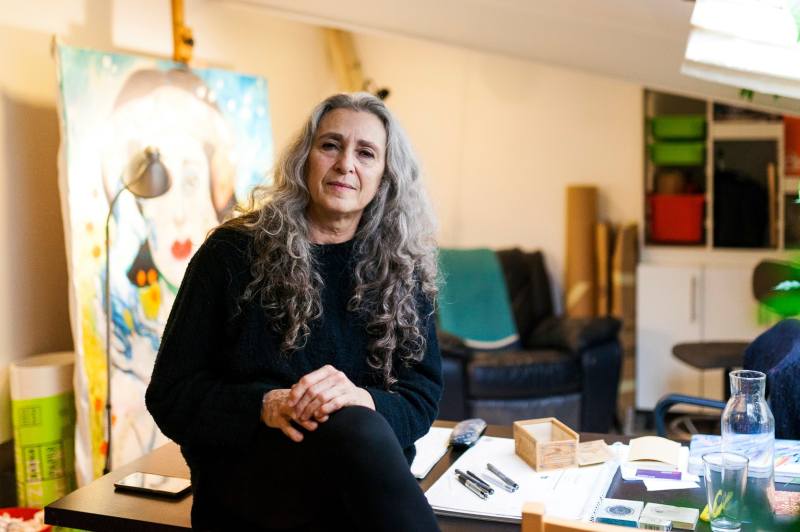
Virginia Patrone. Foto / Photo: Valentina Barreto

Virginia Patrone is an artist of Italian and French descent, born in Montevideo, Uruguay, on March 31, 1950. In 2003 she settled in Barcelona, between 2005 and 2009 she lived between Madrid and Barcelona, and since 2010 she has had a studio in Barcelona and Montevideo. She has been working as an artist since 1979.
Virginia works at the crossroads of expressive forms: theater, poetry, photography, video, which materialize in drawings and paintings. Deeply and totally interested in contemporary thought, Giorgio Agamben, Pascal Quignard, Jean-Luc Nancy or Georges Didi-Huberman are her source of inspiration and feed her creativity.
She spent her childhood at a high point of Montevideo's culture: she lived her youth under military dictatorship in permanent fear and resistance. A young mother of four children, she was a night painter.
She hid her work and her thoughts until the return of democracy. With a long and deep trajectory in the plastic arts, she left Montevideo to settle in Barcelona.
She has higher studies in architecture, painting studies in a Montevidean workshop with Torres-Garcia's methodology, engraving studies with a New York master, and obtained a Fullbright Scholarship thanks to which she studied in New York in 1988.
She has developed an intense collaboration with artists of her generation in workshops and joint projects, participating in international solo and group exhibitions since 1983 in various countries, galleries and museums: from the Metropolitan Museum in Tokyo, to the National Museum of Visual Arts in Montevideo.

"Retrato de una poeta herida / Portrait of a Wounded Poet"
Óleo sobre tela / oil on canvas, 73 x 73 cm., 2010

"El descubrimiento / The Discovery", acrílico sobre tela / acrylic on canvas, 180 x 150 cm., 2005

Interview by Shirley Rebuffo

Shirley Rebuffo: How did your inclination for painting begin? Tell us about yourself, how you started painting, your connection with art.
Virginia Patrone: Painting came with me, at least it is one of the first experiences of consciousness of being that I have. The environment was propitious: I am an only child and I lived my first ten years in a third floor apartment on Buenos Aires Street, in Ciudad Vieja, Montevideo's historic center, my thoughts and I with papers and watercolors, music, a big book by Leonardo Da Vinci, and periodic film projections on the wall of the living room.

La danzarina ausente / The Absent Dancer", acrílico sobre tela / acrylic on canvas, 148 x 107 cm., 2011
Colección / Collection Carolina Oehler

Izq./ Left: "Yo habría sido muy enamoradiza, yo me conozco /
I would have been too much in love, I know myself"
Carboncillo sobre papel Hahnemühle / charcoal on Hahnemühle paper, 65 x 50 cm., 2015
Der./ Right: "Su boca que reía yo no pude matar / His laughing mouth I could not kill"
Carré negro con aguada de cola vinílica sobre papel Hahnemühle Bamboo 265 g /
black carré with vinyl glue gouache on Hahnemühle Bamboo paper 265 g, 40 x 30 cm., 2018

SR: Who were your references?
VP: Leonardo first, of course. Then the universe expanded a lot and I'm sure that cinema, so big and indoors, had a great influence. Fellini, for example. And going out in the street, going to museums, Uruguayan painting, Barradas, Torres-García, the Planists. Uruguayan and Argentinean comic artists, the discovery of ukiyo-e. Women: Leonora Carrington, Remedios Varo, Nancy Spero. 

"Búho / Owl", acrílico sobre tela / acrylic on canvas, 157 x 99 cm., 2012

"Mujer dragón entre dos mundos / Dragon Woman Between Two Worlds"
Acrílico sobre tela / acrylic on canvas, 97 x 130 cm., 2010

SR: How did you find your language?
VP: By doing, by flowing, not looking for a place to arrive but paying attention to what is ahead and what is inside. Going back and forth across the boundary of reality, looking on the other side for what to bring and working to make it visible.

"Vendrá un tiempo de crímenes felices / There will come a time of happy crimes"
De las serie "La Señora Macbeth" / From Lady Macbeth Series
Acrílico sobre tela / acrylic on canvas, 148 x 108 cm., 2013
Colección / Collection Engelman-Ost

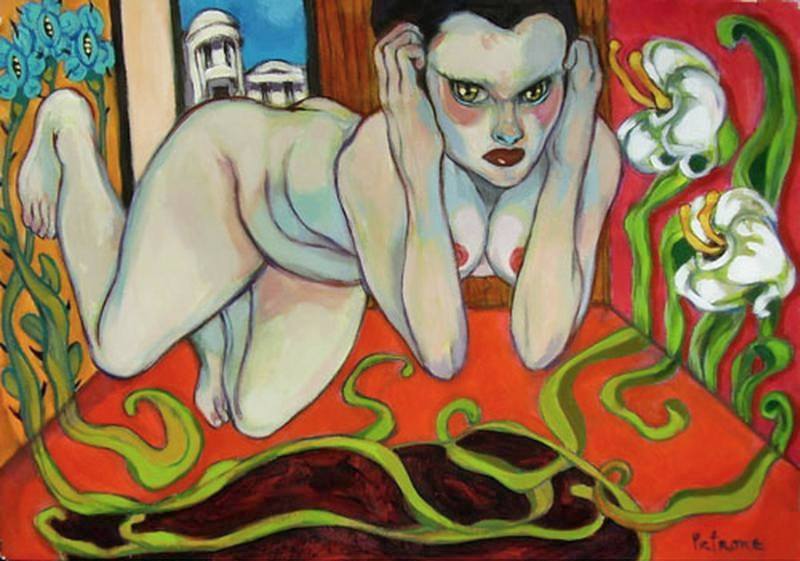
"La mujer tatuada / The Tattooed Woman", acrílico sobre tela / acrylic on canvas, 135 x 185 cm., 2010

SR: Living between two hemispheres, what is your work rhythm like? 
VP: Mysterious, continuous, permanent. Sometimes it's only interior, only in thought; it comes out on paper, on canvas, or in words, when the time is right. 

SR: How do you put an end to a project that takes so much effort and time?
VP: When the project itself tells me so, when I can't add anything more, when it closes and leaves me out.

SR: What does it mean to you to enjoy what you do?
VP: To live.

"Un día, sin hablar / One Day, Without Speaking"
Acuarela y tintas sobre papel / watercolor and inks on paper, 29,7 x 21 cm., 2018

"Tigre, tigre / Tiger, Tiger"

SR: You have gone through different experiences regarding your way of working, that's why this question: Do you prefer to work alone in any of your workshops, or with other colleagues in collective processes?
VP: I prefer to work alone most of the time, but collaboration, when it happens naturally, is wonderful.

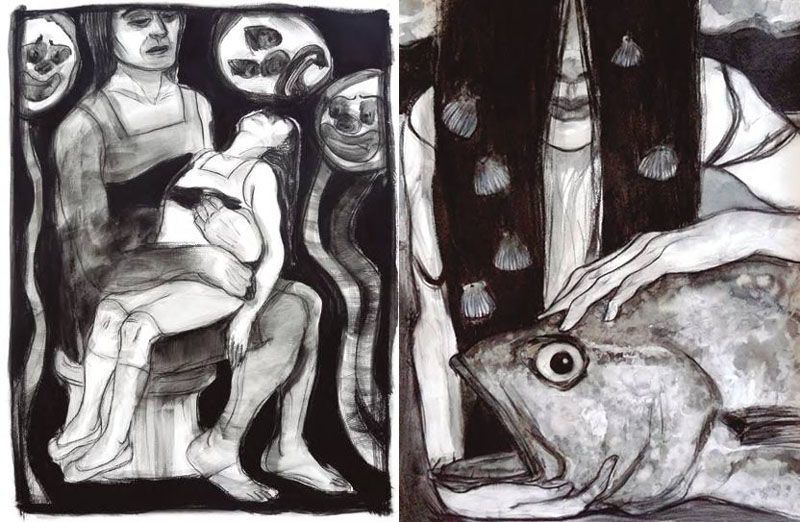
Izq./ Left: "Se le hizo saber desde el principio que no saldrá nunca de aquí /
It was made known to her from the beginning that she will never leave here"
Carboncillo sobre papel Hahnemühle / charcoal on Hahnemühle paper, 65 x 50 cm., 2015
Der./ Right: "Chanquete / Transparent Goby"
Carboncillo y acuarela sobre papel / charcoal and watercolor on paper, 67 x 50 cm., 2008
Colección / Collection Engelman-Ost

"Tango y Pan con abisales / Tango and Pan With Abyssal"
Acrílico sobre tela / acrylic on canvas, 130 x 100 cm., 2018

SR: Is it important for you as an artist to generate your own pictorial, textual and reflective analysis of social events? This question points to your series where your paintings are a means of communication that evolves through events, sometimes very harsh, and carry a message. So we have Iris, Lady Macbeth and others. What are the challenges involved in doing that kind of work?
VP: For me, analysis and reflection from the place and through art is fundamental. It is a form of knowledge that includes the intuitive, the archetypal, the myths, the collective unconscious. This way of working the themes allows to communicate and multiply the reflection, to make possible other ways to understand. I work with emotion. Traversing these themes requires me to cross psychological and emotional boundaries, to relate to the surviving images they carry, without getting lost. The task includes using safety distances, hence the introduction of the comic format, for example.

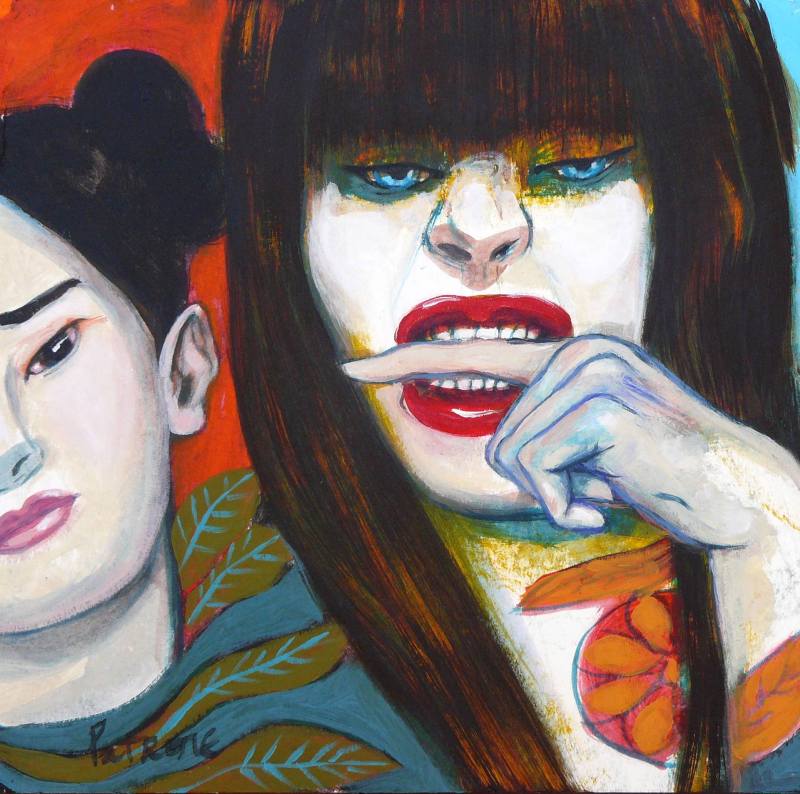
"Pintalabios y muñeca / Rouge & Doll", acrílico sobre papel / acrylic on paper, 30 x 30 cm., 2010

"El sueño difícil / The Difficult Dream", acrílico / acrylic, 70 x 100 cm., 2005

SR: What criteria did you follow to select the women who appear in these series where you read reality?
VP: I simply took the ones that presented themselves to me, the ones that came.

SR: What has been your impossible battle?
VP: Always the hardest thing to achieve is to understand, really, deeply. Iris dedicated her life to understanding and her wake is still trying to make us understand, Lady Macbeth too. The why of the passage to the act, why to put in reality that which generates destruction, repentance. What is free will, what is the limit, what is normal, what is madness. The place of women in societies as distant as Shakespeare's or Montevideo's in the thirties and today's, particularly marks these stories, be they reality or fiction.

"Kitsune", acrílico sobre tela / acrylic on canvas, 97 x 130 cm., 2010

"El jardín de la milonga / The Milonga Garden", acrílico / acrylic, 155 x 200 cm., 2003

SR: You channel your feelings intensely in your works. Do you find it cathartic to create?
VP: It is possible. Undoubtedly it is a form of healing, although the part that we could call professional, the method, the work, is very strong. In cases like the above I have to relate to emotions and feelings that are not part of my experience, I have to act, relate to these ghosts.

SR: Regarding the relationship between love and painting: has love or lack of love influenced your painting?
VP: Inevitably.

"Árboles genealógicos / Family Trees", acrílico sobre tela / acrylic on canvas, 97 x 130 cm., 2010

"El halcón de Freud / Freud's Falcon"
Acrílico sobre papel / acrylic on paper, 30 x 30 cm., 2011

SR: What do you like most or what stimulates you most about your work as a teacher?
VP: The relationship with others, perceiving what they want to achieve and helping them to achieve it.

"Tarea del crepúsculo: coronarse de tinieblas / Twilight Task: Crowning of Darkness"
Acuarela y tintas sobre papel / watercolor and inks on paper, 28 x 21 cm., 2018

"Manía II / Mania II", acrílico sobre papel / acrylic on paper, 50 x 70 cm., 2004

SR: Could you tell us about any artistic and cultural project you have planned for the future?
VP: I have an immediate project in the works: "Los Fantasmas de Venus" (The Ghosts of Venus). It is a book of poetry and watercolors, things I have been writing or painting in the last few years. Right now I am working on a project of which I will not say anything, for now. The future project that awaits its moment is Xirgu, combining plastic and theater, Montevideo and Barcelona, women from two cities, two languages.

"Muñequitas de arrabal / Suburbian Little Dolls", acrílico / acrylic, 100 x 100 cm., 2003

SR: Do you have any anecdotes you would like to share with us?
VP: Having just a few days to present a project that is very important to me, there is an urgent alarm that blocks all colloquial grace. I ask my memory and it doesn't want to give me anything. I remain in debt on this part.

"Qué has hecho de mi pobre corazón / What Have You Done to my Poor Heart"
Acrílico sobre tela / acrylic on canvas, 100 x 130 cm., 2018
________________________________________________________
About mentioned artists:

________________________________________________________

Más sobre / More about Virginia Patrone:


¡Muchas gracias por la entrevista, Virginia!
Thanks a lot for the interview, Virginia!
________________________________________________________

Shirley Rebuffo has a Degree in Library Science and a Degree in Archivology by the Universitary School of Library and Related Sciences (Montevideo, Uruguay), Technician in Museology by the Faculty of Humanities and Sciences (Anthropology option), Object, Symbol and Spance in Curatorship Applied Museology and Social Museology - Concepts, Technics and Practice (Campo Grande, Brazil), Coaching (Campo Grande, Brazil), Strategic Planning (Campo Grande, Brazil), and Art and Painting student under Master Eduardo Espino.

Uruguayos / Uruguayans (LXI-1) - Virginia Patrone [Pintura, Entrevista / Painting, Interview]

Empezamos el año como terminamos el anterior, con una entrevista de Shirley Rebuffo. La escogida en esta oportunidad es la uruguaya Virginia Patrone, creadora de una amplia obra fruto de una intensa actividad artística desarrollada a lo largo de varias décadas entre Montevideo, Barcelona y Madrid.
El artículo va en dos partes, este primer post con texto en español y el segundo en inglés.

We begin the year as we ended the previous one, with an interview by Shirley Rebuffo. The chosen one this time is the Uruguayan Virginia Patrone, creator of an extensive body of work, the result of an intense artistic activity developed over several decades between Montevideo, Barcelona and Madrid.
The article has in two parts, this first post with text in Spanish and the second one in English.
________________________________________________________

Virginia Patrone
(Montevideo, Uruguay, 1950-)

Virginia Patrone

Virginia Patrone es una artista con ascendencia italiana y francesa, nacida en Montevideo, Uruguay, el 31 de marzo de 1950. En 2003 se instala en Barcelona, entre 2005 y 2009 vive entre Madrid y Barcelona, y desde 2010 tiene estudio en Barcelona y en Montevideo. Desarrolla su actividad plástica desde 1979. 
Virginia trabaja en la intersección de formas expresivas: el teatro, la poesía, la fotografía, el video, que se materializan en dibujos y pinturas. Profunda y totalmente interesada en el pensamiento contemporáneo, Giorgio Agamben, Pascal Quignard, Jean-Luc Nancy o Georges Didi-Huberman son su fuente de inspiración y alimentan su creatividad.
Transitó la infancia en un momento álgido de la cultura montevideana: vivió la juventud bajo dictadura militar en permanente temor y resistencia. Madre joven de cuatro hijos, fue una pintora nocturna.
Ocultó su obra y su pensamiento hasta el regreso de la democracia. Con una larga y profunda trayectoria en la plástica, dejó Montevideo para instalarse en Barcelona.
Tiene estudios superiores de arquitectura, estudios de pintura en un taller montevideano con metodología torresgarciana, de grabado con maestro neoyorquino, y obtuvo una Beca Fullbright gracias a la cual estudió en Nueva York en 1988.
Ha desarrollado una intensa colaboración con artistas de su generación en talleres y proyectos conjuntos, participando en muestras internacionales individuales y colectivas desde 1983 en varios países, galerías y museos: desde el Museo Metropolitano de Tokio al Museo Nacional de Artes Visuales de Montevideo.

"Artificio Lunar / Lunar Artifice", acrílico sobre tela / acrylic on canvas, 200 x 250 cm., 2000
Colección / Collection Engelman-Ost

"Porque ser una mujer es un asunto importante / Because Being a Woman is an Important Matter"
De la serie La Señora Macbeth / From Lady Macbeth Series, 2016

Entrevista de Shirley Rebuffo

Shirley Rebuffo: ¿Cómo nace tu inclinación por la pintura? Cuéntanos de ti, cómo empezaste a pintar, tu vinculación con el arte.
Virginia Patrone: La pintura vino conmigo, al menos es de las primeras experiencias de consciencia de ser que tengo. El entorno fue propicio: soy hija única y viví mis primeros diez años en un tercer piso de la calle Buenos Aires, en Ciudad Vieja, centro histórico de Montevideo, mi pensamiento y yo con papeles y acuarelas, música, un gran libro de Leonardo Da Vinci y periódicas proyecciones de cine en la pared de la sala.

"Las sanadoras / The Healers", acrílico sobre tela / acrylic on canvas, 73 x 73 cm., 2010

"Los artificios de Urano / The artifices of Uranus", acrílico sobre tela / acrylic on canvas, 155 x 200 cm., 2011

SR: ¿Cuáles fueron sus referentes?
VP: Leonardo primero, claro. Luego el universo se amplió mucho y estoy segura de que el cine, tan grande y dentro de casa, tuvo gran influencia. Fellini, por ejemplo. Y salir a la calle, ir a museos, la pintura uruguaya, Barradas, Torres-García, los planistas. Los dibujantes de comic uruguayos y argentinos, el descubrimiento del ukiyo-e. Las mujeres: Leonora Carrington, Remedios Varo, Nancy Spero. 

Izq./ Left: "¿Qué te parece si hiciera saltar la casa con una bomba de dinamita? /
What If I Blew Up The House With A Dynamite Bomb?"
Der./ Right: "Yo digo la verdad, lo que yo digo es lo justo / 
I Tell The Truth, What I Say Is The Right Thing To Do"
Ambas / Both: carboncillo sobre papel Hahnemühle / charcoal on Hahnemühle paper, 65 x 50 cm., 2015

"Caprice des yeux / Capricho de los ojos / Whim of the Eyes"
Acuarela y tintas sobre papel / watercolor and inks on paper

SR: ¿Cómo has encontrado tu lenguaje?
VP: Haciendo, fluyendo, no buscando un lugar adonde llegar sino prestando atención a lo que está adelante y a lo que está adentro. Yendo y viniendo a través del límite de la realidad, buscando del otro lado lo que traer y trabajando para hacerlo visible.

"Traicionada / Betrayed", acrílico sobre tela / acrylic on canvas, 95 x 130 cm., 2010

"La pescadora / The Fisherwoman", acrílico sobre tela / acrylic on canvas, 73 x 73 cm., 2016

SR: Viviendo entre dos hemisferios, ¿cómo es tu ritmo de trabajo? 
VP: Misterioso, continuo, permanente. A veces es sólo interior, sólo en el pensamiento; sale sobre papel, sobre tela, o en palabras, cuando es el momento. 

SR: ¿Cómo pones el punto final a un proyecto que te lleva tanto esfuerzo y tiempo?
VP: Cuando el propio proyecto me lo dice, cuando no puedo agregar nada más, cuando se cierra y me deja afuera.

SR: ¿Qué significa para ti disfrutar de lo que haces?
VP: Vivir.

"Muñequita de trapo con superlunas / Rag Doll With Supermoons"
acrílico sobre tela / acrylic on canvas, 130 x 100 cm., 2018

"Jennifer Fox", acrílico sobre papel / acrylic on paper, 30 x 30 cm., 2010

SR: Has transitado por diversas experiencias al respecto de tu manera de trabajar, por eso esta pregunta: ¿Prefieres trabajar sola en alguno de tus talleres, o acompañada de otros colegas en procesos colectivos?
VP: Prefiero trabajar sola la mayor parte del tiempo, pero la colaboración, cuando se da naturalmente, es maravillosa.

"Gigante perdida / Lost Giant"

"Mis siete rosas cortadas / My Seven Cut Roses", acrílico sobre tela / acrylic on canvas, 150 x 200 cm., 2001

SR: ¿Es importante para ti, como artista generar tu propio análisis pictórico, textual y reflexivo acerca de acontecimientos sociales? Esta pregunta apunta a tus series donde tus pinturas son un medio de comunicación que evoluciona a través sucesos, a veces muy duros, y llevan un mensaje. Tenemos así Iris, La señora Macbeth y otras. ¿Qué retos conlleva hacer ese tipo de obra?
VP: Es fundamental el análisis y la reflexión desde el lugar y a través del arte para mi. Es una forma de conocimiento que incluye lo intuitivo, lo arquetípico, los mitos, el inconsciente colectivo. Esta forma de trabajar los temas permite comunicar y multiplicar la reflexión, hacer posibles otros caminos para comprender. Yo trabajo con la emoción. Transitar estos temas requiere que atraviese límites psicológicos y emocionales, que me relacione con las imágenes supervivientes que conllevan, sin perderme. La tarea incluye usar distancias de seguridad, de ahí la introducción del formato comic, por ejemplo.

"Vestida por tigres / Dressed by Tigers", acrílico sobre tela / acrylic on canvas, 100 x 130 cm., 2015

"Los lunáticos / The Lunatics"

SR: ¿Qué criterios seguiste para seleccionar a las mujeres que aparecen en esas series donde lees la realidad?
VP: Simplemente tomé las que se me presentaron, las que vinieron.

SR: ¿Cuál ha sido tu batalla imposible?
VP: Siempre lo más difícil de lograr es entender, realmente, profundamente. Iris dedicó su vida a entender y su estela sigue intentando hacer entender, la Señora Macbeth también. El porqué del paso al acto, porqué poner en la realidad aquello que genera destrucción, arrepentimiento. Qué es el libre albedrío, cuál es el límite, qué es lo normal, qué es la locura. El lugar de la mujer en sociedades tan distantes como la shakespeariana o la del Montevideo de los años treinta, la de hoy, marca particularmente estos relatos, sean realidad o ficción.

"No confíes en mí / Don't Trust Me", tinta sobre papel / ink on paper, 34 x 53,5 cm., 2016

"Las hijas del volcán / The Daughters of The Volcano"
Acrílico sobre tela / acrylic on canvas, 250 x 200 cm., 2008

SR: Canalizas de forma intensa tus sentimientos en las obras. ¿Te resulta catártico crear?
VP: Es posible. Sin duda es una forma de sanación, aunque es muy fuerte la parte que podríamos llamar profesional, el método, el trabajo. En casos como los anteriores tengo que relacionarme con emociones y sentimientos que no son parte de mi experiencia, tengo que actuar, relacionarme con estos fantasmas.

SR: Relación entre el amor y la pintura. ¿Ha influido el amor o el desamor al momento de pintar?
VP: Inevitablemente.

"Temer y confiar / Fear And Trust", acuarela y tintas sobre papel / watercolors and ink on paper, 28 x 21 cm., 2018

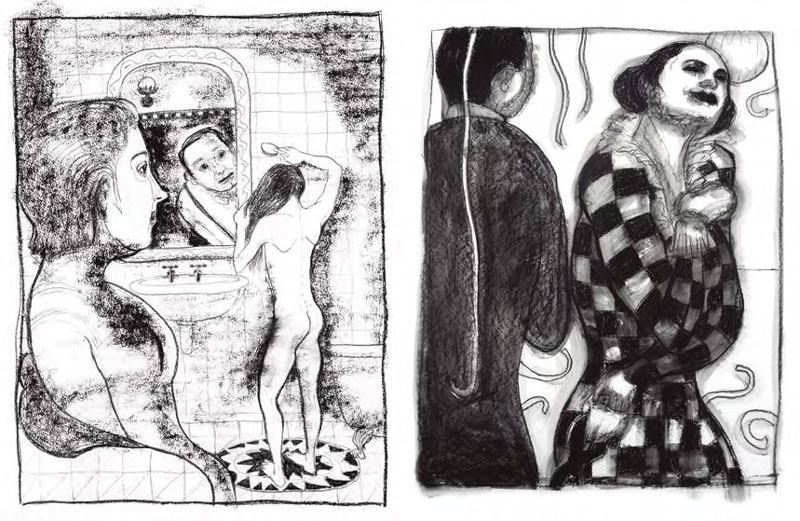
Izq./ Left: "De chico fue un onanista empecinado / As a child, he was a stubborn onanist"
Carboncillo sobre papel Hahnemühle / charcoal on Hahnemühle paper, 65 x 50 cm., 2015
Der./ Right: "Esa colombina puso en sus ojeras humo de la hoguera de su corazón /
That Columbine put smoke from the bonfire of her heart into her eyes"
Carré negro con aguada de cola vinílica sobre papel Hahnemühle Bamboo 265 g /
black carré with vinyl glue gouache on Hahnemühle Bamboo paper 265 g, 65 x 50 cm., 2018

SR: ¿Qué es lo que más te gusta o estimula de tu trabajo como docente?
VP: La relación con el otro, percibir qué quiere lograr y ayudarle a conseguirlo.

"¡Salve, Banquo, cuyos hijos serán reyes! / Hail, Banquo, whose sons shalt be kings!"
De las serie "La señora Macbeth" / From Lady Macbeth Series

"Los perfectos / The Perfect Ones", acrílico sobre papel / acrylic on paper, 11,8" x 11,8", 2009

SR: ¿Podrías contarnos acerca de algún proyecto artístico y cultural que tengas planeado a futuro?
VP: Tengo un proyecto inmediato, en vías de concreción: "Los Fantasmas de Venus". Es un libro de poesía y acuarelas, cosas que vine escribiendo o pintando en los últimos años. Estoy ahora mismo trabajando en un proyecto del cual no diré nada, por ahora. El proyecto futuro que espera su momento es Xirgu, combinando plástica y teatro, Montevideo y Barcelona, mujeres de dos ciudades, dos lenguas.

"Quelques Ténèbres / Algo de oscuridad / Some Darkness"
Acuarela y tintas sobre papel / watercolor and inks on paper, 28 x 21 cm., 2018

SR: ¿Tienes alguna anécdota que quieras compartir con nosotros?
VP: Teniendo apenas unos días para presentar un proyecto que es muy importante para mi, hay una alarma de urgencia que bloquea toda gracia coloquial. Pido a mi memoria y no quiere darme nada. Quedo en deuda en esta parte.

"Hierro, oro, uranio, plomo / Iron, Gold, Uranium, Lead"
Acrílico sobre tela / acrylic on canvas, 150 x 200 cm., 2009
________________________________________________________

Sobre los artistas mencionados:

________________________________________________________

Más sobre / More about Virginia Patrone:


¡Muchas gracias por la entrevista, Virginia!
Thanks a lot for this interview, Virginia!
________________________________________________________

Shirley Rebuffo es Licenciada en Bibliotecología y Archivología por la Escuela Universitaria de Bibliotecología y Ciencias Afines (Montevideo, Uruguay), Técnica en Museología por la Facultad de Humanidades y Ciencias (opción de Antropología), Objeto, símbolo y espacio en Curaduría. Museología Aplicada y Museología Social – Conceptos, técnicas y prácticas (Campo Grande, BR), Coaching (Campo Grande, BR), Planeamiento Estratégico (Campo Grande, BR) y estudiante de arte y pintura con el maestro Eduardo Espino.