miércoles, 20 de septiembre de 2023

Libros de artista / Artist's Books (XIII) - Rafael Romero, Matilde Marín, Rogelio Osorio

Nuevo artículo de esta serie, presentada por Shirley Rebuffo, con más obras y textos que nos ayudan a profundizar sobre el concepto, ideas e historia de estos versátiles objetos de expresión artística.

New article in this series, presented by Shirley Rebuffo, with more works and texts that help us to deepen our understanding of the concept, ideas and history of these versatile objects of artistic expression.
___________________________________________________________________

Rafael Romero Pineda
(Badalona, Catalunya / Cataluña, España / Catalonia, Spain, 1967-)

Rafael Romero

Rafael Romero es profesor de Técnicas, Materiales y Procedimientos Pictóricos de la Facultad de Bellas Artes de la Universidad de Barcelona, Departamento de Artes y Conservación Restauración. Director del grupo de Innovación Docente M.I.M.A (Memoria y Materia Artística) de esa Universidad. Consultor Académico de la Universidad Nacional de Córdoba (Argentina). Miembro del Grupo de Investigación AASA de la universidad de Jaén. Miembro del comité académico de AAMA Centro Internacional de Arte Contemporáneo Tagus de Hangzhou (China) y Profesor invitado de la Universidad Autónoma de Madrid (España).
Es actualmente artista de la galería In der mühle (Alemania), Arbre Bleu (Marruecos), Ismes (España) y La Cerverina de Arte (España). Su obra, está presente en el Museo Español del grabado (España), El Museo Miraflores (España), El Museo de Dibujo “Castillo de Larrés” (España), El Museo del Càntir (España), La Casa Museo Miguel Hernández (España), El Museo Cerdà (España), El Museo Enric Monjo (España) el Museo Fueguino (Argentina), El Museo de Cartague-Salambno (Túnez), El Museo de Kandira (Turquía), El Museo Haegeumgang (Corea), El Museo Fantapia (Corea) y el Museo Tagus de Hangzhou (China), entre otros.
____________________________________________________________

Esta nueva propuesta nos presenta una obra en la que un artista desarrolla su proyecto creativo sobre otra preexistente. En este caso, Rafael Romero construye su "Navegar" pintando sobre las páginas de la obra "El secreto del sombrero rosa" (Frances y Richard Lockridge, Cumbre, México, 1953), enriqueciendo y resignificando la obra original, configurando de esta manera una colaboración a tres manos (las Rafael y las de los dos escritores) a través del tiempo, fusionando la literatura con la pintura, rescatando a través de esta suerte de reciclaje el material de base (el libro en sí) para reconvertirlo en un objeto artístico nuevo y diferente. J.F.

This new proposal presents us with a work in which an artist develops his creative project over a pre-existing one. In this case, Rafael Romero builds his "Navigate" by painting over the pages of the work "The Secret of the Pink Hat" (Frances and Richard Lockridge, Cumbre, Mexico, 1953), enriching and resignifying the original work, thus configuring a three-handed collaboration (Rafael's and those of the two writers) through time, merging literature with painting, rescuing through this kind of recycling the basic material (the book itself) to reconvert it into a new and different artistic object. J.F.

Navigare / Navegar / Navigate


El Libro de Artista como extraordinario viaje interior. 

Existen muchos tipos de Libros de Artista en un amplio territorio semántico que va desde las sutilezas plásticas y gráficas más sorprendentes a las objetualidades mágicas más sutiles. De hecho, el libro de artista es todo un universo en su amplio catálogo de posibilidades y es tan vasto como potenciales creativos haya. Cada artista, en su idiosincrasia, será Demiurgo de su propio libro de artista, conservando sus leyes y principios definitorios, tal vez indagando novedades sorpresivas y, por qué no, implementando en lo lúdico.
Yo entiendo en mi cotidianeidad creativa, fundamentalmente en el ámbito de la pintura, el libro de artista como una extraordinaria posibilidad cognitiva. Me reservo mucho el cuándo recurrir a él, como si de un tesoro valioso se tratara y al que hay que dirigirse cuando en lo iniciático uno está preparado, es decir, cuando en lo interno surge una fuerza superior, después de mucha contención, continencia, ayuno diría yo, en lo metafórico. Ahí surge de lo atávico y natural una voz, la voz interior que te dice "¡Ahora puedes!". Si no se hace de esta manera, considero que el libro de artista se vulgariza, pierde su alma y esencia, deviene burdo e intrascendente, deja de ser ese tesoro que debe ser. De hecho, desde mi punto de vista, hacer un libro de artista es una comunión de uno con uno mismo, pues prevalecen en su liturgia, profundas conversaciones entre ese ser dual que todos somos, el consciente y el inconsciente, el ideal y el material. El libro de artista para mí es esa extraordinaria posibilidad de "desaparecer dentro", ejercer dignamente una catarsis y resurgir trayendo como resultado aquello que puede poner orden, no al universo, pues eso es utópico, pero si a uno mismo, a ese yo que en los tiempos que corren, desafortunadamente, tiene tendencia a habitar más el "tener" que el "ser". Por otra parte, para el espectador, usuario, el libro de artista no dejará de ser nunca una herramienta sorpresiva y mágica puesto que su idiosincrasia introspectiva y catártica trasciende al propio autor. De un ser se dirige otro ser que ejercerá nuevas lecturas y posibilidades en esa línea de crecimiento humano, interacción, transformación y evolución. 


"Navegar" es un libro de artista palimpséstico, es decir creado sobre lo escrito e impreso en un antiguo libro de hojas marrones y con el olor característico de la lignina de los libros de antaño. Escribir sobre lo escrito, pintar sobre lo impreso, reciclar, dar una oportunidad a algo digno recuperado de la basura, vestirlo de nuevas retóricas y posibilidades, eso es todo.
Navegar recoge los sueños e invenciones de mi navegación imaginaria a través del barco como leitmotiv que empodera en el viaje, las culturas, los hombres y mujeres del mundo con sus leguas, aromas y sabores. Sutiles acuarelas, libro de bitácora de alguien que se resiste a morir mientras quede vida y que anima a vivenciarlo todo positivizándolo y dejando fuera de juego el cada vez más habitual pesimismo de este "mal de siglo".


Rafael Romero is professor of Pictorial Techniques, Materials and Procedures at the Faculty of Fine Arts of the University of Barcelona, Department of Arts and Conservation and Restoration. Director of the group of Teaching Innovation M.I.M.A (Memory and Artistic Matter) of that University. Academic Consultant of the National University of Cordoba (Argentina). Member of the AASA Research Group of the University of Jaén. Member of the academic committee of AAMA Tagus International Contemporary Art Center of Hangzhou (China) and Visiting Professor at the Autonomous University of Madrid (Spain).
He is currently an artist of the gallery In der mühle (Germany), Arbre Bleu (Morocco), Ismes (Spain) and La Cerverina de Arte (Spain). His work can be found in the Museo Español del grabado (Spain), El Museo Miraflores (Spain), El Museo de Dibujo "Castillo de Larrés" (Spain), El Museo del Càntir (Spain), La Casa Museo Miguel Hernández (Spain), The Cerdà Museum (Spain), The Enric Monjo Museum (Spain), The Fueguino Museum (Argentina), The Cartague-Salambno Museum (Tunisia), The Kandira Museum (Turkey), The Haegeumgang Museum (Korea), The Fantapia Museum (Korea), and The Tagus Museum of Hangzhou (China), among others.


The Artist's Book as an extraordinary inner journey. 

There are many types of Artist's Books in a wide semantic territory ranging from the most surprising plastic and graphic subtleties to the subtlest magical objectualities. In fact, the artist's book is a whole universe in its wide catalog of possibilities and it is as vast as creative potentials are. Each artist, in his idiosyncrasy, will be the Demiurge of his own artist's book, preserving its laws and defining principles, perhaps exploring surprising novelties and, why not, implementing the playful.
In my creative daily life, mainly in the field of painting, I understand the artist's book as an extraordinary cognitive possibility. I keep very much to myself when to resort to it, as if it were a valuable treasure and to which one must turn when one is ready, that is to say, when a superior force emerges from within, after much restraint, continence, fasting I would say, in the metaphorical sense. There arises from the atavistic and natural a voice, the inner voice that tells you, "Now you can do it!". If it is not done in this way, I consider that the artist's book becomes vulgarized, loses its soul and essence, becomes crude and unimportant, ceases to be the treasure it should be. In fact, from my point of view, making an artist's book is a communion of one with oneself, because in its liturgy, deep conversations prevail between that dual being that we all are, the conscious and the unconscious, the ideal and the material. The artist's book for me is that extraordinary possibility to "disappear inside", to exercise a worthy catharsis and to resurface bringing as a result that which can bring order, not to the universe, since that is utopian, but to oneself, to that self that in these times, unfortunately, has a tendency to inhabit more the "having" than the "being". On the other hand, for the spectator, user, the artist's book will never cease to be a surprising and magical tool, since its introspective and cathartic idiosyncrasy transcends the author himself. From one being is directed another being that will exercise new readings and possibilities in that line of human growth, interaction, transformation and evolution. 


"Navigate" is a palimpsestic artist's book, that is to say, created over what was written and printed in an old book with brown pages and with the characteristic smell of the lignin of the books of yesteryear. To write over the written, to paint over the printed, to recycle, to give a chance to something worthy recovered from the trash, to dress it with new rhetoric and possibilities, that is all.
Navegar collects the dreams and inventions of my imaginary navigation through the boat as a leitmotiv that empowers in the journey, the cultures, the men and women of the world with their languages, aromas and flavors. Subtle watercolors, a logbook of someone who refuses to die while there is life left and who encourages to experience everything positively and leaving out of play the increasingly common pessimism of this "evil of the century".


Más sobre / More about Rafael Romero: Blog, facebook

Imágenes publicadas con autorización del artista (¡Muchas gracias, Rafael!)
Images published here with artist's permission. (Thanks a lot, Rafael!)
___________________________________________________________________

___________________________________________________________________

Matilde Marín
(Buenos Aires, Argentina, 1948-)

Matilde Marín

Matilde Marín (Buenos Aires, 1948) es una artista contemporánea y académica argentina que desarrolla obra en múltiples disciplinas incluyendo grabado, fotografía y video. Marín ha sido profesora visitante dictando seminarios de posgrado en universidades de Argentina, Santiago de Chile y Barcelona, España, y fue Fellow del Institut d’Études Avancées de Nantes, Francia (2020).
Se gradúa como escultora en la Escuela de Bellas Artes de Buenos Aires y continúa sus estudios en la Kunstgewerbeschule de Zúrich, Suiza, donde realiza un entrenamiento en técnicas gráficas. Inicia su trabajo con la obra sobre papel en una constante búsqueda por romper con las normativas tradicionales de la disciplina y desde finales de los noventa incorpora a su obra la fotografía y el vídeo, realizando instalaciones de gran formato.
Desde el año 2008 es Académica de Número y a partir del 2019 vicepresidenta de la Academia Nacional de Bellas Artes y presidenta de la Fundación Federico Jorge Klemm en Buenos Aires. Marín ha trabajado y vivido en Caracas (Venezuela), Zurich (Suiza), Washington (EEUU), y actualmente reside en Buenos Aires (Argentina).
Marín inicia su trayectoria artística en el campo del grabado destacándose por el desarrollo de técnicas experimentales innovadoras trabajadas con materiales no tóxicos. Durante los años 80 y parte de los 90 trabajó la obra gráfica en sus diferentes técnicas, incorporando códigos y símbolos propios, buscando ampliar los horizontes de la técnica y alejarla del contexto tradicional bidimensional y llevarlo al volumen escultórico. Durante este período se destacan sus rollos de papel de gran formato, donde la artista graba con fuego papeles hechos a mano que pese a la impronta gráfica se los asocia al universo de la escultura.
Hacia 1992 investiga sobre «códigos técnicos del grabado», con libertad en la interpretación, lo que Umberto Eco (1968) denominó «Códigos de transmisión». Son los que estructuran las condiciones suficientes para la percepción de la imagen (como el reticulado de la fotografía de prensa), por los que se interesa la artista, que soportan no sólo la calificación estética de la obra, sino los códigos del gusto, los códigos tonales y los códigos estilísticos.

"Laberintos / Labyrinths"

"Laberintos, Homenaje a Jorge Luis Borges", es una edición limitada a cinco ejemplares numerados, realizados con la técnica de suminagashi. Colaboraron en esta edición Alejandro Geiler (papel) y Silvina Pérez (cajas). Se terminó de imprimir en los talleres de Gráfica Kontemporánea, Buenos Aires, Argentina, en abril de 1998.
El Suminagashi es un antiguo arte japonés consistente en el marmoleado de papel. Literalmente la palabra significa "tinta flotante". Se cree que esta técnica surge en el siglo XII tras ser adoptada por monjes japoneses en China. El papel tipo suminagashi se ha utilizado tradicionalmente en Japón para elaborar documentos y libros, también para decorar casas y edificios.
Los patrones de remolinos, imitando los que se encuentran en la piedra de mármol natural, se pueden crear dejando caer tinta sobre la superficie del agua y colocando encima el papel para levantar la tinta.


Matilde Marín (Buenos Aires, 1948) is an Argentine contemporary artist and academic who works in multiple disciplines including printmaking, photography and video. Marín has been a visiting professor teaching graduate seminars at universities in Argentina, Santiago de Chile and Barcelona, Spain, and was a Fellow at the Institut d'Études Avancées de Nantes, France (2020).

She graduated as a sculptor from the School of Fine Arts in Buenos Aires and continued her studies at the Kunstgewerbeschule in Zurich, Switzerland, where she trained in graphic techniques. She begins her work with works on paper in a constant search to break with the traditional rules of the discipline and since the late nineties she incorporates photography and video to her work, making large format installations.

Since 2008 she has been a Full Academician and from 2019 vice-president of the National Academy of Fine Arts and president of the Federico Jorge Klemm Foundation in Buenos Aires. Marín has worked and lived in Caracas (Venezuela), Zurich (Switzerland), Washington (USA), and currently resides in Buenos Aires (Argentina).

Marín began her artistic career in the field of engraving, standing out for the development of innovative experimental techniques worked with non-toxic materials. During the 80's and part of the 90's she worked on graphic work in its different techniques, incorporating her own codes and symbols, seeking to broaden the horizons of the technique and move it away from the traditional two-dimensional context and take it to the sculptural volume. During this period her large format paper rolls stand out, where the artist engraves with fire handmade papers that despite the graphic imprint are associated to the universe of sculpture.

Towards 1992 she researches on "technical codes of engraving", with freedom of interpretation, what Umberto Eco (1968) called "Codes of transmission". These are the ones that structure the sufficient conditions for the perception of the image (such as the reticulation of press photography), in which the artist is interested, supporting not only the aesthetic qualification of the work, but also the codes of taste, the tonal codes and the stylistic codes.


"Labyriths, Tribute to Jorge Luis Borges", is a limited edition of five numbered copies, made with the suminagashi technique. Alejandro Geiler (paper) and Silvina Pérez (boxes) collaborated in this edition. It was printed in the workshops of Gráfica Kontemporánea, Buenos Aires, Argentina, in April 1998.
Suminagashi is an ancient Japanese art of paper marbling. Literally the word means "floating ink". It is believed that this technique emerged in the 12th century after being adopted by Japanese monks in China. Suminagashi paper has traditionally been used in Japan to produce documents and books, as well as to decorate houses and buildings.
Swirling patterns, imitating those found in natural marble stone, can be created by dropping ink on the surface of the water and placing the paper on top to lift the ink.


Todas las fotografías / All images © Estudio / Studio Matilde Marín

Más sobre / More about Matilde Marín: Website, Instagram, Wikipedia

Imágenes publicadas con autorización de la artista (¡Muchas gracias, Matilde!)
Images published here with artist's permission. (Thanks a lot, Matilde!)
___________________________________________________________________

___________________________________________________________________

Rogelio Osorio
(Montevideo, Uruguay, 1962-)

Rogelio Osorio

Rogelio Osorio es un artista visual y docente uruguayo nacido en Montevideo en 1962, cuya obra ya presentamos en el blog acompañando la entrevista realizada por Shirley Rebuffo en mayo de 2021, y que puede disfrutarse aquí.

Rogelio Osorio is a Uruguayan visual artist and teacher born in Montevideo in 1962, whose work we already presented in the blog accompanying the interview conducted by Shirley Rebuffo in May 2021, which can be enjoyed here.

Cuadernos de bocetos / Sketchbooks


Al plantearme la inclusión de la obra de Rogelio Osorio dentro de esta serie, me surge la pregunta: ¿podrían considerarse a los cuadernos de bocetos como libros de artista?
Los diarios gráficos son ideas que surgen, y quizá resurgirán como obras en otra modalidad, pero en definitiva son obras de arte per se. El artista puede no considerarlos como obras de arte, pero como registro de sus trabajos, al hacer una retrospectiva, seguramente se presenten sus cuadernos de artista como muestra de sus ideas.
Los cuadernos de bocetos de Rogelio destilan por completo el estilo orgánico de un creador que se centra en el cuerpo humano; nos muestran su proceso creativo y su forma de ver el mundo sin pulir, cosa que hará cuando pase en limpio hacia la obra final. 
Domar las sombras que hacen fluir la luz en sus monocromos, gracias a su invención y observación, es una de las características de estos libros de Rogelio. Shirley Rebuffo


"Los cuadernos de artista son para mí una herramienta indispensable del proceso creativo.
Su uso es básicamente para bocetos y textos variados como direcciones, nombres de películas, recetas, desarrollo de proyectos. El orden cronológico me permite tener una idea clara de mi evolución. A veces rescato apuntes que he realizado hace muchos años atrás para seguir elaborándolos hasta que se convierten en trabajos definitivos. También son una suerte de 'bitácora visual', cuando miro los dibujos, algunos apenas garabatos, recuerdo lo que estaba viviendo en el momento de hacerlos.
No los considero piezas de arte, pero sí son objetos queridos con un gran valor afectivo". Rogelio Osorio


When considering the inclusion of Rogelio Osorio's work in this series, the question arises: could sketchbooks be considered artist's books?
The graphic diaries are ideas that emerge, and perhaps they will re-emerge as works in another modality, but in the end they are artworks per se. The artist may not consider them as works of art, but as a record of his work, when a retrospective is made, his artist's sketchbooks will surely be presented as a sample of his ideas.
Rogelio's sketchbooks completely distill the organic style of a creator who focuses on the human body; they show us his creative process and his unpolished way of seeing the world, which he will do when he moves on to the final work. 
Taming the shadows that make the light flow in his monochromes, thanks to his invention and observation, is one of the characteristics of Rogelio's books. Shirley Rebuffo


"Artist's sketchbooks are for me an indispensable tool of the creative process.
Their use is basically for sketches and various texts such as addresses, names of movies, recipes, project development. The chronological order allows me to have a clear idea of my evolution. Sometimes I rescue notes that I have made many years ago to continue working on them until they become definitive works. They are also a sort of 'visual log', when I look at the drawings, some of them just doodles, I remember what I was living at the moment of making them.
I don't consider them pieces of art, but they are beloved objects with a great affective value". Rogelio Osorio


Rogelio Osorio en "El Hurgador" / in this blog[Uruguayos (V)], [Uruguayos (LI)]

Más sobre / More about Rogelio Osorio: facebook

Imágenes publicadas con autorización del artista (¡Muchas gracias, Rogelio!)
Images published here with artist's permission. (Thanks a lot, Rogelio!)
___________________________________________________________________

Otros posts de esta serie / Other posts of this series:
 
___________________________________________________________________

Shirley Rebuffo es Licenciada en Bibliotecología y Archivología por la Escuela Universitaria de Bibliotecología y Ciencias Afines (Montevideo, Uruguay), Técnica en Museología por la Facultad de Humanidades y Ciencias (opción de Antropología), Objeto, símbolo y espacio en Curaduría. Museología Aplicada y Museología Social – Conceptos, técnicas y prácticas (Campo Grande, BR), Coaching (Campo Grande, BR), Planeamiento Estratégico (Campo Grande, BR) y estudiante de arte y pintura con el maestro Eduardo Espino.

Shirley Rebuffo has a Degree in Library Science and a Degree in Archivology by the Universitary School of Library and Related Sciences (Montevideo, Uruguay), Technician in Museology by the Faculty of Humanities and Sciences (Anthropology option), Object, Symbol and Spance in Curatorship Applied Museology and Social Museology - Concepts, Technics and Practice (Campo Grande, Brazil), Coaching (Campo Grande, Brazil), Strategic Planning (Campo Grande, Brazil), and Art and Painting student under Master Eduardo Espino.

viernes, 8 de septiembre de 2023

Libros de artista / Artist's Books (XII) - Mariana Torconal, Ricardo Pickenhayn

Nuevo artículo de esta serie, presentada por Shirley Rebuffo, con más obras y textos que nos ayudan a profundizar sobre el concepto, ideas e historia de estos versátiles objetos de expresión artística.

New article in this series, presented by Shirley Rebuffo, with more works and texts that help us to deepen our understanding of the concept, ideas and history of these versatile objects of artistic expression.
___________________________________________________________________

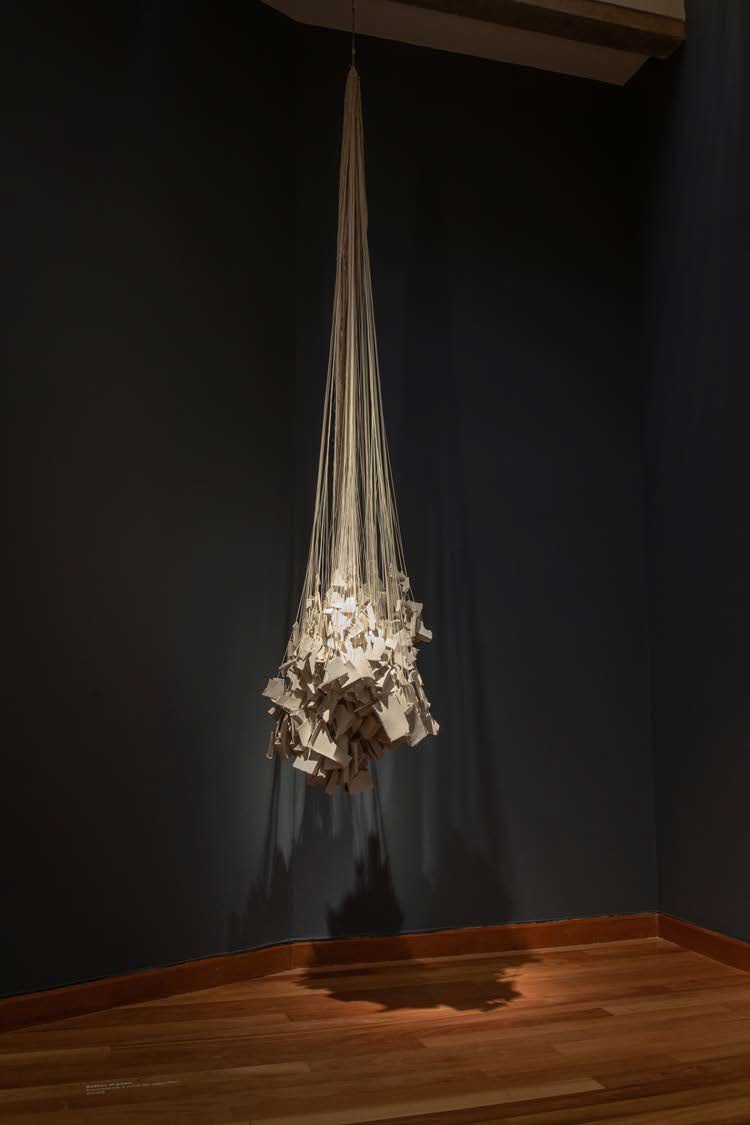
Las obras que hoy presentamos no responden estrictamente a las categorías que hemos ido estableciendo para definir el libro de artista, sino más bien en un concepto más amplio del libro como objeto, o del objeto asociado al libro. En el primer caso, la obra de Mariana Torconal se compone de elementos escultóricos en porcelana con forma de libros, creados a partir de estos. Por su parte Ricardo Pickenhayn ha desarrollado una colección de cajas contenedoras para los primeros ejemplares de una obra literaria. 

The works we present today do not respond strictly to the categories that we have been establishing to define the artist's book, but rather to a broader concept of the book as an object, or of the object associated with the book. In the first case, Mariana Torconal's work consists of porcelain sculptural elements in the shape of books, created from books. Ricardo Pickenhayn has developed a collection of boxes containing the first copies of a literary work.
___________________________________________________________________

Mariana Torconal Bravo
(Santiago de Chile, Chile, 1985-)

Mariana Torconal

Mariana Torconal es una artista chilena nacida en Santiago de Chile, donde vive y trabaja. Es Licenciada en artes plásticas de la Universidad Católica de Chile, magíster en Artes Visuales en el California College of the Arts de San Francisco, Estados Unidos. 
Su obra investiga la carga emotiva y cultural de los objetos a través de técnicas como el dibujo, el grabado, la escultura y la instalación, utilizando materiales como cera de abeja, plasticina, resina y otros. Desde el 2011 trabaja en porcelana. 
Ha expuesto en Santiago, Oaxaca, Milán y San Francisco, entre otros lugares. En Chile ha participado en ferias y ha presentado su trabajo en diversas exposiciones colectivas, en lugares como GAM, Museo de Artes Visuales, Sala Gasco y varias galerías.
Su obra "Proyecto Biblioteca", con libros de porcelana, fue exhibida en el Museo de Artes Visuales MAVI (Exposición Individual "Otras Historias") desde Noviembre de 2020 hasta Febrero 2021 y fue convertida en una instalación "Site specific" para la Biblioteca Patrimonial de la Recoleta Dominica (Noviembre 2021 - Mayo 2022) 
___________________________________________________________________

Todas las imágenes (excepto las dos últimas) pertenecen a la exposición "Otras Historias", presentada en el Museo de Artes Visuales (MAVI), Santiago de Chile, Chile, entre noviembre de 2020 y febrero de 2021.

All images (except for the last two) are from the exhibition "Other Stories", presented at the Museo de Artes Visuales (MAVI), Santiago de Chile, Chile, from November 2020 to February 2021.
___________________________________________________________________

Vista de la exposición "Otras historias" / View of the exhibition "Other Stories"
Museo de Artes Visuales (MAVI), Santiago de Chile, Chile

"Fallas individuales / Individual Failures"
Porcelana y esmalte de oro / Porcelain and gold enamel
Tamaño individual máximo / Individual maximal size: 18 x 8 x 22 cm.
montaje variable / variable staging, 2020

"Fallas individuales / Individual Failures" (detalle / detail)

"Fallas individuales / Individual Failures" (detalle / detail)

"Pulso / Pulse"
Porcelana / Porcelain, largo variable / variable length (máx. 700 cm.) x 10 x 22 cm., 2020

En "Otras Historias" las materialidades dicen cosas que la propia historia impresa sobre papel no dice. La limpia radicalidad del trabajo de Mariana Tocornal convierte un objeto que sostiene el imperio de la Ley y del Discurso en un sucedáneo dispuesto a ejercer las funciones decorativas que encubren su disposición en letra muerta.
Aquí, todo brilla por su ausencia. La expulsión de la interioridad y el abandono de la manufactura de un material absorbente ha sido convertida en objeto sobre cuya superficie se refracta el sentido.
Más bien, su conversión en fetiche que concentra la capacidad de encarnar unas fuerzas que sustituyen la superficie donde se imprime “lo que me mata” –una verdad-, pero que deviene amuleto, bruñido para señalar una reparación por sustitución del objeto de nuestro deseo.
Mariana Tocornal muestra lo que falta, pero a través de lo que está de más. Y lo “congela”, para convertirlo en signo moldeado, haciendo ostentación de su condición. Porque la paradoja es que el molde de un libro no reproduce, digamos, su “contenido” impreso, sino que es por sí mismo, una impresión. Pero es la impresión como duelo, porque la reproducción de la objetualidad del libro implica pensar que su portada y contraportada, incluyendo el grosor de su empaste, son algo así como una máscara funeraria, que sometida al juego de la forma y de la contraforma termina por reproducir un paralelepípedo que exhibe su brillo, como exceso, sin por ello borrar la memoria arcaica de la tablilla caldea sobre cuya opacidad se han marcado los primeros indicios de un nombre.
Justo Pastor Mellado

"Ruma/Montón/Pila/Pira II / Stack/Pile/Heap/Bonfire II"
Porcelana / Porcelain, medidas variables / variable size: 80 x 60 x 50 cm. aprox., 2020

"Ruma/Montón/Pila/Pira II / Stack/Pile/Heap/Bonfire II" (detalle / detail)

Vista de la exposición "Otras historias" / View of the exhibition "Other Stories"
Museo de Artes Visuales (MAVI), Santiago de Chile, Chile

"Frases / Phrases"
Porcelana sobre repisas de madera / Porcelain on wooden shelves
montaje variable / variable staging, 2020

"Si ordenara con oro / If I Ordered With Gold"
Porcelana y lustre de oro en estantería de madera / Porcelain and gold luster on wooden shelf"
114 x 16 x 194 cm., 2020

"Si ordenara con oro / If I Ordered With Gold" (detalle / detail)

Mariana Torconal is a Chilean artist born in Santiago de Chile, where she lives and works. She has a degree in visual arts from the Catholic University of Chile and a Master's degree in Visual Arts from the California College of the Arts in San Francisco, USA. 
Her work investigates the emotional and cultural charge of objects through techniques such as drawing, engraving, sculpture and installation, using materials such as beeswax, plasticine, resin and others. Since 2011 she has been working in porcelain. 
She has exhibited in Santiago, Oaxaca, Milan and San Francisco, among other places. In Chile she has participated in fairs and has presented her work in various group exhibitions, in places such as GAM, Museo de Artes Visuales, Sala Gasco and several galleries.
Her work "Proyecto Biblioteca (Project Library)", with porcelain books, was exhibited at the Museo de Artes Visuales MAVI (Solo Exhibition "Other Stories") from November 2020 to February 2021 and was turned into a "Site specific" installation for the Biblioteca Patrimonial de la Recoleta Dominica (November 2021 - May 2022). 

"Todo lo que no dije quedó encallado en mi boca / Everything I Didn't Say Ran Aground In My Mouth"
Porcelana sobre repisas de madera / Porcelain on wooden shelves
Repisa / Shelf 1: 62 x 16 x 22 cm., Repisa / Shelf 2: 50 x 16 x 22 cm., Repisa / Shelf 3: 32 x 16 x 22 cm., 2020

"Pendientes I y II / Pending I & II"
Porcelana y esmalte de oro / Porcelain and gold enamel, 20 x 18 x 60 cm. (aprox), 2020

"Si ordenara al revés / If I Ordered The Other Way Around"
Porcelana en estantería de madera / Porcelain on wooden shelf, 114 x 16 x 194 cm., 2020

In "Other Stories" the materialities say things that history itself, printed on paper, does not say. The clean radicality of Mariana Tocornal's work turns an object that sustains the rule of Law and Discourse into a surrogate willing to exercise the decorative functions that cover up its disposition as a dead letter.
Here, everything is conspicuous by its absence. The expulsion of interiority and the abandonment of the manufacture of an absorbent material has been converted into an object on whose surface meaning is refracted.
Rather, its conversion into a fetish that concentrates the capacity to incarnate forces that substitute the surface where "what kills me" -a truth- is printed, but which becomes an amulet, burnished to signal a repair by substitution of the object of our desire.
Mariana Tocornal shows what is missing, but through what is extra. And she "freezes" it, to turn it into a molded sign, flaunting its condition. Because the paradox is that the mold of a book does not reproduce, let us say, its printed "content", but is itself an impression. But it is the impression as mourning, because the reproduction of the objectuality of the book implies thinking that its front and back covers, including the thickness of its filling, are something like a funerary mask, which subjected to the game of form and counterform ends up reproducing a parallelepiped that exhibits its brightness, as an excess, without erasing the archaic memory of the Chaldean tablet on whose opacity the first traces of a name have been marked.
Justo Pastor Mellado

"Soltar el peso / Release The Weight"
Porcelana y pita de algodón / Porcelain and cotton rope, 90 x 90 x altura variable / variable height, 2020

"Soltar el peso / Release The Weight" (detalle / detail)

Vista de la exposición "Otras historias" / View of the exhibition "Other Stories"
Museo de Artes Visuales (MAVI), Santiago de Chile, Chile

Obra en collage y ensamblajes sobre libros, parte de la exposición «Quebranto» donde la artista explora elementos del cotidiano y los libros. Allí se reflejan recuerdos familiares, añoranzas entre la memoria íntima y los objetos
Collage and assemblages on books, part of the exhibition "Quebranto" where the artist explores elements of everyday life and books. It reflects family memories, longing between intimate memory and objects.

Más sobre / More about Mariana Torconal: Website, Instagram, facebook

Imágenes publicadas con autorización de la artista (¡Muchas gracias, Mariana!)
Images published here with artist's permission. (Thanks a lot, Mariana!)
___________________________________________________________________

___________________________________________________________________

Ricardo Pickenhayn
(Islas del Río de la Plata / River Plate Islands,
Tigre, Buenos Aires, Argentina, 1960-)

Ricardo Pickenhayn
Captura del video "Arte en casa" de la Intendencia de Maldonado /
Still of the video "Arte en casa" of the Municipality of Maldonado. Youtube

Ricardo Pichenhayn nació el 27 de agosto de 1960 en las islas del Río de la Plata, desembocadura del Paraná (Tigre, Buenos Aires, Argentina). Hijo de padre argentino y madre uruguaya -una sobrina de Francisco Mazzoni- se nacionalizó oriental en 1978, cuando llegó desde Buenos Aires, donde residía, a vivir en "la quinta de Medina", en las afueras de San Carlos.
Cursó estudios de Artes Plásticas y Cerámica con la profesora Alicia Keshishishián, docente en la Escuela Superior de Bellas Artes de Buenos Aires. Luego perfeccionó su técnica cerámica en el taller de Jorge Santágelo y, ya radicado en el Uruguay, descubrió el "engobe indigenista" con la profesora Imáz de Sosa, alumna de Collel, así como – años después – el "Rakú" junto al renombrado ceramólogo J. Fernández Chiti, una de las autoridades máximas en cerámica de los últimos tiempos.
Hoy es conocido como un gran artista constructivo, una rama a la que ya se había acercado en sus juventudes. "En Montevideo asistí al homenaje por el centenario natalicio del gran maestro [Joaquín Torres-García]; donde pude descubrir su obra y apreciar los emblemáticos murales que, posteriormente, consumiría el trágico incendio (1978) del Museo de Río de Janeiro", ha recordado.

Portada del libro "Nadayave, Metafísica del arte universal (desde la idea hasta su representación)", Cedartes (2018)
______________________________________________________________________

El libro "NADAYAVE, Metafísica del Arte Universal (desde la idea hasta su representación)", es una propuesta para redefinir el concepto de arte universal y su posible interpretación para el siglo XXl. Es un alegato revolucionario que propicia un aporte para enriquecer nuevas consciencias y despertar un diferente interés por el arte entre los jóvenes del presente.
En sus más de 600 páginas se desarrolla un experimento para desvelar la propia esencia metafísica del arte y su evolución en el transcurso de la historia, partiendo de los comienzos más remotos hasta el presente. Por ello, los capítulos redimensionan la apreciación social de las diferentes manifestaciones sensibles, desde lo visual, lo táctil, auditivo, olfativo, habitable e incluso lo referente al orbe gastronómico. Sin duda un desafío ineludible como resumen y revisionismo holístico de la interpretación del arte, en todos los tiempos.
La obra escrita se complementa con la creación de cincuenta cajas artísticas de madera, contenedoras de los primeros ejemplares numerados, cada una de ellas elaborada con diferentes propuestas estéticas, tanto de concepto y estilo, como de desarrollo en diversas técnicas y materiales, que invitan a una óptica reflexiva y vanguardista.
Ambas realizaciones - la literaria y la plástica - se exhibieron en un evento-instalación en el Museo Regional Francisco Mazzoni (Maldonado, Uruguay), en enero de 2019, en donde también se expuso el gran mural en óleo sobre tela "Nadayave Ultra" (creado en el año 2004) representado en la tapa y contratapa del libro.

50 "work-boxes", containers for the book Nadayave

"En este caso decidí incluir las cajas artísticas contenedoras del libro Nadayave del artista Ricardo Pickenhayn.
Además de ser una forma creativa y funcional para guardar, proteger y exhibir su libro con ese significado tan especial, son obras de arte en sí mismas, con un diseño único y elegante, causando una apariencia visualmente sorprendente en el espacio.
El artista, con su particular forma de trabajar la minuciosidad y el detalle de su técnica y estilo, ha realizado diferentes diseños donde combinó metal, cerámica, madera, papel y otros materiales para crear cajas impares que reflejan su condición personal.
El libro Nadayave forma parte de la Historia del Arte. Diseñar las 50 cajas contenedoras que reflejan de manera creativa el área donde se contiene el libro, manifiesta su imaginación para incorporar movimiento y declara su importancia artística." 
Shirley Rebuffo
______________________________________________________________________

Caja 3 / Box 3. "Estructura de corchos / Cork Structure"

El universo está pautado por tres estructuras, entre las cuales descuella la ortogonal. En este caso la trama de esta obra se conforma de secciones de caña de bambú (cuyo principio es circular). Este curioso fractal se ordena y fusiona hasta conformar una equilibrada red abstracta que fue posteriormente reforzada por los ritmos de los opuestos del óleo blanco y negro.

The universe is patterned by three structures, among which the orthogonal one stands out. In this case, the weft of this work is made up of sections of bamboo cane (whose principle is circular). This curious fractal is ordered and merged to form a balanced abstract network that was later reinforced by the rhythms of the opposites of the black and white oil.

Caja 7 / Box 7. "Estructura con telas indígenas / Structure With Indigenous Fabrics"

Construcción de madera troquelada sobre fragmentos originales de telas peruanas ancestrales.
La decoración geométrica de estas reliquias se yuxtapone a un constructivo moderno en madera calada con óleo blanco.

Construction of die-cut wood on original fragments of ancestral Peruvian fabrics.
The geometric decoration of these relics is juxtaposed with a modern wood construction with white oil paint.

Caja 8 / Box 8. "Estructura primitiva en piedra / Primitive Structure On Wood"

Alegoría del misterioso cuadrilátero coloreado de la cueva de Lascaux. Antecedente de toda manifestación abstracta en el el curso de la Humanidad. En el famoso enclave prehistórico de Francia coinciden los dibujos naturalistas con este raro entramado que recuerda al cuadrado chino de "Lo Shú". El singular ejercicio geométrico (estudiado por Pitágoras) tiene múltiples versiones numerales en donde cada cuartelillo guarda un dígito que se suma —indistintamente— de forma regular.
Piedra tallada y policromada inserta en cuna de madera.

Allegory of the mysterious colored quadrilateral of the Lascaux cave. Antecedent of all abstract manifestation in the course of the Humanity. In the famous prehistoric enclave of France, the naturalistic drawings coincide with this rare framework reminiscent of the Chinese square of "Lo Shú". The singular geometric exercise (studied by Pythagoras) has multiple numerical versions in which each square keeps a digit that is added - indistinctly - in a regular way.
Carved and polychrome stone inserted in a wooden cradle.

Caja 9 / Box 9. "Pareja multicromática / Multichromatic Couple"

Siempre presentes, hombre y mujer se asocian al concepto ideal (bipolar) de Sol y Luna. En esta obra todo parte de un calado profundo, sobre madera noble, en donde se establece el universo cromático.
Al ver la talla con detenimiento, se advierte la pincelada a modo de mancha rítmica y gestual que se manifiesta en armonía con los colores primarios.
Óleo sobre madera calada y montada sobre la tapa de la caja.

Always present, man and woman are associated to the ideal concept (bipolar) of Sun and Moon. In this work, everything starts from a deep fretwork, on noble wood, where the chromatic universe is established.
When looking at the carving closely, one can see the brushstroke as a rhythmic and gestural stain that manifests itself in harmony with the primary colors.
Oil on fretworked wood and mounted on the lid of the box.

Caja 10 / Box 10. "Sol y Luna de acero / Steel Sun And Moon"

Cuadrilátero de metal en donde se manifiestan los signos del sol y la luna con delgados filamentos electro soldados.
La escultura se desprende y flota en el aire sobre tonalidades de gris que están pintadas al óleo sobre la madera. Por ello, también, las líneas juegan con sus sombras cambiantes, mismas que se proyectan desde la trama de hierro.

Metal quadrilateral where the signs of the sun and the moon are manifested with thin electro-welded filaments.
The sculpture detaches and floats in the air on shades of gray that are painted in oil on the wood. For this reason, the lines also play with their changing shadows, which are projected from the iron frame.

Caja 11 / Box 11. "Nada y Ave (*) - Eva y Adán / Adam and Eve"

(*) "Nada y Ave" is "Adam and Eve" backwards in Spanish.
Also in Spanish "Nada" is "Nothing", and "Ave" is "Bird"

El neologismo NADAYAVE que imaginamos como síntesis para todo Cosmos, es un palíndromo que esconde la metafísica de los opuestos (es decir la esencia energética como principio polarizador del Universo).
En este caso, sus personajes "humanos" son el símbolo de esta metáfora. Acompañados —siempre— del Sol y la Luna (como principio universal: masculino y femenino) recrean, en sí mismos, la unidad.
Esta obra fue compuesta por trozos de madera, sin retocar, que sirven como "leit motiv" para la construcción del dibujo ideo gráfico.
Óleo sobre madera con detalles de tinta china.

The neologism NADAYAVE (Adam and Eve backwards in Spanish), which we imagine as a synthesis for the whole Cosmos, is a palindrome that hides the metaphysics of opposites (i.e. the energetic essence as the polarizing principle of the Universe).
In this case, its "human" characters are the symbol of this metaphor. Accompanied -always- by the Sun and the Moon (as universal principle: masculine and feminine) they recreate, in themselves, unity.
This work was composed by pieces of wood, without retouching, which serve as "leit motiv" for the construction of the ideo-graphic drawing.
Oil on wood with Chinese ink details.

Caja 16 / Box 16. "Síntesis térrea de Nadayave / Nadayave Earthy Synthesis"

Versión simplificada del mural "Nadayave Ultra" que precede al libro. La simbología gira entorno a los opuestos positivo y negativo; motores energéticos de todo el universo. En esta obra se resumen al Sol y la Luna o el Hombre y la Mujer, tanto enfrentados simétricamente en el centro, como conectados por el "arco de tres elementos".
El "Uróboros" (serpiente que se auto-fagocita) rodea a la conjunción de los círculos; acto que da vida a la enigmática "Vésica piscis" y a la "pareja progenitora".
Óleo y tintas térreas sobre tabla.

Simplified version of the "Nadayave Ultra" mural that precedes the book. The symbolism revolves around the positive and negative opposites; energetic engines of the entire universe. This work summarizes the Sun and the Moon or Man and Woman, both symmetrically facing each other in the center, and connected by the "arc of three elements".
The "Ouroboros" (serpent that self-phagocytizes) surrounds the conjunction of the circles; an act that gives life to the enigmatic "Vesica Pisces" and the "progenitor couple".
Oil and earthy inks on board.

Caja 22 / Box 22. "Universo Andino / Andean Universe"

Cosmovisión del indígena americano. Simbología que sintetiza el pensamiento de los primeros pueblos de América, cuando el continente aún se denominaba "Abya Yala" (tierra de florecimiento). En esta obra (un óleo sobre tabla) se representan los tres mundos metafísicos. El Hanan Pacha (o espacio de "arriba") El Kay Pacha (entorno presente) y el Uray (o Uku) Pacha (el inframundo). Signos celestiales, humanos y animales sagrados como el cóndor, el zorro, el murciélago, el colibrí la lechuza o la serpiente, conviven con emblemas cósmicos y universales. Existe una pintura mayor de 4 m2 ubicada en el Hotel Punta del Este.

Cosmovision of the American Indian. Symbology that synthesizes the thought of the first peoples of America, when the continent was still called "Abya Yala" (land of flowering). In this work (an oil on panel) the three metaphysical worlds are represented. The Hanan Pacha (or "above" space), the Kay Pacha (present environment) and the Uray (or Uku) Pacha (the underworld). Celestial signs, humans and sacred animals such as the condor, the fox, the bat, the hummingbird, the owl or the snake, coexist with cosmic and universal emblems. There is a larger painting of 4 m2 located in the Hotel Punta del Este.
_______________________________________________________________

Ricardo Pichenhayn was born on August 27, 1960 in the islands of the Río de la Plata, at the mouth of the Paraná River (Tigre, Buenos Aires, Argentina). The son of an Argentine father and Uruguayan mother - a niece of Francisco Mazzoni - he became an Oriental citizen in 1978, when he came from Buenos Aires, where he lived, to live in "La quinta de Medina", on the outskirts of San Carlos.
He studied Plastic Arts and Ceramics with Professor Alicia Keshishishián, a teacher at the Escuela Superior de Bellas Artes (Higher School of Fine Arts) in Buenos Aires. Then he perfected his ceramic technique in the workshop of Jorge Santágelo and, already settled in Uruguay, he discovered the "indigenist slipware" with Professor Imáz de Sosa, a student of Collel, as well as - years later - the "Rakú" with the renowned ceramologist J. Fernández Chiti, one of the highest authorities in ceramics in recent times.
Today he is known as a great constructive artist, a branch he had already approached in his youth. "In Montevideo I attended the homage for the centennial birthday of the great master [Joaquín Torres-García], where I was able to discover his work and appreciate the emblematic murals that would later be consumed by the tragic fire (1978) at the Museum of Rio de Janeiro," he recalled.
_______________________________________________________________

Cover of the book "Nadayave, Metaphysics of universal art (from the idea to its representation)", Cedartes (2018)
______________________________________________________________________

The book "NADAYAVE, Metaphysics of Universal Art (from the idea to its representation)" is a proposal to redefine the concept of universal art and its possible interpretation for the 20th century. It is a revolutionary plea that propitiates a contribution to enrich new consciences and awaken a different interest in art among the young people of the present.
In its more than 600 pages, an experiment is developed to unveil the very metaphysical essence of art and its evolution in the course of history, starting from the most remote beginnings to the present. Therefore, the chapters resize the social appreciation of the different sensitive manifestations, from the visual, tactile, auditory, olfactory, habitable and even the gastronomic orb. Undoubtedly an unavoidable challenge as a summary and holistic revisionism of the interpretation of art, in all times.
The written work is complemented by the creation of fifty artistic wooden boxes, containing the first numbered copies, each one of them elaborated with different aesthetic proposals, both in concept and style, as well as in the development of diverse techniques and materials, which invite to a reflexive and avant-garde optic.
Both works - literary and plastic - were exhibited in an event-installation at the Francisco Mazzoni Regional Museum (Maldonado, Uruguay), in January 2019, where the large mural in oil on canvas "Nadayave Ultra" (created in 2004), represented on the cover and back cover of the book, was also exhibited.

"In this case I decided to include the artistic boxes containing the Nadayave book by artist Ricardo Pickenhayn.
Besides being a creative and functional way to store, protect and display his book with such a special meaning, they are works of art in themselves, with a unique and elegant design, causing a visually striking appearance in the space.
The artist, with his particular way of working the meticulousness and detail of his technique and style, has made different designs where he combined metal, ceramic, wood, paper and other materials to create odd boxes that reflect his personal condition.
The Nadayave book is part of Art History. Designing the 50 container boxes that creatively reflect the area where the book is contained, manifests his imagination to incorporate movement and declares its artistic importance."
Shirley Rebuffo 
______________________________________________________________________

Caja 23 / Box 23. "Intervención constructiva de El Jardín de las delicias /
Constructive intervention of The Garden of Earthly Delights"

Pintura y tinta sobre fotografías de la obra "El Jardín de las delicias" de El Bosco. Mediante un estudio de geometría, se encontraron patrones geométricos en esta obra clásica, los que permitieron un re ordenamiento de la misma y la aparición de una diferente simbología inventada. Los grupos de personajes creados por el genio holandés con una armonía - en sección áurea - dan espacio a una vanguardista propuesta estructurada y a la vez superreal.

Painting and ink on photographs of the work "The Garden of Earthly Delights" by Hieronymus Bosch. Through a study of geometry, geometric patterns were found in this classic work, which allowed a reordering of it and the appearance of a different invented symbology. The groups of characters created by the Dutch genius with a harmony - in golden section - give space to an avant-garde proposal structured and at the same time superreal.

El Bosco en "El Hurgador" / Hieronymus Bosch in this blog: [Todos los enlaces / All links]

Caja 23 / Box 23. "Construcción a sola línea / Single-line Construction"

Esta obra expone el ejercicio del dibujo construido por una sola línea espontánea que va avanzando y generando nuevas formas en el plano.
El entrecruzamiento ortogonal genera un ritmo en donde se manifiestan partes de círculos, triángulos y cuadrados.
Óleo sobre vieja tela usada (de túnica escolar manchada y desgastada).

This work exposes the exercise of drawing constructed by a single spontaneous line that advances and generates new forms on the plane.
The orthogonal crisscrossing generates a rhythm where parts of circles, triangles and squares are manifested.
Oil on old used canvas (from a stained and worn school tunic).

Caja 32 / Box 32. "Animóvil de etiquetas / Animobile of Labels"

Los "Animóviles" o (ánimas en movimiento) son el producto de una idea que desarrollamos, tanto en lo gráfico como en lo escultórico. La utilizamos de diversas maneras (dibujo, pintura y objetos lúdicos en tres dimensiones). En este caso, nuestra "nave voladora" resume la metáfora del "viaje" que debemos hacer para evadirnos de este plano y adentrarnos en el ámbito más auténtico: el de la metafísica del arte.
La obra es un collage realizado con fragmentos de etiquetas de vino pertenecientes a la serie "Bodegones" del Establecimiento Juanicó de la Familia Deicas, empresa que utilizó nuestras obras como embajadoras del arte uruguayo en diferentes destinos del mundo.

The "Animobiles" (moving animas) are the product of an idea that we developed, both graphically and sculpturally. We use it in different ways (drawing, painting and playful objects in three dimensions). In this case, our "flying ship" summarizes the metaphor of the "journey" we must make to escape from this plane and enter the most authentic realm: that of the metaphysics of art.
The work is a collage made with fragments of wine labels belonging to the series "Still lifes" of Juanicó Establishment of the Deicas Family, a company that used our works as ambassadors of Uruguayan art in different destinations around the world.

Caja 37 / Box 37. "El aroma del Universo / The Aroma Of The Universe"

Esta composición alude al capítulo de NADAYAVE "El arte de los aromas" en donde se comprueba cómo las vibraciones de energía (cuántica) son responsables —también— (por intermedio de su polaridad) de las sutilezas que luego percibimos (entre otras) gracias al sentido del olfato. La abstracción plástica de nuestra alegoría resume (en esta gestalt con "leit motiv" conceptual) ese "perfume" que inhalamos y luego decodificamos en el cerebro (antes de pasar a planos más elevados).
Ambas caras de este personaje metafórico, conforman (con sus perfiles) la forma oculta de un recipiente virtual que "guarda" la esencia de todo (la palabra NADAYAVE representa una síntesis connotativa de este arcano universal).
Óleo sobre tabla.

This composition alludes to NADAYAVE's chapter "The Art of Aromas" where it is shown how (quantum) energy vibrations are also responsible (through their polarity) for the subtleties that we then perceive (among others) thanks to the sense of smell. The plastic abstraction of our allegory summarizes (in this gestalt with conceptual "leit motiv") that "scent" that we inhale and then decode in the brain (before passing to higher planes).
Both faces of this metaphorical character, conform (with their profiles) the hidden form of a virtual container that "keeps" the essence of everything (the word NADAYAVE represents a connotative synthesis of this universal arcane).
Oil on panel.

Caja 41 / Box 41. "Superrealismo en ladrillo y piedra / Superrealism in Brick and Stone"

Singular "animóvil" (ánima en movimiento) que ejemplifica la capacidad "naïf" del inconsciente.
El personaje está creado casi automáticamente merced a las formas que fueron surgiendo "solas" a medida que se cortaron los trozos de ladrillo y piedra al azar.
Luego, un posterior razonamiento ordena, equilibra y cuantifica el conjunto que pasa a conformar esta obra constructiva.
Ladrillo y piedra de basalto cortados y montados en pasta de caolín con polyester. El dibujo está labrado con percutor de tungsteno y policromado con óleo y tinta china.

Singular "animobile" (anima in movement) that exemplifies the "naïf" capacity of the unconscious.
The character is created almost automatically thanks to the shapes that emerged "on their own" as the pieces of brick and stone were cut at random.
Then, a later reasoning orders, balances and quantifies the whole that becomes this constructive work.
Brick and basalt stone cut and assembled in kaolin paste with polyester. The drawing is carved with a tungsten hammer and polychromed with oil and Chinese ink.

Caja 48 / Box 48. "Gestalt de colores puros / Gestalt of Pure Colors"

Esta muy especial gestalt de colores primarios consigue la polarización (de su lado positivo y negativo) mediante el texturado y oscurecimiento de una de sus dos "caras". Para decodificar la obra es preciso enfocar —de forma diferente— tanto en lo claro como en lo oscuro.
Óleo esgrafiado y entonado sobre tabla.

This very special gestalt of primary colors achieves polarization (of its positive and negative sides) by texturing and darkening one of its two "faces". To decode the work it is necessary to focus -in a different way- on both the light and the dark.
Oil sgraffito and toned oil on board.

"Nadayave Ultra", óleo sobre tela / oil on canvas, 2004

Joaquín Torres-García en "El Hurgador" / in this blog:

Imágenes publicadas con autorización del artista (¡Muchas gracias, Ricardo!)
Images published here with artist's permission. (Thanks a lot, Ricardo!)
___________________________________________________________________

Otros posts de esta serie / Other posts of this series:
 
___________________________________________________________________

Shirley Rebuffo es Licenciada en Bibliotecología y Archivología por la Escuela Universitaria de Bibliotecología y Ciencias Afines (Montevideo, Uruguay), Técnica en Museología por la Facultad de Humanidades y Ciencias (opción de Antropología), Objeto, símbolo y espacio en Curaduría. Museología Aplicada y Museología Social – Conceptos, técnicas y prácticas (Campo Grande, BR), Coaching (Campo Grande, BR), Planeamiento Estratégico (Campo Grande, BR) y estudiante de arte y pintura con el maestro Eduardo Espino.

Shirley Rebuffo has a Degree in Library Science and a Degree in Archivology by the Universitary School of Library and Related Sciences (Montevideo, Uruguay), Technician in Museology by the Faculty of Humanities and Sciences (Anthropology option), Object, Symbol and Spance in Curatorship Applied Museology and Social Museology - Concepts, Technics and Practice (Campo Grande, Brazil), Coaching (Campo Grande, Brazil), Strategic Planning (Campo Grande, Brazil), and Art and Painting student under Master Eduardo Espino.