lunes, 19 de septiembre de 2016

Kito Mbiango [Fotografía, Técnicas mixtas]

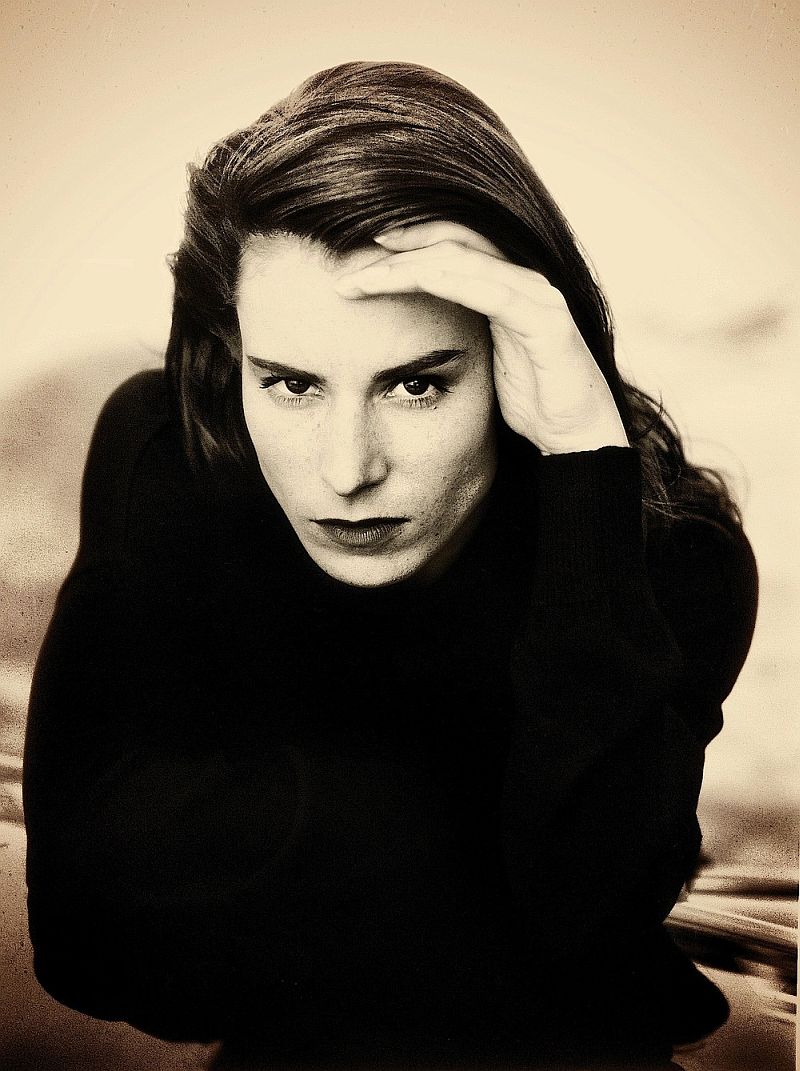
Toda la expresión en la obra de Kito Mbiango es dual: hombre y naturaleza, imágenes gemelas, color y blanco y negro y la propia fusión a través del montaje. El autor sintetiza estos conceptos en una unidad visual utilizando técnicas propias de transferencia de fotografías a lienzos, madera y otros materiales, a través de procesos que "recuerdan las técnicas de los tatuajes tribales". En estos ensamblajes abundan las referencias étnicas, geográficas y simbólicas, que remiten a un bagaje cultural amplio y diverso: nacido en Bélgica, de padre congoleño y madre flamenca, que pasaba tiempo con su abuela, una entusiasta del ikebana, y su tía Roos, que producía pinturas al óleo exquisitamente femeninas.
En este crisol de referencias se fragua una obra cambiante, experimental, comprometida y singular que abarca la pintura, las técnicas mixtas, la fotografía y la construcción de "pinturas de transferencia" a través de una "sensual apropiación".
Texto en inglés más abajo, marcado con [*] en cada párrafo.

The whole expression in the work of Kito Mbiango is dual: man and nature, twin images, color and black and white, and the fusion itself through the assembly. The author summarizes these concepts in a visual unit using own techniques to transfer photographs to canvas, wood and other materials, using processes that "calls to mind the techniques of tribal tattoos". In these assemblies abound ethnic, geographic and symbolic references, which refer to a broad and diverse cultural background: Belgian-born, Congolese father and Flemish mother, who spent time with his grandmother, an ikebana enthusiast, and his aunt Roos, who produced exquisitely feminine oil paintings.
In this melting pot of references is forged an experimental, changing, commited, and singular work that includes painting, mixed media, photography and the construction of "transfer paintings" through a "sensual appropriation".
English text below, marked with [*] in each paragraph.
_______________________________________________________

Kito Mbiango


Kito Mbiango muestra una sensibilidad impregnada simultáneamente de las culturas africana y europea. La justicia social forma el tejido de su existencia. Nació en Bélgica (Bruselas, 1966) y de niño vivió en el Congo. Fue aquí donde su madre acogía gran cantidad de niños, y donde su padre, que se convirtió en el primer Presidente de la Suprema Corte, dirigió la redacción de la primera Constitución de la nación. Se sumergió en los espíritus de la oscuridad en la selva. También bailó entre las almas de los maestros holandeses de la luz, en la idílica campiña flamenca donde pasó el resto de su niñez. Allí estudió geología y exploró la naturaleza con su amada abuela. La tribu de su padre, los Kisakata, era matriarcal, así que es comprensible que las mujeres hayan sido siempre constelaciones de su universo. Vivió en Miami y Nueva York durante más de 20 años. Recientemente ha regresado a su Bélgica natal y divide su tiempo entre Miami y Bruselas. [1]

"Mi corazón se deleita en el jardín de tu rostro... / My heart delights in the garden of your face…"
Impresión digital / digital print © Kito Mbiango

"El poder de las vibraciones de la verdad debe conocerse en todas partes... / 
The power of the vibration of truth will be known everywhere…"
Impresión digital / digital print, 2016 © Kito Mbiango

Bucea en sus largos viajes y experiencia fotográfica para producir obras que reflejen la danza infinita entre la naturaleza y la humanidad (la unidad y dualidad del hombre). El mundo de las ideas disponibles y fuentes de imágenes están al alcance de sus dedos, recolectadas y conectadas en "pinturas de transferencia" a gran escala.
Mbiango comprende implícitamente la importancia de encontrar una voz visual, y lo hace centrándose en la meditación sobre un tema en particular, como puede verse en cada una de sus obras. Entresaca material de fotografías antiguas, ilustraciones científicas, cartografía y literatura. Luego transfiere esas imágenes dispares a tela, lienzo o madera utilizando una variedad de técnicas, que evocan espíritus ancestrales y viajes a través del tiempo. [2]
Fotografía / photography © Kito Mbiango

"Ab Uno", técnica mixta sobre tabla / mixed media on wood, 96" x 96" © Kito Mbiango

"Aquí el sol apenas se pone... / Here the sun hardly sets..."
Impresión digital sobre papel de terciopelo mejorado o caja de luz / 
digital print on enhaced velvet paper or Light Box, 2014 © Kito Mbiango

«Como artista puedo ahora ver claramente la simbiosis entre el hombre y la naturaleza; una conexión que siento está reflejada en mi obra, pero no lo he comprendido plenamente hasta que he comenzado a meditar. La meditación me ha permitido poner los pies más sobre la tierra, tener perspectiva y ser paciente respecto a mi proceso artístico.» [3]

"Los tesoros te están esperando / The treasures that are waiting for you"
Impresión digital sobre papel de terciopelo mejorado o caja de luz / 
digital print on enhaced velvet paper or Light Box, 2016 © Kito Mbiango

"Sabrina", fotografía / photography © Kito Mbiango

«Hubo un período en mi vida en el que hice la transición entre la fotografía y la pintura, en los '80, porque me esforzaba en desconstruir imágenes en emociones, y captar lo que puede ser visto por la mente, pero raras veces por el ojo; imágenes que cuenten historias a través del tiempo.» [4]

"Necesito el mar porque él me enseña... / I need the sea because it teaches me…"
Impresión digital sobre papel de terciopelo mejorado o caja de luz / 
digital print on enhaced velvet paper or Light Box, 2016 © Kito Mbiango

Serie "Gemelos" / Twins Series © Kito Mbiango

"Tanto la luz como las sombras son la danza de la luz... / Both light and shadow are the dance of light…"
Impresión digital sobre papel de terciopelo mejorado o caja de luz / 
digital print on enhaced velvet paper or Light Box, 2015 © Kito Mbiango

«A menudo comienzo con una imagen, pero puedo inspirarme en cualquier cosa visual; diseños Kuba africanos en telas de vestidos, ilustraciones botánicas del s.XVIII, insectos amazónicos de vibrante colorido, un encantador bouquet ikebana o una sonata sublime (generalmente Bach). Todas cosas que para mí están imbuídas de romanticismo.» [5]

"Como una sombra, yo soy, yo no soy... / Like a shadow, I am, I am not…"
Impresión digital sobre papel de terciopelo mejorado o caja de luz / 
digital print on enhaced velvet paper or Light Box, 2016 © Kito Mbiango

"La ventana / The Window", fotografía / photography © Kito Mbiango

«Mis temas son una reflexión sobre estados de mis sentimientos internos. Tomen por ejemplo la imagen de una joven mujer llamada "Malaika" (ella es mi Mona Lisa o algo así), una chica cuyo retrato fue tomado en una de las primeras expediciones al Congo. Por aquella época, aquellos que fotografiaban gente allí los trataban como estudios antropológicos, en vez de encarnaciones de la divinidad incrustada en nuestro tapiz humano. La historia me afectó mucho, y la forma como el hombre ha devastado su tierra y su gente, así que siempre intento retratar la belleza en mi obra, como un recordatorio constante de nuestra conectividad.» [6]

Serie EE.UU., "Incluso cuando llueve..." / USA Series "Even when it rains..."
Impresión digital sobre papel de terciopelo mejorado / 
digital print on enhaced velvet paper, 2013 © Kito Mbiango

"Christy Turlington" (Azzedine Alaïa), fotografía / photography © Kito Mbiango

Christy Turlington en "El Hurgador" / in this blog:

«Cuando estoy pintando o trabajando en una impresión, entro en un estado creativo de flujo que me impulsa hacia delante. Nunca imagino dónde se colgará, pero permito que la obra emerja como una mariposa de su capullo. A menudo me sorprendo al ver dónde o cómo un diseñador, decorador o cliente ha decidido colgar o iluminar mi pieza, pero es también entonces cuando sé que ha tomado vida propia. Sólo entonces puedo guardar luto por la pérdida de una pieza que ha sido parte de mí durante el proceso de creación.» [7]

"Moeke", técnica mixta sobre lienzo / mixed media on canvas, 48" x 108", 2012. © Kito Mbiango

Serie EE.UU., "Realmente quiero estar contigo ahora..." / USA Series, "I really want to be with you right now..." (Elizabeth Taylor)
Impresión digital sobre papel de terciopelo mejorado / 
digital print on enhaced velvet paper, 2013 © Kito Mbiango

Elizabeth Taylor en "El Hurgador" / in this blog: [Todos los enlaces / All links]

"Tu alma está tan cerca de la mía / Your soul is so close to mine..."
Impresión digital sobre papel de terciopelo mejorado o caja de luz / 
digital print on enhaced velvet paper or Light Box, 2014 © Kito Mbiango

«En realidad nunca busqué el arte, sino que el arte encontró su camino hasta mí, desde mi niñez. Pasaba tiempo con mi abuela que viajaba a menudo a Japón para estudiar su pasión por el ikebana, el arte japonés de los arreglos florales. También aprendí algunas técnicas de mi tía Roos, una maestra de pintura que producía óleos exquisitamente femeninos. Esta exposición me condujo a desarrollar un profundo aprecio por la belleza, y me dio la libertad de explorar y experimentar con diferentes herramientas y texturas por mí mismo. Inicialmente abracé la fotografía, pero después de 10 años como fotógrafo profesional, me volví hacia la pintura y las técnicas mixtas para producir imágenes que hasta entonces sólo existían en mi imaginación. [8]

Serie EE.UU. / USA Series (Marilyn Monroe)
Impresión digital sobre papel de terciopelo mejorado / 
digital print on enhaced velvet paper, 2013 © Kito Mbiango

Marilyn Monroe en "El Hurgador" / in this blog: [Todos los enlaces / All links]

 Serie "Gemelos" / Twins Series © Kito Mbiango

"Didier", fotografía / photography, © Kito Mbiango

"El alma está envuelta en calma y confort... / 
The soul is wrapped in calm and comfort…", 2016 © Kito Mbiango

"Cuanto más tranquilo estás, más puedes oir... / The quieter you become, the more you are able to hear..."
Impresión digital sobre papel de terciopelo mejorado o caja de luz / 
digital print on enhaced velvet paper or Light Box, 2016 © Kito Mbiango

«Las fotografías son mi medio favorito debido a mis antecedentes como fotógrafo. Me gusta pensar que los fotógrafos pueden capturar el alma de una persona, como ha conjeturado el filósofo Henri Bergson. Me gusta contar historias con imágenes y combinarlas con símbolos de nuestros orígenes ancestrales que acuden a mi mente. He desarrollado mi propia técnica para transferir imágenes al lienzo, madera y otros materiales, en un proceso que trae a la mente las técnicas de los tatuajes tribales. [9]

Dondequiera que estés, sé el alma del lugar... / Wherever you stand be the soul of that place…"
Impresión digital sobre papel de terciopelo mejorado o caja de luz / 
digital print on enhaced velvet paper or Light Box, 2016 © Kito Mbiango

"Cerré mi boca y te hablé en un centenar de formas silenciosas... / 
I closed my mouth and spoke to you in a hundred silent ways…" © Kito Mbiango
_________________________________________________________

* Website
* Artículo / Article, Jul, 2015. Trascendental Meditation
* Entrevista de / Interview by Megan Eileen, Sep, 2014. Bohemian Trails
* Entrevista por / Interview by Cultcollective, Cult

Más imágenes e información sobre Kito en / More images and information about Kito in:


Texto en inglés / English translation

[1]
Kito Mbiango shows a sensibility steeped in both African and European cultural directions, simultaneously. Social justice forms the fabric of his existence. He was born in Belgium (Brussels, 1966) and lived in the Congo as a small child. It was here where his mother nursed countless children to health and where his father, who became the first President of the Supreme Court, headed the drafting the nation’s first Constitution. He bathed in the spirits of darkness in the jungle. He also danced among the souls of the Dutch masters of light, in the idyllic Flemish countryside where he spent the remainder of his childhood. Here he studied geology and explored nature with his beloved grandmother. His father’s tribe, the Kisakata, was matriarchal – so women understandably have always been constellations in his universe. He resided in  Miami and New York for over 20 years. He has recently returned to his native Belgium and divides his time between Miami and Brussels.

[2]
He draws from his wide-ranging travels and photographic experience in producing works that reflect the infinite dance between nature and humanity - man’s unity and duality. The world of available ideas and image sources are at his fingertips, collected and connected in large-scaled “transfer painting”.
Mbiango implicitly understands the importance of finding a visual voice. He does so by a focused meditation on a particular theme as seen in each of his works. He culls source material from vintage photographs, scientific illustrations, cartography and literature. He then transfers these disparate images onto fabric, canvas or wood through a variety of techniques, which evoke ancestral spirits and voyages through time.

[3]
«As an artist, I can now see more clearly the symbiosis between man and nature—a connection which I felt was reflected in my work, but never fully understood until I started meditating. Meditation has enabled me to be more grounded, to have perspective and be patient about my artistic process.»

[4]
«There was a period in my life where I transitioned between photography and painting in the 1980s because I was striving to deconstruct images into emotions and capture that which can be seen by the mind but rarely the eye – images that tell stories across time.»

[5]
«I often start with one image but can be inspired by virtually anything – African Kuba cloth patterns on fabric, 18th century botanical illustrations, vibrantly colored insects from Amazonia, an enchanting ikebana bouquet or a sublime sonata – usually Bach – all things which for me are imbued with romanticism.»

[6]
«My subjects are a reflection of my inner states of feeling, take for example, the image of a young woman called “Malaika” – she’s my Mona Lisa or sorts – a young girl who’s portrait was taken on one of the earliest expeditions to Congo. At the time, those photographing people there treated them like anthropological studies rather than as embodiments of divinity embedded in our human tapestry. I am deeply affected by history and the way man has ravaged his land and his people, yet I always try to portray beauty in my work as a constant reminder of our connectedness.»

[7]
«When I’m painting or working on a print, I go into a creative state of flow that carries me forward – I never envision where it will hang but allow the work to emerge like a butterfly from a cocoon. I am often surprised to see where or how a designer, decorator or client has chosen to hang or light my piece, but that’s also when I know it has taken on a life of its own. Only then can I can mourn the loss of that piece that was a part of me during the process of creation.»

[8]
«I never really sought out art, but art world found its way to me, for since my childhood, I spent time with my grandmother who traveled often to Japan to study her passion for ikebana, the Japanese art of flower arranging. I also learned some techniques from my aunt Roos, a painting teacher who produced exquisitely feminine oil paintings. This exposure led me to develop a deep appreciation for beauty and gave me the freedom to explore and experiment with different tools and textures of my own. I initially took to photography but after almost 10 years as a professional photographer, turned to painting and mixed media to produce the images that previously lived only in my imagination.»

[9]
«Photographs are my favourite choice of medium because of my background as a photographer. I like to think that photographs can capture a person’s soul as the philosopher Henri Bergson surmised. I like to tell stories with images and combine them with symbols that call to mind our ancestral origins. I’ve developed my own technique of transferring images on canvas, wood and other materials as this process calls to mind the techniques of tribal tattoos.»

domingo, 18 de septiembre de 2016

Aniversarios Fotografía (CXLI) [Septiembre / September 12-18]

Textos en inglés al final del post / English translation at the end of this post.
Todos los aniversarios de Septiembre aquí / All anniversaries for September here.
_________________________________________________________

El 12 de Septiembre es el cumple de

Heinrich Hoffmann, fotógrafo, marchante, coleccionista de arte y editor de revistas alemán nacido en 1885, que fue durante muchos años el fotógrafo oficial de Adolf Hitler y parte de su círculo íntimo.

"Retrato de un joven Hitler / Portrait of the young Hitler", 1923

Hoffmann trabajó en la tienda de fotografía de su padre y como fotógrafo en Munich a partir de 1908.
Se unió al Partido Nazi el 6 de abril de 1920. Después de que Hitler se hizo cargo del partido en 1921, nombró a Hoffmann su fotógrafo oficial, puesto que ocupó durante más de un cuarto de siglo. A ningún otro fotógrafo, salvo a él, se le permitía tomar fotografías de Hitler, y al propio Hoffmann le estaba prohibido tomar fotos naturales. Hitler controlaba estrictamente su imagen pública en todos los aspectos, fotografiándose con cada nuevo traje antes de usarlo en público, según Hoffmann, y en 1933 ordenó que todas las imágenes de sí mismo vistiendo pantalones de cuero fueran retiradas de la circulación. También expresó su desaprobación de que Benito Mussolini se dejara fotografiar en traje de baño.

"Marcel Duchamp", fotografía publicada en / photograph published in 
"Guillaume Apollinaire, Les Peintres cubistes", 1913

Marcel Duchamp en "El Hurgador" / in this blog:
[Arte & humor (II)], [Asonancias (XVI)], [Asonancias (XVI, Anexo)], [Sucedió en el museo (XI, Anexo)]

Las fotografías de Hoffman eran una parte importante de la campaña de propaganda de Hitler al presentarse a sí mismo y al Partido Nazi como un significativo fenómeno de masas.
Cuando Hitler se convirtió en el gobernante de Alemania, Hoffmann fue la única persona autorizada para tomar sus fotografías oficiales, que fueron publicadas como sellos, postales, carteles y en libros ilustrados.

"Retrato de / Portrait of Adolf Hitler", 1935

Fue detenido por el ejército de Estados Unidos el 10 de mayo de 1945, y más tarde fue juzgado y condenado a cuatro años por lucrarse con la guerra. A su salida de la cárcel el 31 de mayo de 1950, se instaló en el pequeño pueblo de Epfach en la zona de Munich, donde murió siete años más tarde.

"Hitler ensayando su discurso frente a un espejo / rehearsing his speech in front of a mirror", 1925

Adolf Hitler en "El Hurgador" / in this blog: [Todos los enlaces / All Links]


El 13 de Septiembre es el cumple de

Felipe Ferré, fotógrafo francés nacido en 1934 en Bogotá, Colombia.
Sus padres eran el químico catalán Gabriel Ferré y la francesa de Martinica Elisabeth Marie Joseph. Con siete años ayudaba a su padre a hacer fotografías y revelarlas. Cuando este murió en 1946, la familia se quedó en una difícil situación económica y Felipe tuvo que realizar diversos trabajos antes de poder emigrar a Francia, en 1961. Se instaló en París, Vire (Calvados).

"Bottier Nicoine / Nicoine Zapatero / Bootmaker"

"Fernando Botero en su estudio / at his Studio" (1973-76)

Fernando Botero en "El Hurgador" / in this blog:

Aunque en un principio continúo sus estudios musicales, en 1964 comenzó a dedicarse a la fotografía. Su obra sobre espacios arquitectónicos es bien conocida, como su reportaje sobre París y otro sobre los cafés de 1991. En noviembre de 2007 realizó una exposición con retratos de Fernando Botero en la Galería Andrée Macé de París.

"Teinturerie / Tintorería / Dyeing"

Los tenderos solían fotografiarse con sus empleados frente a las vitrinas de sus negocios. Felipe Ferré retoma la costumbre de esta iconografía. En el París de antaño. Estos clichés profesionales de las tiendas parisinas a la antigua, eran ostentosos y se utilizaban con fines publicitarios, mientras que las tomas de Ferré son nostálgicas. Más allá del interés documentalista, Felipe Ferré fotografía una estética que ha perdurado durante mucho tiempo, antes de que desaparezca. A medio camino entre las vitrinas de comercios de Atget y los decorados de una película de Tati, esta serie es una oda a la obsolescencia./
The shopkeepers were used to being photographed in front of their shop windows with their employees. Felipe Ferré resumes the conventions of this iconography. Professional cliché of old style Paris shops were ostentatious and for advertising purposes, whilst Ferré's shots are nostalgic. Beyond the documentary interest, Felipe Ferré photographs a long existing aesthetic, before it disappears. Halfway between Atget'€™s shop window clichés and the decor of a Tati film, this series is an ode to desuetude.

Izq./ Left: "Cafe Ritter" - Der./ Right: "Cafe Tirolerhof", Viena
Del libro "El Mundo mágico de los Cafés Europeos" / from the book "The Magic World of European Cafes"


El 14 de Septiembre es el cumple de

Hermann Krone, fotógrafo de Sajonia, Alemania, nacido en Breslau en 1827.
Su padre era litógrafo y comenzó su aprendizaje con él en 1843. Produjo sus primeras fotografías, calotipos y daguerrotipos, en 1843.

"Autorretrato con sus herramientas de trabajo / Self Portrait with his Working Tools", 1858

"Vista de la Iglesia de Nuestra Señora, Dresde / View of Dresden Frauenkirche (Church of Our Lady), Dresden"
Impresión a la albúmina / albumen print, 21 x 16,3 cm., fines de / late 1850s

Abrió un estudio en Leipzig en 1851 y en Dresde desde 1852. Fotografió los paisajes de la Suiza sajona. Se casó con Clementine Blochmann y tuvo cuatro hijos.
En 1855 trabajó con placas de colodión seco y en 1869 estableció una editorial. En 1872 completó un álbum de fotos con vistas de 142 ciudades del Reino de Sajonia. Viajó a las islas Auckland en 1874 para observar el paso de Venus frente al sol y regresó a casa a través de Australia y la India.

"Českém Švýcarsku: Malý pravčický kužel / Parque Nacional de la Suiza Bohemia: Pequeño cono Prebisch /
Bohemian Switzerland: Small cone Prebisch", República checa / Czech Republic, 26/9/1853

"La princesa / Princess Pauline von Metternich", daguerrotipo / daguerrotype, 31/12/1854

Publicó una recopilación de su poesía en cuatro volúmenes entre 1899 y 1902. También publicó "Métodos fotográficos estándar que conservan su valor práctico para siempre" (Die für alle Zeit von praktischem Wert bleibenden Photographischen Urmethoden) y fundó un museo de fotografía.
Murió en 1916 .

"Ansicht des Elbufers mit Hofkirche, Alter Semperoper, Augustus brücke /
Vista del Elba con la Catedral de la Santísima Trinidad, la Ópera Semper y Puente de Augusto /
View of Elba with Cathedral of the Holy Trinity, the Semper Opera and Augustus Bridge",
Dresde / Dresden, impresión a la albúmina / albumen print, 30,7 x 40 cm., 1857


El 15 de Septiembre es el cumple de

Gustavo Zapata (Gus Z') Covarrubias, fotógrafo chileno, nacido en 1989 en Providencia.

"Santuario de la naturaleza Yerba Loca / Yerba Loca Nature Sanctuary", Chile

Su trayectoria artística comienza con una invitación de la fotógrafa Lucette O’Ryan a exponer en la fiesta de la multiculturalidad en el Parque Quinta Normal el año 2009. Titulado como Fotógrafo Profesional en Bellas Artes en la Escuela de Foto Arte de Chile (EFACH). Obtuvo dos reconocimientos mientras estudiaba en la EFACH en año 2015, a través de la International Freelance Photographers Organization (I.F.P.O), uno en bellas artes “International Fine Art Photographer – American Image” y un segundo “International Commercial Photographer – American Image”.

"New Topographics-la subjetividad de lo objetivo / subjectivity of the objective", 2015

El 2014 y 2015 participo en la realización de dos videos musicales titulados "Sol" y "Al final", para la banda emergente SECTOR A como Director Fotográfico y Camarógrafo.

"Formalismo topográfico / Topographic formalism"


El 16 de Septiembre es el cumple de

Kristoffer Eliassen, fotógrafo, artista visual y diseñador gráfico noruego nacido en 1971 en Oslo, donde vive y trabaja.

Proyecto Selfie / The Selfie Project, "Habitación de hotel / Hotel Room" © Kristoffer Eliassen

Estudió en la Academia de Arte y Diseño Bergen (KHiB), Noruega. Licenciatura en fotografía, 1993 - 1996 y Máster en fotografía, 1997-1999.

"Cuarto de lavar, Escena de Mil Palmeras, Costa de Orihuela, España /
Laundry Room, Mil Palmeras Scene, Orihuela Coast, Spain" © Kristoffer Eliassen

Ganó el 3er premio en el 2016 Sony World Photography Awards, y actualmente está trabajando sobre selfies y escenificación de selfies, ebook sobre selfies y autorrepresentaciones, junto con Lin Prøitz y Universitetsforlaget (primavera de 2016), y una exposición sobre el mismo tema (octubre 2016 - marzo de 2017), junto con Prøitz y Museo Preus. También están organizando el seminario "Self/Image/Public" en octubre 1-2 este año, en Oslo / Horten, Noruega.

Proyecto Selfie / The Selfie Project, "Accidente de selfie / Selfie Accident" © Kristoffer Eliassen

El "Proyecto Selfie" explora las relaciones entre el hombre y la tecnología a través de la fotografía escenificada.
Este proyecto se ocupa del hecho de que la gente actualmente está tomando una enorme cantidad de selfies. Los smartphones mueven parte de nuestra presencia desde el mundo real al mundo virtual, y el Proyecto Selfie trata de cómo esas nuevas herramientas han cambiado nuestros comportamientos y costumbres, especialmente en lo que tiene que ver con nuestro yo físico en la esfera pública./
The Selfie Project explores the relations between man and technology through staged photography.
This particular project is concerned with the fact that people now are taking an enormous amount of selfies. The smartphones move some of our presence from the real world over to the virtual world, and The Selfie Project is about how these new tools have changed our behaviours and habits, especially when it comes to our sense of physical self in the public sphere.

Proyecto Selfie / The Selfie Project, "Selfie y café / Selfie and Coffee" © Kristoffer Eliassen


El 17 de Septiembre es el cumple de

Sakae Tamura (田村 榮), fotógrafo japonés nacido en Otsu, Prefectura de Shiga, en 1906, prominente en los años previos a la guerra.
Tamura se graduó en el Colegio de Fotografía de Tokio (東京 写真 専 門 学校, Tōkyō Shashin Senmon gakko; ahora Universidad Politécnica de Tokio) y entró a Oriental (オ リ エ ン タ ル 写真 工, Orientaru Shashin Kogyo) en 1928, convirtiéndose en editor de Photo Times. Fue un miembro activo de la revista Geijutsu Shashin Kenkyu y en el grupo Nihon Koga Kyōkai (日本 光 画 協会), creado en 1928 y en relación con Nihon Koga Geijutsu Kyōkai (日本 光 画 芸 術 協会). Fue una figura destacada en la Sociedad de Investigación de la Nueva Fotografía (新興 写真 研究 会, Shinko Shashin Kenkyukai), formada en 1930.

“「人形と花柳はるみ」 / Muñecas y / Dolls and Harumi Hanayagi”, 1928 
Harumi Hanayagi fue la primera estrella del cine japonés / was the first star of Japanese cinema"

La obra de Tamura presenta influencias tanto del pictorialismo como de la Nueva fotografía.
Tamura es especialmente conocido por sus retratos, y Shiroi Hana (白い 花, flor blanca, 1931) es el más famoso y más veces reproducido. Okatsuka dice que expresa un cierto lirismo, pero "muestra un más sofisticado sentido de madurez" que las obras de sus contemporáneos Masataka Takayama y Jun Watanabe.
Murió en 1987.

“白い花, Shiroi Hana / Flor blanca / White Flower”, 1931


Hoy, 18 de Septiembre, es el cumple de

la primera fotografía de la Tierra y la Luna en el mismo cuadro. Es la primera de este tipo tomada por una nave espacial, y fue registrada en 1977, cuando la sonda Voyager 1 de la NASA estaba a 7,25 millones de millas (11,66 millones de kilómetros) de la Tierra. La luna aparece arriba en la imagen, y más alejada de la Tierra, tal como la veía la Voyager.

El sistema Tierra-Luna fotografiado por la sonda Voyager 1 de la NASA /
Earth-Moon System photographed by NASA's Voyager 1 spacecraft"


Textos en inglés / English translation

On September 12 is the birthday of

Heinrich Hoffmann, German photographer, art dealer, art collector, and magazine publisher born in 1885, who was for many years Adolf Hitler's official photographer and a part of his intimate circle.
Hoffmann worked in his father's photographic shop and as a photographer in Munich from 1908.
He joined the Nazi Party on 6 April 1920. After Hitler took over the party in 1921, he named Hoffmann his official photographer, a post he held for over a quarter-century. No other photographer but Hoffmann was allowed to take pictures of Hitler, and Hoffmann himself was forbidden to take candid shots. Hitler strictly controlled his public image in all respects, having himself photographed in any new suit before he would wear it in public, according to Hoffmann, and ordering in 1933 that all images of himself wearing lederhosen be withdrawn from circulation. He also expressed his disapproval of Benito Mussolini allowing himself to be photographed in his bathing suit.
Hoffman's photographs were a significant part of Hitler's propaganda campaign to present himself and the Nazi Party as a significant mass phenomenon.
When Hitler became the ruler of Germany, Hoffmann was the only person authorized to take official photographs of him. Hoffmann's photographs were published as postage stamps, postcards, posters and picture books.
Hoffmann was arrested by the United States Army on 10 May 1945, and he was later tried and sentenced to four years for war profiteering. Upon his release from prison on 31 May 1950, he settled in the small village of Epfach in the Munich area, where he died seven years later at age 72. 

On September 13 is the birthday of

Felipe Ferré, French photographer born in 1934 in Bogotá, Colombia.
His parents were the Catalan chemical Gabriel Ferré and a French from Martinique Elisabeth Marie Joseph. At seven he helped his father to take pictures and develop them. When his father died in 1946, the family was in a difficult economic situation and Felipe had to do various jobs before he could emigrate to France in 1961. He settled in Paris, Vire (Calvados).
Although initially continued his musical studies, in 1964 he began with photography. His work on architectural spaces is the best known, like his story on Paris and another on the cafes of 1991. In November 2007 held an exhibition with portraits of Fernando Botero at Gallery Andrée Macé in Paris.

On September 14 is the birthday of

Hermann Krone, photographer from Saxony, Germany, who was born in Breslau in 1827.
His father was a lithographer and he began an apprenticeship with him 1843. He produced his first calotype and daguerreotype photographs in 1843. He opened a studio in Leipzig in 1851 and in Dresden from 1852. He took landscape photographs of Saxon Switzerland. He married Clementine Blochmann and had four children.
In 1855 he worked with collodion dry plates and in 1869 he established a publishing house. In 1872 he completed a photo book with views of 142 cities in the Kingdom of Saxony. He went on a journey to the Auckland Islands in 1874 to observe the passage of Venus in front of the sun and returned home via Australia and India. He published a compilation of his poetry in four volumes between 1899 and 1902. He also published The Standard Photographic Methods Retaining their Practical Value Forever (Die für alle Zeit von praktischem Wert bleibenden Photographischen Urmethoden) and established a museum of photography.
He died in 1916.

On September 15 is the birthday of

Gustavo Zapata (Gus Z') Covarrubias, Chilean photographer born in 1989 in Providencia.
His artistic career began with an invitation from Lucette O'Ryan photographer to exhibit at the party of multiculturalism in the Quinta Normal Park 2009. He qualified as a professional photographer in Fine Arts at the School of Art Photo Chile (EFACH). He won two awards while studying at EFACH in 2015, through the International Freelance Photographers Organization (I.F.P.O), one in fine arts "International Fine Art Photographer - American Image" and a second one "International Commercial Photographer - American Image". In 2014 and 2015 participated in the realization of two music videos called Sol and "At the end" to the emerging band "Sector A" as a Director and Cameraman.

On September 16 is the birthday of

Kristoffer Eliassen, Norwegian photographer, visual artist and graphic designer born in 1971 in Oslo, where he lives and works.
He studied at Bergen Academy of the Art and Design (KHiB), Norway. BA in photography, 1993 - 1996, and MA in photography, 1997 - 1999.
He won 3rd prize in The 2016 Sony World Photography Awards, and is currently working with #selfie and staged selfie situations, ebook about selfies and self representations together with Lin Prøitz and Universitetsforlaget (spring 2016), and an exhibition about the same topic (October 2016 - March 2017) together with Prøitz and Preus Museum. They are also arranging the seminar "Self/Image/Public" on October 1-2 this year, in Oslo/Horten, Norway. 

On September 17 is the birthday of

Sakae Tamura (田村 榮), Japanese photographer born in Ōtsu, Shiga Prefecture, in 1906, prominent in the years before the war.
Tamura graduated from the Tokyo College of Photography (東京写真専門学校, Tōkyō Shashin Senmon Gakkō; now Tokyo Polytechnic University) and entered Oriental (オリエンタル写真工, Orientaru Shashin Kōgyō) in 1928 and became editor of Photo Times. He was an active contributor to the magazine Geijutsu Shashin Kenkyū and in the group Nihon Kōga Kyōkai (日本光画協会), created in 1928 and related to Nihon Kōga Geijutsu Kyōkai (日本光画芸術協会). He was a leading figure in the New Photography Research Society (新興写真研究会, Shinkō Shashin Kenkyūkai), formed in 1930.
Tamura's work was influenced both by pictorialism and by New Photography.
Tamura is particularly known for his portraits, and Shiroi hana (白い花, White flower, 1931) is the best known of these and widely anthologized. Okatsuka says that it expresses a certain lyricism but “displays a more sophisticated sense of maturity” than the works of his contemporaries Masataka Takayama and Jun Watanabe.
He died in 1987.

Today, September 18, is the birthday of

the first picture of the Earth and Moon in a single frame, the first of its kind ever taken by a spacecraft, was recorded September 18, 1977, when NASA's Voyager 1 was 7.25 million miles (11.66 million kilometers) from Earth. The moon is at the top of the picture and beyond the Earth as viewed by Voyager.