Mostrando entradas con la etiqueta entomología. Mostrar todas las entradas

martes, 18 de febrero de 2020

Recolección / Compilation (CXLI-1) - Arañas / Spiders

Selección de pinturas e ilustraciones científicas de arañas.
He limpiado un poco los fondos en algunas ilustraciones antiguas para destacar los diseños. /
Selection of paintings and scientific illustrations of spiders.
I've cleaned up the backgrounds on some old illustrations to make the designs stand out.
_______________________________________________________

Cesare Vignato
(Italia / Italy, 1959-)

"Universo parallelo 2 / Universo paralelo 2 / Parallel Universe 2"
Óleo sobre lienzo / oil on canvas, 100 x 100 cm., 2012
_______________________________________________________

Georges Cuvier
Le Règne Animal / El reino animal / The Animal Kingdom

Arachnides, Lámina / Plate 18
"Dolomedes limbatus. Hahn, Dolomedes mirabilis. Walck, Dolomedes marginatus. Walck". BHL

Arachnides, Lámina / Plate 2
"Mygale Cancerides", Walck, macho / male. BHL

Le Règne animal distribué d'après son organisation, pour servir de base à l'histoire naturelle des animaux et d'introduction à l'anatomie comparée. Vol. 3, Les mollusques, Les annélides, Les crustacés, Les arachnides et Les insectes

El reino animal, dispuesto según su organización, sirviendo como base para la historia natural de los animales, y una introducción a la anatomía comparada. Vol. 3, Moluscos, Anélidos, Crustáceos, Arácnidos e Insectos

The animal kingdom, arranged according to its organization, serving as a foundation for the natural history of animals : and an introduction to comparative anatomy. Vol. 3, Mollusca, Annelides, Crustacea, Arachnides and Insecta.

Londres / London: G. Henderson, 1834. (1ª ed./ 1st ed., 1816). BHL, Wikipedia (English)

Georges Cuvier en "El Hurgador" / in this blog[Recolección (CLV-2)]
_______________________________________________________

La revista de bolsillo del naturalista / The Naturalist's Pocket Magazine

"Gran araña de Surinam / Great Surinam Spider" (Aranea avicularia. Linn)

La revista de bolsillo del naturalista, o completo gabinete de curiosidades y bellezas de la naturaleza

The Naturalist's Pocket Magazine or compleat cabinet of the curiosities and beauties of nature. Vol VI
Londres / London, Harrison, Cluse & Co., 1801?. BHL

En el texto que acompaña a la imagen podemos leer:
"Esta Araña, que parece ser la más grande del género, es la Aranea Avicularia de Linneus: así llamada, por el gran naturalista, de que se supone que depreda a los pequeños pájaros de Surinam, así como a los insectos. En las Planchas Iluminadas, se da una figura de esta misma Araña, allí llamada la Gran Araña de Surinam, en el acto de devorar un Colibrí".
Supongo que se refiere a la plancha de Merian cuyos detalles pueden verse aquí.

Maria Sybilla (Sibylla) Merian
(Fráncfort, Alemania / Frankfurt, Germany, 1647 -
Ámsterdam, Holanda / Netherlands, 1717)

Lámina / Plate 18 (detalle / detail). Tarantula: Avicularia avicularia

Lámina / Plate 18
"Arañas, hormigas y un colibrí en una rama de guayabo / Spiders, ants and hummingbird on a branch of a guava"
Grabado coloreado a mano/ hand-colored engraving
"Metamorphosis insectorum Surinamensium / Metamorfosis de los insectos del Surinam /
Metamorphosis of Insects of Surinam", 1705Göttinger Digitalizierungzentrum

In the text following the image, we can read:
"This Spider, shich appears to be the largest of the genus, is the Aranea Avicularia of Linneus: so called, by the great naturalist, from it's being supposed to prey on the small birds of Surinam, as well as on insects. In the Planches Enluminées, a figure is given of this same Spider, there called the Great Spider of Surinam, in the act of devouring a Colibri of Humming Bird."
I suppose the reference to the plate of Merian whose details you can see here.

Lámina / Plate 18 (detalle / detail)

Maria Sibylla Merian en "El Hurgador" / in this blog[Merian, Ott, Palmer]
_______________________________________________________

Jan Augustin van der Goes
(Activo / Active 1690 - 1700)

"Araña / Spider", pergamino / parchment, 4,1 x 5,1 cm.
Rijksmuseum (Ámsterdam, Holanda / Netherlands)

"Araña / Spider" (detalle / detail)
_______________________________________________________

Biologia Centrali-Americana

Arachnida, Araneida, Lámina / Plate 4. BHL

Arachnida, Araneida, Lámina / Plate 4 (detalle / detail)
4. Cyrtarachne Tuberculata, 6. Argiope Trivittata, 9. Carepalxis Tuberculifera
11. Turckheimia Nodosa. BHL

Arachnida, Araneida, Lámina / Plate 30. BHL

Arachnida, Araneida, Lámina / Plate 30 (detalle / detail)
1. Triclaria Connexa, 2. Enna Velox. BHL

Arachnida, Araneida, Lámina / Plate 11 (detalle / detail)
5. Diaea Puta, 8. Eurypelma Mesomelas, 11. Bucranium Spinigerum. BHL

Biología Centroamericana: zoología, botánica y arqueología

Biologia Centrali-Americana: zoology, botany and archaeology 
Londres, publicado para los editores por / London, Published for the editors by R. H. Porter, 1879-1915.
_______________________________________________________

Carteles de insectos / Insect Wall Charts

Araneina epeira
"Araneus" es un género de arañas que tejen telas radiales. Este género se conocía antiguamente como Epeira, y permanece como seudónimo /
Araneus^ is a genus of common orb-weaving spiders. Araneus was formerly called epeira and it remains a pseudonym.
Carteles de insectos / Insect Wall Charts
Sitio de entomología histórica en la Universidad de Wageningen /
Historic Entomology site at Wageningen UR. En BibliOdyssey
_______________________________________________________

Leah Williams
(Ontario, Canadá)

"Tarántula / Tarantula", óleo sobre lienzo / oil on canvas, 18" x 16", 2014 © Leah Williams
_______________________________________________________

Dictionnaire classique des sciences naturelles

1. Mygale fasciéo, 2. Cténize Chasseur, 3. Epéire Militaire, 4. Lycose Xyline, 5. Erése rouge

Erése rouge

Dictionnaire classique des sciences naturelles : présentant la définition, l'analyse et l'histoire de tous les êtres qui composent les trois règnes, leurs application générale aux arts, à l'agriculture, à la médicine, à l'économie domestique, etc.

Diccionario clásico de ciencias naturales, presentando la definición, el análisis y la historia de todos los seres que componen los tres reinos, sus aplicaciones generales a las artes, a la agricultura, a la medicina, a la economía doméstica, etc.

Classic dictionary of natural sciences: presenting the definition, analysis and history of all the beings that make up the three kingdoms, their general application to the arts, agriculture, medicine, home economics, etc.

Drapiez, Pierre Auguste Joseph, 1778-1856, Bory de Saint-Vincent, M. (Jean Baptiste Geneviève Marcellin), 1778-1846
Bruselas / Brussels: Meline, Cans et Ce., 1853. BHL
_______________________________________________________

Journal of a voyage to New South Wales

"Araña de articulación blanca / White-Jointed Spider"

Diario de un viaje a Nueva Gales del Sur, con sesenta y cinco láminas de animales no descritos, aves, lagartijas, serpientes, curiosos conos de árboles y otros productos naturales.

Journal of a voyage to New South Wales : with sixty-five plates of nondescript animals, birds, lizards, serpents, curious cones of trees and other natural productions.

Londres, impreso para / London, printed for J. Debrett, 1790. BHL
_______________________________________________________

Jagannath Panda
(Bhubaneshwar, Orissa, India, 1970-)

"In-Spider", acrílico sobre lienzo con tela /
acrylic on canvas with fabric, 152,4 x 182,9 cm., 2004. Sotheby's

"Generation-I", acrílico sobre lienzo / acrylic on canvas, 108 x 102,9 cm., 2004. Saffron Art

"Sin título / Untitled", acrílico y tela sobre lienzo / acrylic and fabric on canvas, 91,5 x 122 cm. Sotheby's

Jagannath Panda en "El Hurgador" / in this blog[Recolección (LXXVII)], [Rinocerontes (LXXXIV)]

viernes, 4 de julio de 2014

Yudy Sauw [Macrofotografía]

No hace mucho publiqué algunas imágenes de Yudy Saw. Unas estupendas capturas con macro, espectaculares colores y un nivel de definición magnífico. Ahora, gracias al artista, unas cuantas más.

Not long ago I posted some images by Yudy Saw. Great macro shots with spectacular colors and a superb definition. Now, thanks to the artist, a few more.

Yudy Sauw
Retratos de insectos / Insects Portraits


Yudy Sauw es un fotógrafo indonesio nacido en Mekarsari, Jawa Barat, en 1980, que reside actualmente en Tangerang. Su auténtica pasión es la macrofotografía extrema. No hay más que verlo...


"Mantis verde / Green Mantis"

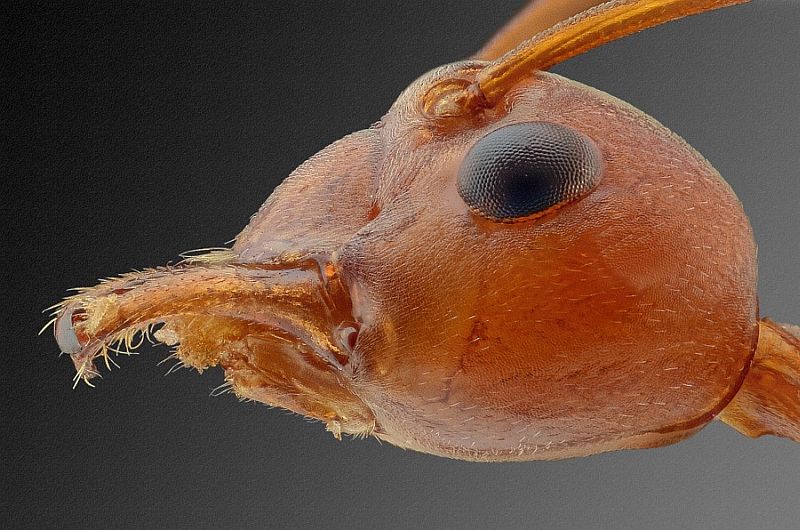
"Hormiga / Ant"

"Rojo y negro / Red and White"

«En verdad amo la macrofotografía. Especialmente el macro extremo. La razón es que nos permite ver con claridad lo que no podemos ver a simple vista...»


"Hormiga roja / Red Ant"


"Pelos / Hairs"

"Mantis"

"La abeja / The Bee"


Yudy Sauw is an Indonesian photographer born in Mekarsari, Jawa Barat, in 1980, currently based in Tangerang. His real passion is extreme macro photography. You just have to see ...

"Escarabajo longicornio / Longhorn Beetle"


"Insecto con cabeza de 1 mm / 1mm Head Insect"

"Gorgojo / Weevil"


«I really like macros photgrapy. Especially Extreme macro. The reason I love this hobby because we can see clearly what we can not see with the naked eye...»

"Mosca / Fly"

"Naranja y negro / Orange and Black"


"Gorgojo / Weevil"

"Amarillo vívido / Vivid Yellow"

Puedes disfrutar de muchas más imágenes de Yudy en / You can enjoy a lot of images by Yudy in

Yudy Sauw en "El Hurgador" / in this blog: [Nido de Urraca (II)]

Imágenes publicadas con autorización del artista (¡Muchas gracias, Yudy!)
Images published here with artist's permission (Thanks a lot, Yudy!)

viernes, 15 de noviembre de 2013

Cristina Samsa [Pintura]

Cristina Samsa

Cristina en una fotografía de / in a photograph of "El Norte Red Carpet".

Cristina Samsa es una pintora mexicana que ha tomado como tema de su arte a los insectos. Quienes hayan leído "La Metamorfosis" de Franz Kafka habrán recordado a Gregorio al leer el nombre de ésta artista.
De pequeña su familia se mudó a una casa con un amplio jardín bastante descuidado, con escombros y maleza. Allí empezó a interesarse por el mundo de esos pequeños seres que pululaban por todas partes, lo que ella llama la "figura insecta". Fascinada por su nivel de adaptación, estructura y diversidad, optó por dedicar su esfuerzo creativo a representarlos bajo su particular punto de vista.

"El empalado II / The Impaled II"
Óleo sobre lienzo / oil on canvas, 110 x 83 cm., 2013

"Cortejo geométrico / Geometric Courtship", óleo sobre lienzo / oil on canvas, 90 x 63 cm.

"Antes yo veía a otros pintores y creía que tenía que hacer lo que ellos hacían: bodegones, paisaje, figura humana. Me puse a hacer éstos temas, pero no me gustaban; me aburrían un poco. Pues entonces mejor voy a pintar lo que siempre me ha gustado, lo que me apasiona, y es cuando empecé a pintar la figura insecta."

"El empalado / The Impaled", Óleo sobre lienzo / oil on canvas, 80 x 60 cm.

"Entomología cromática IV / Chromatic Entomology IV"
Óleo sobre lienzo / oil on canvas, 100 x 100 cm., 2013

"Anatomia Insecta I: Megasoma Elephas", óleo sobre lienzo / oil on canvas, 80 x 60 cm.

"Estuve un rato en [la escuela de arte] La Esmeralda, pero tenía un perfil más bien de arte conceptual, y no era lo que yo buscaba. Busqué otros maestros, como Oscar Aguilar Olea. Después estuve un tiempo con Arturo Rivera. Con él aprendí muchas técnicas."

"Acrocinus Longimanus", óleo sobre lienzo / oil on canvas, 80 x 60 cm.

"Al principio, los insectos me daban fobia, pero no podía evitarlos. (...) Entonces me dije: ¿por qué me dan miedo?, tengo que vencer esa fobia porque me los voy a encontrar en todos lados. Entonces fue cuando los vi con lupa, los empecé a analizar más de cerca, con microscopio incluso, y me di cuenta de que no había nada que temer, al contrario, hay que admirarlos. Tienen unas estructuras muy complejas, una variedad de colores casi infinita. Fue cuando pasé de la fobia a la adicción."

"Anatomia Insecta: Goliathus Orientalis", óleo sobre lienzo / oil on canvas, 80 x 60 cm., 2013

"Microbiontes III", óleo sobre lienzo / oil on canvas, 80 x 60 cm., 2008

"De la misma forma que otros pintores hacían cosas muy recurrentes, los mismos temas, yo pensaba que tenía que pintar eso, no paisajes o figura humana. Me interesó mucho el cuerpo de los insectos, pintarlos porque siento que hay mucha más diversidad, mucha más belleza que en la figura humana. Siento que la figura humana en la pintura está hasta cierto punto un poco agotada, muy vista, todo lo que había para aportar ya se aportó, pero los insectos son un terreno que está inexplorado para los artistas, para el pintor.
Siento que es un reto, mucho más reto pintar los insectos que pintar la figura humana. La figura humana hasta cierto punto te la puedes aprender de memoria y la haces casi automáticamente, pero con los insectos es imposible. Es tanta la diversidad que no te los puedes aprender de memoria. Nunca los voy a acabar de pintar."

"Entomología cromática III / Chromatic Entomology III"
Óleo sobre lienzo / oil on canvas, 110 x 110 cm., 2013

Los textos están tomados de la entrevista realizada a Cristina por Guillermo Sepúlveda con motivo de la muestra "Selección antinatural", cuyo video puede verse al final del post.
Se puede disfrutar del trabajo de Cristina en su espacio de deviantART y también en su facebook.

"Kimera Genomics: Deroplatys Sparverius"
Acrílico y óleo sobre lienzo / acrylic and oil on canvas, 80 x 55 cm., 2013

Cristina Samsa is a Mexican painter who has chosen insects as the subject of her art. Those who have read Franz Kafka's "The Metamorphosis" reminded Gregor reading the name of this artist.
When she was a child her family moved to a house with a large garden pretty sloppy, with rubbish and weeds. There she became interested in the world of that little beings swarming everywhere, what she calls the "Insecta Figure". Fascinated by their level of adaptation, structure and diversity, chose to devote his creative effort to represent them under her particular point of view.

"Kimera Genomics: Macrocheira Alatus"
Acrílico y óleo sobre lienzo / acrylic and oil on canvas, 60 x 50 cm., 2007

"El empalado III / The Impaled III"
Acrílico y óleo sobre lienzo / acrylic and oil on canvas, 110 x 72 cm., 2013

"Before I saw other painters and believed I had to do what they did: still lifes, landscapes, human figure. I started doing these threads, but I did not like, I bored a little. Well then maybe I'll paint what I've always liked, what I love, and that's when I started to paint the Insecta Figure. "

"I spent some time in [art school] La Esmeralda, but had a profile more like conceptual art, and it was not what I wanted. Looked for other teachers, as Oscar Aguilar Olea. Then spent some time with Arturo Rivera. I learned many techniques with him. "

"El Observador I / The Beholder I", óleo sobre lienzo / oil on canvas, 110 x 75 cm., 2013

"La caída del Imperio Humano III / The Fall of the Human Empire III"
Acrílico y óleo sobre lienzo / acrylic and oil on canvas


"At first, I had a phobia of insects, but I could not avoid them. (...) Then I thought, why am I afraid?, I have overcome that phobia because I'm going to find them everywhere. Then was when I saw them with magnifying glass, I started to analyze them very closely, even with a microscope, and I realized that there was nothing to fear, on the contrary, you have to admire them. They have complex structures, an almost infinite variety of colors. Then I pass from the phobia to the addiction."


"Kimera Genomics: Tritonis Nasicornis", óleo sobre lienzo / oil on canvas, 80 x 53 cm., 2013

"Vespula Longicornis", óleo sobre lienzo / oil on canvas, 60 x 70 cm., 2007

"In the same way that other painters did very recurring things, the same subjects, I thought I had to paint that, not landscape or human figure. I was interested in the insects bodies, I paint them because I feel that there is much more diversity, many more beauty than on the human figure. I feel that the human figure in painting is somewhat a little exhausted, too seen, all you has to contribute had already contributed, but insects are an area that is unexplored for artists, for the painter.
I feel it is a challenge, painting insects is much more challenging than painting human figure. To some extent you can memorize the human figure and you can paint it almost automatically, but with insects is impossible. Such is the diversity that you can't memorize it. I'll never finish painting them."

"La caída del Imperio Humano II / The Fall of the Human Empire II"
Óleo sobre lienzo / oil on canvas, 80 x 60 cm.

Texts translated from an Interview by Guillermo Sepúlveda about Cristina's show "Unnatural Selection". The video (in Spanish) can be seen at the end of this post.
You can enjoy Cristina's work in her deviantART space and also in her facebook.

"Retrato híbrido / Hybrid Portrait", grafito y óleo sobre madera / graphite and oil on wood, 40 x 50 cm.

Imágenes publicadas con autorización de la artista (¡Muchas gracias, Cristina!)
Images published here with artist's permission (Thanks a lot, Cristina!)


"Selección Antinatural". Cristina habla con Guillermo Sepúlveda sobre su trabajo.
"Unnatural Selection". Cristina speaks with Guillermo Sepúlveda about her work.


"El mundo y todas las especies que lo habitan fueron creadas por medio de la destrucción, la violencia y la muerte, y los insectos se han adaptado a la perfección a todo cuanto la naturaleza les ha arrojado. Han sobrevivido a las interminables eras de glaciación, inundación, erupciones volcánicas y extinciones masivas. Es una de las más grandes ironías de la evolución que una de las primeras especies en aparecer será la última en permanecer sobre la Tierra.
Algunas veces me han dicho que soy una traidora de mi propia especie, pero en todos los años que llevo pintando y estudiando a la especie insecta me he dado cuenta de una verdad que muy pocos quieren oir: los insectos son semilla de variación infinita, seres que se reproducen por miriadas, que con cada nueva generación dan lugar a nuevos experimentos de formas y funciones, logrando adaptarse a cualquier circunstancia adversa, incluyendo los venenos inmundos que genera la tecnología humana.
Los deshechos industriales que contaminan el aire, los pesticidas que envenenan las fuentes de alimento, la radiación que destruye nuestra propia carne, son para los insectos sólo un suave perfume. Todas las toxinas que a nosotros nos matan son para los insectos un néctar con el que viven, se reproducen e incluso se hacen más fuertes. Si una especie va a heredar la Tierra, no será el animal humano, sino una legión que ha estado aquí mucho antes que nosotros, que siempre ha estado mucho mejor equipada para la supervivencia.
Sobre los restos de la civilización humana se alzará victoriosa la raza insecta, sus múltiples especies de variación infinita." C.S.

"The world and all the species that inhabit it were created by the destruction, violence and death, and insects have adapted perfectly to everything nature has thrown. They have survived the endless ages of glaciation, flooding, volcanic eruptions and mass extinctions. It is one of the great ironies of the evolution: the first species to appear will be the last to remain on Earth.
Sometimes people told me I'm a traitor to my own kind, but in all my years studying painting and insecta species I realized a truth that few want to hear:  insects are seed of an infinite variation, beings that reproduce by myriads, that with each new generation experiments give rise to new forms and functions, managing to adapt to any adverse circumstances, including unclean poisons generated by human technology.
The industrial waste that pollute the air, pesticides that poison the food sources, the radiation that destroys our own flesh, are to insects just a gentle perfume. All the toxins that kill us are nectar for insects with which they live, breed and even become stronger. If a species is to inherit the Earth, not the human animal, but an army that was here long before us, which has always been much better equipped for survival.
On the remains of human civilization will rise victorious insecta race, its many species of infinite variation." C.S.