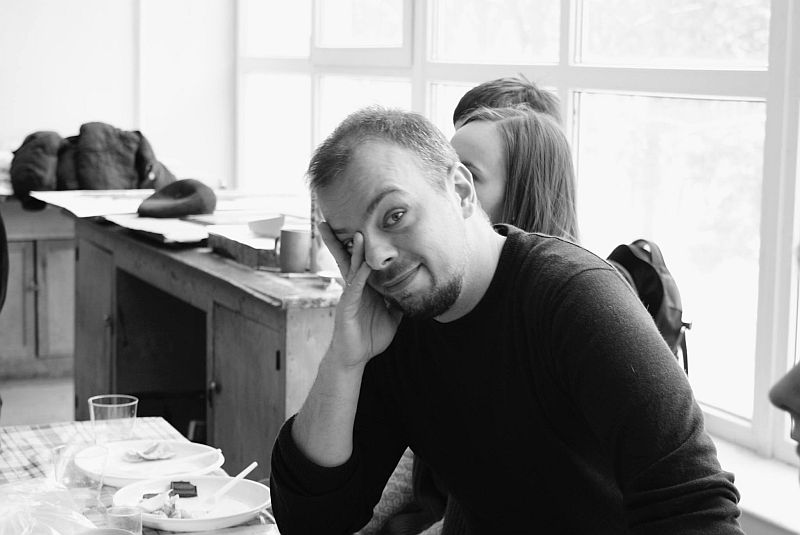
Presentamos hace poco a Gerardo Mantero en el blog, como curador de la muestra de Octavio Podestá en la Sala Loureiro. Ahora nos centramos en su propia carrera artística, con una breve reseña biográfica, una entrevista y una selección de su obra pictórica y gráfica.
We recently presented Gerardo Mantero in the blog, as the curator of Octavio Podestá's exhibition at the Sala Loureiro. Now we focus on his own artistic career, with a brief biography, an interview and a selection of his pictorial and graphic work.
________________________________________________
Gerardo Mantero
(Montevideo, Uruguay, 1956-)
Entrevista de / Interview by Shirley Rebuffo

Gerardo Mantero es un artista visual, editor y periodista cultural uruguayo nacido en 1956.
Entre 1977 y 1986 se formó estudiando en los talleres de Hilda López, Dumas Oroño y Guillermo Fernández. Sus obras se han presentado en numerosas muestras individuales y colectivas en Uruguay y el exterior, e integran colecciones privadas en Brasil, Canadá y Francia.
Ha participado como ilustrador y periodista cultural en varias publicaciones nacionales como Alternativa Socialista y El Día, y ha sido responsable de la edición de otras, como La Guía de Información de la ciudad de Montevideo, 50 años del teatro Circular y Balcón al Sur.
Actualmente es co-director de las revistas "Socio Espectacular" y "La Pupila", esta última junto con Oscar Larroca, y con la que obtuvo, entre otros, el premio "Morosoli Institucional".

"El tiempo está después / Time is After"
Técnica mixta sobre tela / mixed media on canvas, 115 x 150 cm. Colección privada / Private Collection
Shirley Rebuffo: ¿Cómo te diste cuenta de tu vocación por el arte?
Gerardo Mantero: Desde muy chico cuando veía a mi tío que dibujaba muy bien. Me llevaba al Estadio a partidos de futbol. Al regresar a casa él dibujaba las jugadas y eso me fascinaba.
SR: ¿Quién o quieres han influido en tu forma de trabajar?
GM: Mis maestros Hilda López, Dumas Oroño, Guillermo Fernández y otros tantos artistas uruguayos, y por supuesto mil influencias del arte universal.

Técnica mixta sobre papel / mixed media on paper, 45 x 56 cm., 1990

Técnica mixta, tintas de color, oleo pastel / mixed media, colored inks, oil pastel
SR: ¿Qué te motiva a pintar?
GM: El arte se hace por necesidad y por ninguna razón concreta. En mi caso lo artístico, así como mi labor editorial codirigiendo una revista de arte, tiene que ver con el estar convencido de que la educación y la cultura son las herramientas que tenemos para intentar transformar nuestra cruenta realidad.
SR: ¿Dentro de qué lenguaje plástico te ubicarías hoy? ¿Por qué etapas has pasado?
GM: En mi lenguaje se entrelazan la figuración y la abstracción, también trabajo lo matérico y el dibujo. Los cambios que he experimentado tienen que ver con el pulimiento del lenguaje y en este momento con la grata sensación de que hay una experiencia adquirida y la labor acumulada que tiene que ver con los procesos creativos. Al decir de André Malraux: “El artista crea un lenguaje, pero debe aprenderlo antes de poder hablarlo. Hacen falta muchos años de expresión para llegar a escribir con el sonido de su propia voz.”

Ilustración / Illustration
SR: ¿En qué técnica o con qué materiales te sientes más cómodo al trabajar?
GM: La técnica mixta es lo que caracteriza mi lenguaje. Los acrílicos o tintas de color que conviven con el pastel oleoso, con grabado en distintas técnicas, collage y otros.
SR: ¿Qué diferencias encuentras entre expresarte a través de la pintura, y hacerlo a través de la escritura?
GM: Las artes visuales habilitan una mayor búsqueda del inconsciente, la escritura es más racional por lo menos en mi caso.

"Estado de situación interior / State of Internal Situation"
Técnica mixta sobre papel / mixed media on paper, 47 x 67 cm., 2016

"Todo en la vida cuesta y se paga / Everything In Life Costs And Must Be Paid For"
Técnica mixta sobre tela / mixed media on canvas, 115 x 150 cm.
Colección privada / Private Collection
SR: ¿Haces obras con motivaciones o intenciones, o haces obras para que le guste a la gente?
GM: La obra honesta, la que se le parece al autor, es lo único que importa. La singularidad inherente a todo ser humano, jamás se debe crear pensando si le va a gustar a la gente. Hilda López me decía; “el artista es como un caballo con anteojeras, el camino es la concreción del lenguaje, todo lo otro está a la vera del camino, a veces juega a favor y otras va en contra.”
SR: ¿Usas la pintura para interactuar con los otros?
GM: El arte es una forma de comunicación. Sí, se interactúa con el público y con el medio, colegas, críticos, etc.

"Visiones subjetivas, presagios lúdicos / Subjective Visions, Playful Omens"
Acrílico sobre papel / acrylic on paper, 100 x 80 cm., 1997

"Territorio levemente ondulado / Slightly Undulating Territory"
Técnica mixta sobre papel / mixed media on paper, 50 x 72 cm., 2016
SR: ¿Qué peso tienen estos factores (si es que lo tienen) en tu arte? Inconsciente, gestualidad, materialidad.
GM: Son tres factores importantes e infaltables en mi lenguaje.
SR: ¿Tus trabajos (y con trabajos me refiero a lo tuyo con la revista y al hacer obras con el pincel mismo) crees que aportan un valor social?
GM: Como hacedor cultural, en todas mis facetas, creo contribuir para alimentar a la construcción de un entramado cultural que nos exprese y nos enriquezca. Es una tarea continua, que debe ser colectiva, para que tenga incidencia real.

"Sin título / Untitled", técnica mixta sobre papel / mixed media on paper, 48 x 68 cm.
SR: Dado tu conocimiento general, por ser editor y escribir para una revista de arte, ¿qué piensas del momento actual del arte?
GM: En este momento el mundo del arte se maneja de acuerdo a las lógicas del mercado una gran trenza donde intervienen, galeristas, curadores, directores de museos, críticos, subastas de arte y por supuesto, el público, lo que da como resultado una línea horizontal en donde en forma indivisible todo flota, y muy de vez en cuando un línea mágica que nos hace creer que todo es posible.

"Baldío"
Diseño de portada del disco del grupo Baldío, liderado por Fernando Cabrera, 1983 /
Cover design for the album of the group Baldío, led by Fernando Cabrera, 1983
«Es más que frecuente en Gerardo Mantero tomar como centro representativo la figura humana. Lo hace de manera crítica, socarrona, expresiva. En su arte proyecta líneas entramadas, elementos imprevisibles, trazos que denotan impulso, grafismos. Es un dibujante que utiliza el color de forma expresiva; son colores lanzados, de manera sesuda e imperiosa, a la superficie (a veces superpuestos), como trazos o goteos con una textura especial. Cuentan que se crió en un Pocitos barrial. Jugaba al fútbol en Viejo Pancho y Obligado. Marco Maggi (quien realiza un texto sobre él para un catálogo del MNAV) narra que se juntaba a dibujar espalda con espalda junto a Gerardo Mantero en un restaurante de la calle Ellauri: “Dibujábamos, como siempre, para nada y para nadie” . Compartían tertulias en un ambiente vinculado a lo popular, el teatro independiente y la Cinemateca Pocitos. (...)
Es un artista que genera su trabajo plástico junto a un frenesí de investigación ampliada hacia el trabajo de otros, difundiendo siempre pensamiento crítico.»
Gerardo Caetano, "Pinceladas sobre Gerardo Mantero"

"El árbol ontológico / The Ontological Tree"
Técnica mixta sobre papel / mixed media on paper, 48 x 68 cm.

"Sin título / Untitled"
Técnica mixta sobre papel / mixed media on paper, 48 x 68 cm.
Gerardo Mantero is a Uruguayan visual artist, editor and cultural journalist born in 1956.
Between 1977 and 1986 he studied in the workshops of Hilda López, Dumas Oroño and Guillermo Fernández. His works has been presented in numerous individual and collective exhibitions in Uruguay and abroad, and are part of private collections in Brazil, Canada and France.
He has participated as an illustrator and cultural journalist in several national publications such as Alternativa Socialista and El Día, and has been responsible for editing others, as The Information Guide to the City of Montevideo, 50 years of the Circular Theatre and Balcón al Sur.
He is currently co-director of the magazines "Socio Espectacular" and "La Pupila", the latter together with Oscar Larroca, and with which he won, among others, the "Morosoli Institucional" award.

Técnica mixta sobre papel / mixed media on paper, 65 x 46 cm., 1985

Técnica mixta, grabados fotopolímeros con tintas chinas de color
Mixed media, photopolymer prints with coloured Chinese inks, 50 x 70 cm., 2018
Shirley Rebuffo: How did you realize your vocation for art?
Gerardo Mantero: Since I was very young when I saw my uncle who drew very well. He would take me to the stadium to soccer games. When we returned home he would draw the plays and that fascinated me.
SR: Who or what have influenced your way of working?
GM: My teachers Hilda López, Dumas Oroño, Guillermo Fernández, and many other Uruguayan artists, and of course a thousand influences from universal art.

"Asfixiante / Suffocating", técnica mixta sobre papel / mixed media on paper, 45 x 60 cm., 2017

"Mucho ruido / A Lot of Noise", técnica mixta sobre tela / mixed media on canvas, 90 x 145 cm.
SR: What motivates you to paint?
GM: Art is done out of necessity and for no specific reason. In my case the artistic, as well as my editorial work co-directing an art magazine, has to do with being convinced that education and culture are the tools we have to try to transform our cruel reality.
SR: In what visual language would you place yourself today? What stages have you gone through?
GM: In my language figuration and abstraction are intertwined, I also work with material and drawing. The changes I have experienced have to do with the polishing of the language and at this moment with the pleasant sensation that there is an acquired experience and accumulated work that has to do with the creative processes. As André Malraux said: "The artist creates a language, but he must learn it before he can speak it. It takes many years of expression to be able to write with the sound of his own voice."

"El espejo / The Mirror", técnica mixta sobre tela / mixed media on canvas, 72 x 83 cm.

Portada del disco / Cover of the album "Segundos afuera" de / by Jorge Galemire, 1883
SR: What technique or materials do you feel most comfortable working with?
GM: The mixed technique is what characterizes my language. The acrylics or colored inks that coexist with oil pastel, with engraving in different techniques, collage and others.
SR: What differences do you find between expressing yourself through painting, and doing it through writing?
GM: The visual arts enable a greater search for the unconscious; writing is more rational, at least in my case.

"Simulacro de comunicación / Communicative Simulation"
Técnica mixta sobre papel / mixed media on paper, 46 x 50 cm., 2017

"Pasta base / Cocaine Paste"
Técnica mixta sobre papel / mixed media on paper, 24 x 32 cm., 2016
SR: Do you make works with motivations or intentions, or do you make works for people to like?
GM: The honest work, the one that resembles the author, is the only thing that matters. The uniqueness inherent in every human being should never be created by thinking about whether people are going to like it. Hilda Lopez told me, "the artist is like a horse with blinders on, the path is the concreteness of language, everything else is at the side of the road, sometimes it plays for him and sometimes it goes against him."
SR: Do you use painting to interact with others?
GM: Art is a form of communication. Yes, you interact with the public and the environment, colleagues, critics, etc.

"Gestualidades / Gestualities"
Técnica mixta sobre tela / mixed media on canvas, 115 x 150 cm.
SR: What weight do these factors - if any - have on your art? Unconsciousness, gestures, materiality.
GM: These are three important and unavoidable factors in my language.
SR: Do you think your work (and by work I mean your work with the magazine and your work with the brush itself) has a social value?
GM: As a cultural doer, in all my facets, I believe I contribute to the construction of a cultural network that expresses and enriches us. It is an ongoing task, which must be collective, so that it has real impact.

Técnica mixta, tintas de color, oleo pastel / mixed media, colored inks, oil pastel
SR: Given your general knowledge, being an editor and writing for an art magazine, what do you think of the current moment in art?
GM: At this moment the art world is handled according to the logic of the market, a great plait where gallery owners, curators, museum directors, critics, art auctions and of course the public intervene, resulting in a horizontal line where everything floats in an indivisible way, and very occasionally a magic line that makes us believe that everything is possible.

Diseño de gráfica para la obra / Graphic design for the play
"El ala quebradiza de la mariposa / The Brittle Wing of the Butterfly (2007)", de / by Santiago Sanguinetti
Dirigida por / Directed by: Dante Alfonso. Teatro El Galpón, 2015

Ilustración / Illustration
«It is more than frequent in Gerardo Mantero to take the human figure as the representative center. He does so in a critical, sly, expressive way. In his art, he projects interwoven lines, unpredictable elements, strokes that denote impulse, graphology. He is a draftsman who uses color in an expressive way; they are bold colors, in a brainy and imperious way, to the surface - sometimes superimposed -, as strokes or drips with a special texture. It is said that he grew up in a regional Pocitos neighborhood. He played football in Viejo Pancho and Obligado streets. Marco Maggi, who wrote a text about him for a National Museum of Visual Arts' catalogue, tells us that he used to draw back to back with Gerardo Mantero in a restaurant in Ellauri Street: "We drew, as always, for nothing and for nobody". They shared conversations in an atmosphere linked to the popular, independent theatre and the Pocitos Cinematheque. (...)
He is an artist who generates her plastic work together with a frenzy of investigation extended to the work of others, always spreading critical thinking".»
Gerardo Caetano, "Brushstrokes on Gerardo Mantero"

"Vos nuevo uruguayo / You New Uruguayan"
Técnica mixta sobre papel / mixed media on papel, 48 x 68 cm.
_____________________________________________________
Gerardo Mantero nos habla sobre la revista La Pupila /
Gerardo Mantero talks about The Pupil magazine
_____________________________________________________
Sobre los artistas mencionados / About Mentioned Artists:
Hilda López: [Uruguayos (IX)]
Sobre los artistas mencionados / About Mentioned Artists:
Hilda López: [Uruguayos (IX)]
Dumas Oroño: Wikipedia
Guillermo Fernández: Wikipedia
Oscar Larroca: [Uruguayos (IX)], [Uruguayos (XIII)]
Guillermo Fernández: Wikipedia
Oscar Larroca: [Uruguayos (IX)], [Uruguayos (XIII)]
Gerardo Mantero en "El Hurgador" / in this blog: [Octavio Podestá en la Sala Nicolás Loureiro]
_____________________________________________________
Shirley Rebuffo es Licenciada en Bibliotecología y Archivología por la Escuela Universitaria de Bibliotecología y Ciencias Afines (Montevideo, Uruguay), Técnica en Museología por la Facultad de Humanidades y Ciencias (opción de Antropología), Objeto, símbolo y espacio en Curaduría. Museología Social – Conceptos, técnicas e prácticas (Campo Grande, BR), Coaching (Campo Grande, BR), Planeamiento Estratégico (Campo Grande, BR) y estudiante de arte y pintura con el maestro Eduardo Espino..
Shirley Rebuffo has a Degree in Library Science and a Degree in Archivology by the Universitary School of Library and Related Sciences (Montevideo, Uruguay), Technician in Museology by the Faculty of Humanities and Sciences (Anthropology option), Object, Symbol and Spance in Curatorship Social Museology - Concepts, Technics and Practice (Campo Grande, Brazil), Coaching (Campo Grande, Brazil), Strategic Planning (Campo Grande, Brazil), and Art and Painting student under Master Eduardo Espino.