lunes, 31 de diciembre de 2018

Zoe Keller [Dibujo / Drawing]

En este último post monográfico del año echamos un vistazo a la obra de la estadounidense Zoe Keller, cuyos maravillosos y detallados dibujos en grafito, basados en investigaciones y estudios sobre el terreno, nos ofrecen una magnífica visión del mundo animal y vegetal que nos rodea, y que nuestra insensatez como especie va destruyendo día a día.

In this last monographic post of the year we will take a look at the work of the American Zoe Keller, whose wonderful and detailed drawings in graphite, based on research and field studies, offer us a magnificent view of the animal and plant world arounds us, and that our folly as a species is destroying day by day.
________________________________________________

Zoe Keller
(Woodstock, Nueva York, EE.UU./ NY, USA)
en / at Portland, Oregon

Zoe pintando / painting "Limuw, Santa Cruz Island"

Zoe Keller es una artista estadounidense nacida en Woodstock, Nueva York. Utiliza el grafito para crear narraciones visuales representadas meticulosamente a gran escala. Centrándose especialmente en especies en peligro y tierras silvestres, Keller entreteje dibujos que exploran la interconexión de frágiles ecosistemas que están desapareciendo. Al destacar la biodiversidad en riesgo en una era de extinción masiva impulsada por el hombre, su obra busca inspirar reverencia por el mundo natural y acciones para defender lo que nos queda. Su trabajo de estudio se basa en meses de investigación académica, colaboraciones con la comunidad científica y experiencias sobre el terreno en lugares salvajes a través de residencias de artistas y expediciones autodirigidas.

"Limuw, Isla de Santa Cruz / Santa Cruz Island"
Grafito sobre papel / graphite on paper, 7,5' x 4', 2017

«"Limuw, Isla Santa Cruz" y "Regreso", mis dos dibujos más grandes hasta la fecha, tomaron forma gracias a mi fascinación por la Provincia Florística de California, una región con una diversidad de plantas increíblemente alta. La PFC es el único punto de acceso a la biodiversidad global que se encuentra dentro de los Estados Unidos, y se extiende desde el sureste de Oregón hasta California e incluye Baja California, México. Preparándome para este trabajo, pasé dos meses leyendo textos científicos y cuatro días explorando y fotografiando el Parque Nacional de las Islas del Canal frente a la costa del sur de California. "Retorno" resalta el fascinante régimen de incendios del chaparral, la forma más extendida de vegetación de la PFC, trazando correlaciones entre el renacimiento después del fuego, similar al de un fénix, de esta comunidad de plantas, el regreso del Cóndor a California y la posible reintroducción de grizzlies en el estado. 'Limuw, Isla Santa Cruz" se centra en las narrativas ecológicas encontradas en la isla más grande del archipiélago de las Islas del Canal, y la trata como un microcosmos de muchos de los más importantes conceptos ecológicos que se encuentran dentro de la PFC.»

"Callipepla Californica", grafito sobre papel / graphite on paper, 14" x 18", 2018

La educación creativa de Zoe Keller en las zonas rurales de Catskills dio forma a su futuro como artista y naturalista amateur. Después de graduarse de la Escuela de Arte del Instituto de Maryland, Keller hizo estudios y residencias en Minneapolis, Filadelfia, en la rocosa costa de Maine, en la región agrícola del oeste de Michigan y en las montañas Wallowa del este de Oregón antes de establecerse finalmente en Portland, donde reside actualmente. En los últimos años, las residencias de artistas la han llevado a moverse por la costa oeste desde el a lo largo de la costa oeste desde el Parque nacional y reserva Wrangell-San Elías de Alaska hasta el archipiélago de las Islas del Canal de California.

"Monstruo de Gila / Gila Monster", grafito / graphite

"Riparian / Ribereña", grafito sobre papel / graphite on paper, 36" x 26", 2016

«Tengo muchos recuerdos de salidas con mis padres, mirando salamandras, huevos de rana e insectos. Esa fascinación nunca se fue. También creo que este momento en el tiempo, en que nuestro planeta se enfrenta a una extinción masiva provocada por el hombre, es especialmente importante para explorar lo increíble que es el mundo natural. Espero que mi trabajo pueda hacer un poco para que las personas se den cuenta de lo fantástica y fragilmente diversa que es la vida en nuestro planeta.»

"Marcha / March", grafito sobre papel / graphite on paper, 11" x 15", 2016

"Paisaje de hongos / Mushroomscape", grafito sobre papel / graphite on paper, 11" x 15", 2015

«Un día sueño con trabajar directamente con científicos botánicos, entomólogos, ornitólogos ... casi cualquier "ólogo" que trabaje con el mundo natural. La primera vez que lo probé fue como artista residente en la Fundación Hurricane Island, en la costa de Maine. Allí pude trabajar con educadores de ciencias en una serie de ilustraciones que se pueden usar en sus programas con estudiantes de secundaria y preparatoria. ¡Fue increíble! Podían explicar relaciones naturales que me tomaría horas o días de lectura de las guías de campo descubrirlas por mi cuenta, y también hicieron conexiones y plantearon preguntas en las que nunca habría pensado. Lo que más me gusta es hacer un trabajo que sea fácilmente reproducible, así que generalmente apunto a una obra que finalmente termine como revistas, libros y carteles.»

"Martes Caurina Humboldtensis", grafito sobre papel / graphite on paper, 14" x 18", 2018

«Creo que lo que distingue mi práctica actual de todos mis otros años de creación artística es que, por primera vez, no estoy deseando constantemente ser otra persona, ¡hacer el trabajo de otra persona! He incursionado en la pintura al óleo figurativa, la serigrafía, el diseño gráfico; si alguno me hubiera enganchado, me sentiría orgullosa y feliz de hacer ese tipo de trabajo. Mi obra es un poco repetitiva, pero hay una cierta alegría en volver sobre los mismos temas una y otra vez.»

"Líquenes / Lichens", grafito sobre papel / graphite on paper, 14" x 18", 2016

"Fuego / Fire", grafito sobre papel / graphite on paper, 36" x 26", 2016
Museo Nacional de Vida Silvestre / National Museum of Wildlife Art
(Jackson Hole, Wyoming, EE.UU./ USA)

«Vivimos en un planeta tan fascinante y frágil, que no creo que me vaya a quedar sin temas para trabajar. Hacer obras todo el tiempo puede generar ansiedad desde el punto de vista financiero y es solitario, pero estoy aprendiendo a manejar esos aspectos con más gracia a medida que pasa el tiempo. Rodearme de otras personas creativas maravillosas y emocionadas tanto como sea posible es increíblemente importante.»

"Hermanos / Siblings", grafito sobre papel / graphite on paper, 8" x 10", 2016

Zoe pintando "Regreso" / painting "Return"

Zoe Keller is an American artist born in Woodstock, New York. She uses graphite to create large-scale, meticulously rendered visual narratives. Placing a special focus on at-risk species and wildlands, Keller weaves drawings that explore the interconnectedness of fragile, vanishing ecosystems. By highlighting the biodiversity at risk in an era of human-driven mass extinction her work aims to inspire reverence for the natural world and action to defend what we have left. Keller's studio work draws upon months of academic research, collaborations with the scientific community, and on-the-ground experiences in wild places through artist residencies and self-directed expeditions.

"Regreso / Return", grafito sobre papel / graphite on paper, 83,75" x 48", 2017

«'Limuw, Santa Cruz Island' and 'Return,' my two largest drawings to date, grew from my fascination with the California Floristic Province, a region of incredibly high plant diversity. The CFP is the only global biodiversity hotspot found within the United States, extending from southeastern Oregon down through and including most of California and into Baja California, Mexico. In preparation for this body of work, I spent  two months reading scientific texts and four days exploring and photographing Channel Islands National Park off the coast of southern California. 'Return' highlights the fascinating fire regime of chaparral, the CFP’s most widespread form of vegetation, drawing correlations between the phoenix-like rebirth of this plant community post-fire, the return of the Condor to California, and the possible reintroduction of grizzlies to the state. 'Limuw | Santa Cruz Island' focuses on the ecological narratives found on the largest island of the Channel Islands archipelago, treating the island as a microcosm of many of the larger ecological concepts found within the CFP.»

"Hongo III / Mushroom III", grafito sobre papel / graphite on paper, 14" x 18", 2017

Zoe Keller's creative upbringing in the rural Catskills shaped her future as an artist and amateur naturalist. After graduating from the Maryland Institute College of Art, Keller made homes and studios in Minneapolis, Philadelphia, on the rocky Maine coast, in West Michigan's farm country and Eastern Oregon's Wallowa Mountains before finally settling in Portland, where she currently resides. In recent years, artist residencies have taken Keller up and down the West Coast from Alaska's Wrangell-St. Elias National Park and Preserve to California's Channel Islands archipelago. 

"Lobo / Wolf", grafito sobre papel / graphite on paper, 36" x 28", 2018

"Bosque primario (díptico, izquierdo) / Old Growth (diptych, left)"
Grafito sobre papel / graphite on paper, 60" x 45", 2018

«El trabajo para "Bosque", mi segunda exposición individual en Antler Gallery, se inspiró en la flora y fauna de la región de Klamath-Siskiyou de Oregón y California. Las dos piezas del díptico central del programa,"Bosque primario" y "Después del fuego", se centran en puntos vitales en el ciclo de vida de los bosques de Klamath Siskiyou: un bosque primario maduro, y un complejo temprano de maderas muertas, la etapa de la vida forestal que sigue a eventos tales como incendios forestales. Al resaltar las especies fascinantes y en riesgo que dependen de estas etapas del desarrollo forestal, estas dos piezas subrayan la importancia de proteger los bosques en cada etapa de crecimiento. Piezas adicionales en "Bosque" celebran la biodiversidad de la región y reflexionan sobre mis experiencias personales en ella.»

"Después del fuego (díptico, derecho) / Postfire (diptych, right)"
Grafito sobre papel / graphite on paper, 60" x 45", 2018

«The work for ‘Forest,’ my second solo show at Antler Gallery, was inspired by the flora and fauna of the Klamath-Siskiyou region of Oregon and California. The two pieces of the show’s central diptych, ‘Old Growth’ and ‘Postfire,’ focus on vital points in the life-cycle of Klamath Siskiyou forests: mature old-growth, and complex early seral, the stage of forest life that follows a disturbance like wildfire. By highlighting the fascinating and at-risk species that are dependent upon these stages of forest development, these two pieces underscore the importance of protecting forests at every stage of growth. Additional pieces in ‘Forest’ celebrate the region’s biodiversity and reflect upon my personal experiences in the region.»

"Presa / Prey", grafito sobre papel / graphite on paper, 42" x 30", 2016
Museo Nacional de Vida Silvestre / National Museum of Wildlife Art
(Jackson Hole, Wyoming, EE.UU./ USA)

«I have a lot of memories of being outside with my parents, looking at salamanders, frog eggs, and bugs. That fascination never went away. I also think that this moment in time - as our planet faces a man-made mass extinction - is an especially important one to explore how incredible the natural world is. I hope that my work can do a little to make people realize how fantastically, fragilely diverse the life on our planet is.»

"Competición / Competition", grafito sobre papel / graphite on paper, 11" x 14", 2017

«I day dream a bunch about working directly with scientists botanists, entomologists, ornithologists…pretty much any “-ologist” working with the natural world. I got my first taste of this as a resident artist at the Hurricane Island Foundation off the coast of Maine. There, I got to work with science educators on a series of illustrations that can be used in their programs with middle and high school students - It was so incredible! They could explain natural relationships that would take me hours or days of field-guide-reading to figure out on my own, and also made connections and raised questions that I would never have thought of. Making work that is easily reproducible is really important to me - so making work that ultimately ends up as zines, books and posters is what I usually aim for.»

"Crotalus Viridis Oreganus", grafito sobre papel / graphite on paper, 14" x 18", 2018

"Massasauga", grafito sobre papel / graphite on paper, 14" x 18"

«I think the thing that sets my current practice apart from all of my other years of art making is that for the first time I am not constantly wishing that I were someone else, making someone else’s work! I’ve dabbled in figurative oil painting, screen printing, graphic design – if any had stuck I would be proud and happy to be making that kind of work. My work is a bit repetitive, but there’s a certain joy in revisiting the same subject matters over and over again.»

«We live on such a fascinating, fragile planet, I don’t think I’ll ever run out of subjects to make work about. Making work all the time can be very financially anxiety-inducing and lonesome, but I’m learning to manage those aspects of the job with more grace as time goes on. Surrounding myself with other wonderful, excited creative folks as much as possible is incredibly important.»

"Nutria de río / River Otter", grafito sobre papel / graphite on paper, 36" x 28", 2018
___________________________________________________________-

Intricacies / Complejidades

"Caracol / Snail", grafito sobre papel / graphite on paper, 11" x 15", 2015

"Complejidades" es un proyecto conjunto que consiste en detallados dibujos al grafito creados por Zoe Keller y Christina Mrozik, que combinan imágenes naturales con historias insinuadas. Dibujadas durante dos estaciones en un pequeño estudio en la zona rural del oeste de Michigan, estas ilustraciones son producto de una decisión consciente de disminuir la velocidad, explorar el paisaje natural que cambia sutilmente y los pequeños y tranquilos momentos de maravillas naturales que oculta. El resultado es un libro de 64 páginas diseñado con tanto cuidado como los dibujos que contiene.

"Garzas y serpientes / Herons and Snakes", grafito / graphite, 11" x 15", 2015

Christina Mrozik es una artista estadounidense nacida en 1986 en Grand Rapids, Michigan. Ha pasado la mayor parte de su vida observando el mundo natural y las diversas relaciones dentro de él. En sus dibujos Mrozik utiliza una combinación de flora y fauna, que ocasionalmente incorpora prosa, para analizar la complejidad de nuestros mundos internos.
Graduada en la universidad con énfasis en ilustración, ha trabajado con múltiples galerías internacionales y agencias comerciales. Ella principalmente hace dibujos a menudo se componen de acuarela, grafito, acrílico y tinta, y recientemente ha profundizado en el mundo de la cerámica. Trabaja constantemente con organizaciones sin fines de lucro de educación artística, incluida la escuela Rabbit Island, y disfruta trabajando en colaboración. Actualmente reside en Portland, Oregón, aunque siempre lleva el medio oeste en su corazón.

Zoe Keller & Christina Mrozik con "Raíz y médula" / with "Root and Marrow"

Intricacies is a collaborative project consisting of detailed graphite drawings created by Zoe Keller and Christina Mrozik, that blend lovingly rendered natural imagery with hints of story. Drawn over two seasons in a tiny studio in rural West Michigan, these illustrations are the product of a conscious decision to slow down, to explore the subtly-shifting natural landscape and the small, quiet moments of natural wonder that it conceals. The result is a 64-page book designed with as much care as the drawings it contains.

"Raíz y médula / Root and Marrow", grafito / graphite, 11" x 15", 2015

Christina Mrozik is an American artist born in 1986 in Grand Rapids, Michigan. She has spent the majority of her life observing the natural world and the various relationships within it. In her drawings Mrozik uses a combination of flora and fauna, occasionally adding prose, to parse the complexity of our inner worlds.
Graduating from University with an emphasis in illustration, Mrozik has worked with multiple international galleries and commercial agencies. Her drawings are often composed from watercolor, graphite, acrylic and ink, and has recently delved into the world of ceramics. Mrozik consistently works with arts education nonprofits including Rabbit Island School, and enjoys working collaboratively. She is currently based in Portland, Oregon, though always midwestern at heart.

"Halcón / Hawk"", grafito / graphite, 11" x 15", 2015

Christina Mrozik en "El Hurgador" / in this blog[Christina Mrozik (Dibujo, pintura)], [Asonancias (XLIV)]

Más sobre / More about Christina Mrozik: Website, Instagramfacebook

Más información sobre el libro / More information about the book: Intricacies
_________________________________________________

Fuentes / Sources:
* Website
* Entrevista en / Interview in Light Grey Art Lab, 7/2015
* Entrevista en / Interview in Jung Katz, 2/2016
* Entrevista en / Interview in Hypocritedesign Magazine, 5/2016

Zoe Keller en "El Hurgador" / in this blog: [Rinocerontes (XCVII)], [Christina Mrozik (Dibujo, pintura)]

Más sobre / More about Zoe Keller: Website, Instagram, facebook

Imágenes publicadas con autorización de la artista (¡Muchas gracias, Zoe!)
Images published here with artist's permission (Thanks a lot, Zoe!)

domingo, 30 de diciembre de 2018

Aniversarios / Anniversaries (CCLXVII) [Diciembre / December 28-31]

Todos los aniversarios de Diciembre aquí / All anniversaries for December here.
_________________________________________________________

El 28 de Diciembre es el cumple de

Jean-Pierre Dantan, conocido como Dantan el Joven, escultor retratista francés nacido en 1800 en París. Su hermano mayor Antoine-Laurent (Dantan el Viejo, 1798–1878) también fue escultor.
Su padre era un tallador de madera, y fue el primer maestro de Dantan. Antoine-Laurent era capaz de realizar esculturas históricas y de figuras a gran escala, pero los talentos de Jean-Pierre se adaptaban mejor al retrato y a una escala más pequeña. Esto significaba que era menos probable que ganara premios como el Prix de Rome, pero no le faltaba éxito. Expuso en los Salones y ganó una medalla de segunda clase en 1831. Y desde muy temprano en su carrera, comenzó a explorar el estilo que, en última instancia, lo convertiría en el escultor más recordado: la primera obra suya en obtener reconocimiento fue un busto del pintor César Ducornet disfrazado de poeta maldito. El talento de Dantan como retratista que podía agregar emoción expresiva y romántica a su modelo ya era evidente (además de su trabajo como escultor, Dantan también era un solvente caricaturista gráfico).

"Jeune adolescent de la famille Berthelot / Joven adolescente de la familia Berthelot /
Young Adolescent from the Berthelot Family"
Mármol blanco / white marble, altura / height: 52 cm., 1852. Eric Gillis Fine Art

Es por tales bustos de caricatura y también por estatuillas que se recuerda a Dantan, y por lo que recibió la mayor cantidad de elogios durante su propia vida. Una característica frecuente de las caricaturas de Dantan fue la inclusión de un jeroglífico en el zócalo. Tales juegos con "códigos" habrían aumentado el efecto "contracultural" de las obras, en una sociedad donde la caricatura era una herramienta política importante. Pero los jeroglíficos también jugaron el simple papel de identificación, porque no todas las caricaturas de Dantan fueron reconocibles de inmediato.
Para vender mejor su trabajo, Dantan estableció un "Dantanorama" en el Passage des Panoramas en París, donde vendió caricaturas y trabajos serios. Produjo un catálogo ilustrado por el caricaturista Grandville, impreso por primera vez en 1834, que da una buena idea de su producción. Las ilustraciones de Grandville del Dantanorama en sí hacen que parezca un lugar más grandioso de lo que quizás fue. Las fotografías contemporáneas muestran una tienda lo suficientemente desordenada como para sugerir una actitud de "amontonarlas y venderlas a buen precio" y esta actitud fue detectada por algunos comentaristas de la época. En 1835, un crítico anónimo en L'Artiste advirtió al anciano Dantan, Antoine-Laurent, que no persiguiera el mercadeo ni la popularidad, y que aprendiera del desafortunado ejemplo de su hermano menor, que tenía el talento para ser un gran artista, pero que había abandonado el arte por una profesión, la escultura por caricatura, y había prostituido la noble tradición de la escultura.

"Retrato caricatura de / Portrait caricature of Franz Liszt", yeso / plaster, 17 x 8 cm., 1832. Sotheby's

Aunque esta última consideración es discutible, la cuestión de que Dantan era demasiado comercial y populista es una de las preguntas más fascinantes sobre el artista. La mayoría de los críticos están de acuerdo en que no fue un gran artista, pero su obra es un eslabón importante en la historia de la caricatura, e incluso si son fallas desde el punto de vista artístico, tanto la comercialización como el populismo son aspectos importantes de un París en el que Charles Baudelaire, el contemporáneo más joven de Dantan, describiría como esencialmente moderno.
Murió en 1889.

"Retrato caricatura de / Portrait caricature of Victor Hugo"
Yeso patinado / patinated plaster, altura / height: 17,5 cm., 1832
Musée Victor Hugo (París, Francia / France). WGA

Victor Hugo en "El Hurgador" / in this blog:
[Aniversarios Fotografía (CXVII)], [Gabriel Pacheco (Ilustración)], [Taisuke Mohri (Dibujo)]

"Retrato caricatura de / Portrait caricature of Alexandre Dumas"
Yeso patinado / patinated plaster, altura / height: 17,5 cm. Blouin Art

"Dantanorama", Victor Hugo & Alexandre Dumas
Lepeudry - Delaunois, Nicolas Louis, litografía / lithograph, 11,3 x 16 cm., láminas / plates n° 9 & 10 (1933-35)
Paris Musées (Francia / France)

On December 28 is the birthday of

Jean-Pierre Dantan, known as Dantan the Younger, French portrait sculptor, born in 1800 in Paris. His elder brother Antoine-Laurent ("Dantan the Elder", 1798–1878) was also a sculptor
His father was a wood carver, and Dantan's first teacher. Antoine-Laurent was capable of large scale historic and figure sculpture, but Jean-Pierre's talents were better suited to portraiture, and to a smaller scale. This meant he was less likely to win prizes such as the Prix de Rome, but he was not without success. He exhibited at the Salons, and won a second class medal in 1831. And from very early in his career he had begun to explore the style that would ultimately make him the better-remembered sculptor: the first of his works to gain notice was a portrait bust of the painter César Ducornet in the guise of an accursed poet. Dantan's talent as a portraitist who could add expressive, romantic emotion to his subject was already apparent. (Apart from his work as a sculptor, Dantan was also a capable graphic caricaturist.)

"Retrato caricatura de / Portrait caricature of Chrétien Urhan (1790-1845)"
Yeso patinado / patinated plaster, altura / height: 30 cm., 1832. Sotheby's

It is for such caricature busts and also statuettes that Dantan is remembered, and for which he received most praise during his own lifetime. A frequent feature of Dantan's caricatures was the inclusion of a rebus on the socle. Such games with "codes" would have enhanced the "counter cultural" effect of the works, in a society where caricature was an important political tool. But the rebuses also played the simple role of identification, because not all of Dantan's caricature's were immediately recognizable.
The better to sell his work, Dantan established a "Dantanorama" in the Passage des Panoramas in Paris, where he sold both is caricatures and serious works. He produced a catalogue illustrated by the caricaturist Grandville, first printed in 1834, which gives a good idea of his output. Grandville's illustrations of the Dantanorama itself make it look a grander place than it perhaps was. Contemporary photographs show a shop sufficiently cluttered to suggest an attitude of "pile 'em high and sell 'em cheap" and this attitude was certainly detected by some commentators of the time. In 1835, an anonymous critic in L'Artiste warned the elder Dantan, Antoine-Laurent, not to chase after merchandise, nor after popularity, and to learn from the unfortunate example of his younger brother who had the talent to be great artist but who had abandoned art for a profession, sculpture for caricature, and had prostituted the noble tradition of sculpture.

Mármol blanco / white marble, 77,5 x 43,5 x 27 cm., base: 41 x 30 cm., 1868
Foto / Photo: Jean-Marc Anglès
Collection du Musée Philharmonie (París, Francia / France)

Ludwig van Beethoven en "El Hurgador" / in this blog[Aniversarios (CCLXXIX)]

Arguably this last consideration, the concern that Dantan was too commercial and too populistic, is among the most fascinating questions about the artist. Most critics agree that he was not a great artist, but his work is an important link in the history of caricature, and even if they are artistic failings, both commercialization and populism are important aspects of the Paris which Dantan's younger contemporary, Charles Baudelaire would describe as essentially modern.
He died in 1889.

"Le compositeur / El compositor / The Composer Giuseppe Verdi (1813-1901)"
Yeso patinado / patinated plaster, 36 x 19,5 cm., 1866. Sotheby's
Inscripción / Inscription: "Il a des fiers lions la Griffe et la Crinière/Trouver est son triomphe, à ce maître hardi/Il suit à travers champs et chemins sans ornières/L'art Fleurira toujours tant qu'il aura Verdi"

Jean-Pierre Dantan en "El Hurgador" / in this blog[Manos a la obra (XXV)]


El 29 de Diciembre es el cumple de

Franz Xaver Pönninger, escultor y medallista austriaco nacido en 1832 en Viena.
Era el hijo del grabador de monedas Johannes Pönninger. Estudió con el escultor Anton Dominik Fernkorn, de quien se encargó de la gestión de la K.u.k Kunstgießerei en Viena (1866-1896). Pönniger fue profesor y consejero imperial. En 1874 fundó la Escuela General de Dibujo para Mujeres y Niñas en Viena. La escuela fue el centro de formación de muchos pintores de la época. Fue continuado después de su muerte por su alumno y esposa Caroline Pönninger (1845-1920).

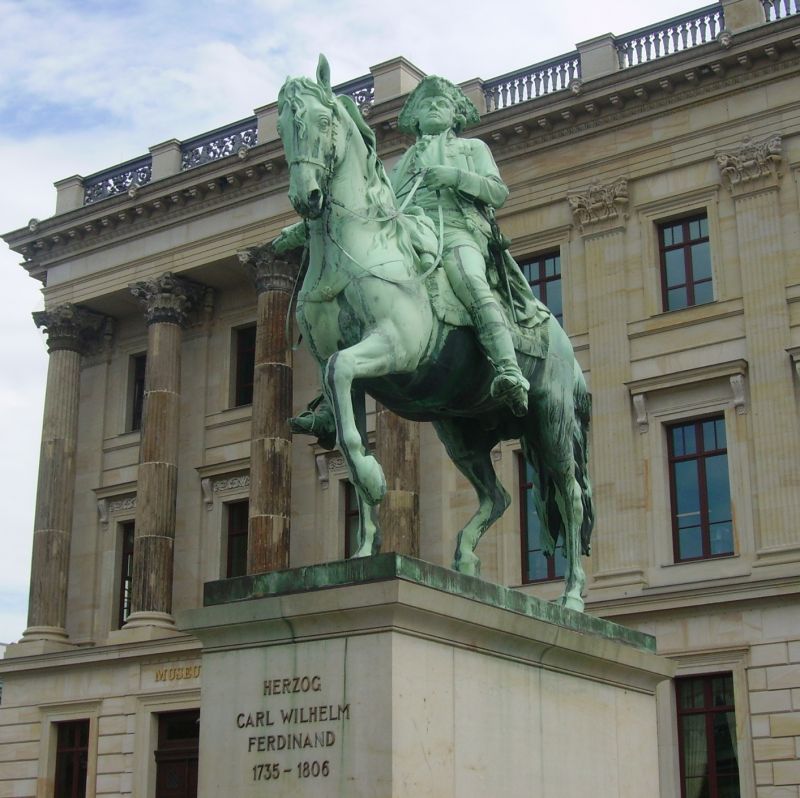
"Reiterstandbild Herzog / Estatua ecuestre de / Equestrian statue of Carl Wilhelm Ferdinand von Braunschweig-Wolfenbüttel"
Inaugurada el 10/11/1874 / unveiled November 10, 1874
Palacio de Brunswick / Brunswick Palace (Braunschweig / Brunswick, Alemania / Germany). Wikimedia Commons


Entre sus obras se cuenta la estatua de retrato de tamaño natural del archiduque Carlos de Austria-Teschen, que construyó en 1871 para la Feldherrenhalle de 18 k.u.k. Museo de Armas (hoy Museo de Historia Militar).
Murió en 1906.

"Busto de / Bust of Carl von Schwarz", mármol de Carrara / Carrara marble, 1871
Museo de Salzburg (Salzburgo, Austria). Wikimedia Commons

On December 29 is the birthday of

Franz Xaver Pönninger, Austrian sculptor and medalist born in 1832 in Vienna.
He was the son of the coin engraver Johannes Pönninger. He studied under the sculptor Anton Dominik Fernkorn, from whom he took over the management of the k.u.k Kunstgießerei in Vienna (1866-1896). Pönniger was a professor and imperial councilor. In 1874 he founded the General Drawing School for Women and Girls in Vienna. The school was the training center of many painters of the time. It was continued after his death by his pupil and wife Caroline Pönninger (1845-1920).

"Fuente de Krakonoš / Krakonoš Fountain"
Plaza Krakonosovo / Krakonošovo Square (Trutnov, República Checa / Czech Republic). Wikimedia Commons

His works include the life-size portrait statue of Archduke Charles of Austria-Teschen, which he built in 1871 for the Feldherrenhalle of 18 k.u.k. Weapons Museum (today Museum of Military History).
He died in 1906.

"Denkmal Maria Theresia / Monumento a María Teresa I de Austria / Monument to Maria Theresa"
Inaugurada en / unveiled 1873
Neuer Platz / Plaza Nueva (Klagenfurt, Austria). Wikimedia Commons


El 30 de Diciembre es el cumple de

Auguste Nicolas Trémont, pintor, escultor y medallista luxemburgués nacido en 1892. Se especializó en esculturas de animales, con especial énfasis en los grandes felinos.
Después de pasar su infancia en Luxemburgo se mudó a París, donde se inscribió en la École des Arts décoratifs en 1909. La Primera Guerra Mundial lo sorprendió mientras visitaba Luxemburgo. Mientras intentaba regresar a París pasando por Suiza, fue arrestado por las fuerzas alemanas cerca de la frontera suiza y fue encarcelado. Una vez liberado regresó a Luxemburgo donde permaneció hasta el final de la guerra en 1918, trabajando en una fábrica de acero en Dudelange. Este trabajo le dio la oportunidad de practicar sus habilidades dibujando a los trabajadores del acero en acción. También se hizo amigo del futuro presidente de Arbed, Aloyse Meyer.

"Couple de tigres royaux marchant / Pareja de tigres reales caminando /
Couple of royal tigers walking", 1927
Musée national d'histoire et d'art (Luxemburgo / Luxembourg). Visit Luxembourg

Al final de la guerra regresó a París, donde estudió en la École des Beaux Arts. Primero se especializó en retratos e imágenes de París y bodegones. Esto cambió cuando visitó el Jardin des Plantes, los jardines zoológicos, donde encontró los temas que se convertirían en su principal área de especialización: los animales. Más adelante en su vida, cuando se le preguntó por qué eligió representar a los animales, respondió: "porque era la tarea más difícil".

"Bisonte europeo / Wisent"
Bronce con pátina marrón / bronze, brown patinated, 38,5 x 18 cm. Blouin Art

En 1924 realizó sus primeras esculturas, y posteriormente desarrolló sus habilidades creando esculturas de diferentes especies de animales en una variedad de tamaños. A finales de la década de 1920 y principios de la década de 1930 fueron sus años más productivos; es durante este período que esculpió, en París, dos grandes leones que ahora decoran la entrada del Ayuntamiento de Luxemburgo. Pasó la Segunda Guerra Mundial en París y regresó a Luxemburgo al finalizar esta, y creó monumentos para las víctimas de la guerra. Más tarde regresó a su maravillosos y detallados bodegones, pinturas al óleo de flores y retratos.
Murió en 1980.

"De aalscholver / El cormorán / The Cormorant"
Bronce con pátina negra / bronze, black patina, 31 x 10,5 x 7 cm., c.1935-45. Pinterest

On December 30 is the birthday of

Auguste Nicolas Trémont, Luxembourger painter, sculptor, and medallist born in 1892. He specialised in sculptures of animals, with a particular emphasis on big cats.
After spending his childhood in Luxembourg, Auguste Tremont moved to Paris where he enrolled at the Ecole des Arts décoratifs in 1909. World War I caught him by surprise while he was visiting Luxembourg. As he tried to make his way back to Paris by passing through Switzerland, he was arrested by German forces near the Swiss border and was imprisoned. Once released from detention, he returned to Luxembourg where he remained until the end of the war in 1918, working in a steel factory in Dudelange This work gave him the opportunity to practice his skills by drawing pictures of steel workers in action; he also befriended future Arbed president Aloyse Meyer.

"Chimpanzé marchant / Chimpancé caminando / Marching Chimp"
Bronce, pátina negra-marrón / bronze, brown-black patina, 25,5 x 39,5 x 14,5 cm. Liveauctioneers

At the end of the war, Trémont returned to Paris where he studied at the Ecole des Beaux Arts. He first specialized in portraits and pictures of Paris and still life. This changed when he visited the Jardin des Plantes, the zoological gardens, where he found the subjects that were to become his main area of specialization: animals. Later in his life, when asked why he chose to represent animals, he replied: “because it was the most difficult task”.

"Chimpanzé marchant / Chimpancé caminando / Marching Chimp"
Bronce, pátina negra-marrón / bronze, brown-black patina, 25,5 x 39,5 x 14,5 cm. Liveauctioneers

In 1924, Trémont made his first sculptures, and he subsequently developed his skills as a sculptor by creating animal sculptures in a variety of sizes and species. The late 1920s-early 1930s were his most productive years; it is during this period that he sculpted, in Paris, two large lions that now decorate the entrance of the Luxembourg City Hall. He spent World War II in Paris, and returned to Luxembourg at the end of the war where he created monuments for the victims of the war. He later returned to his wonderful detailed still life and oil paintings of flowers and portraits.
He died in 1980.

"Panthere tournant / Pantera girando / Panther Turning"
Receptioun vum Parc Hôtel zu Munneref / Recepción en el Hôtel Parque de Mondorf
Mondorf-les-Bains (Remich, Luxemburgo / Luxembourg). Wikimedia Commons


Hoy, 31 de Diciembre, es el cumple de

Aimé-Jules Dalou, escultor francés nacido en 1838 en París, reconocido como uno de los virtuosos más brillantes de la Francia del siglo XIX, admirado por su percepción, ejecución y realismo sin pretensiones.
Fue alumno de Jean-Baptiste Carpeaux, quien lo patrocinó para la Petite École (futura École nationale supérieure des arts décoratifs), donde simpatizó con Alphonse Legros y Fantin-Latour. En 1854 asistió a la École des Beaux-Arts de Paris en el aula François-Joseph Duret.
Dalou expuso por primera vez en el Salón de París en 1861, pero no ocultó sus simpatías hacia la clase trabajadora. Su política obstruyó su carrera en el Segundo Imperio: se le negó repetidamente el Premio de Roma que abría las carreras de escultores a futuros encargos oficiales. Comenzó a trabajar para decoradores y, gracias a ello conoció a Auguste Rodin y comenzó su amistad. Hizo una vida tranquila proporcionando escultura decorativa para las estructuras que bordeaban los nuevos bulevares de París y modelos de cera para joyería.

"La vérité méconnue / La verdad desactivada / Truth Unacknowledged"
Bronce, pátina semi-marrón / bronze, mid-brown patina, 31,5 x 29,5 cm. Sotheby's

Habiéndose identificado públicamente con la Comuna de París de 1871, como curador en el Musée du Louvre bajo Gustave Courbet, se refugió en Inglaterra en julio de 1871, quedándose al principio con su amigo el pintor y grabador Alphonse Legros. Rápidamente se hizo un conocido gracias a su nombramiento como profesor en la Escuela Técnica de Arte del Sur de Londres y en la Escuela de Arte de South Kensington, también en Londres. Fue condenado en ausencia por el gobierno francés de participación en la Comuna, y se le impuso una sentencia de por vida.

"La vérité méconnue / La verdad ignorada / Truth unacknowledged"

En sus ocho años de exilio inglés, la asociación de Dalou con City and Guilds of London Art School, la National Art Training School y los artistas del movimiento New Sculpture sentaron las bases para nuevos desarrollos en la escuela de escultura británica posclásica.
Regresó a Francia en 1879, después de la declaración de amnistía, y produjo varias obras maestras. Para la ciudad de París ejecutó su logro más elaborado y espléndido, el vasto monumento "El triunfo de la República".
Recibió el Gran Premio de la Exposición Universal (1889) y fue nombrado comandante de la Legión de Honor. Fue uno de los fundadores de la Société Nationale des Beaux-Arts, y el primer presidente de la sección de escultura.
Murió en 1902.

"Le Triomphe de la République / El triunfo de la República / The Triumph of the Republic"
Bronce / bronze, 1899
Place de la Nation / Plaza de la Nación (París, Francia / France). Wikimedia Commons

"Le Triomphe de la République / El triunfo de la República / The Triumph of the Republic" (detalle / detail)
"La Justice et l'Équité / La Justicia y la Equidad / Justice and Equity". Wikimedia Commons

"Le Triomphe de la République / El triunfo de la República / The Triumph of the Republic" (detalle / detail)
"L'instruction / La instrucción / The instruction". Wikimedia Commons

Today, December 31, is the birthday of

Aimé-Jules Dalou, French sculptor born in 1838 in Paris, recognized as one of the most brilliant virtuosos of nineteenth-century France, admired for his perceptiveness, execution, and unpretentious realism.
He was the pupil of Jean-Baptiste Carpeaux, who sponsored him for the Petite École (future École nationale supérieure des arts décoratifs), where he sympathized with Alphonse Legros and Fantin-Latour. In 1854 he attended the École des Beaux-Arts de Paris in the François-Joseph Duret classroom.
Dalou first exhibited at the Paris Salon in 1861, but he made no secret of his working-class sympathies. His politics obstructed his career under the Second Empire: he was repeatedly refused the Prix de Rome that opened sculptors' careers to future official commissions. He started to work for decorators, and through this work met Auguste Rodin and began their friendship. He made a quiet living providing decorative sculpture for the structures that lined Paris's new boulevards and providing wax models for jewelry.

"Gran campesino / Large Paesant", yeso / plaster, 197 x 70 x 68 cm. c.1897-1902
Impresión antigua del "Catálogo de la obra de Jules Dalou", de Adolphe Giraudon /
Vintage print from Catalogue de l'oeuvre de Jules Dalou by Adolphe Giraudon, 1904
Musée du Petit Palais (París, Francia / France). Wikimedia Commons

Having identified himself too publicly with the Paris Commune of 1871, as curator at the Musée du Louvre under Gustave Courbet, he took refuge in England in July 1871, staying at first with his friend the painter and engraver Alphonse Legros. He rapidly made a name through his appointment teaching at the South London Technical Art School and the South Kensington School of Art, also in London. He was convicted in absentia by the French government of participation in the Commune, and given a life sentence.
In his eight-year English exile, Dalou's association with City and Guilds of London Art School, the National Art Training School and the artists of the New Sculpture movement laid the foundation for new developments in the post-classical British school of sculpture.

"Busto de / Bust of Gustave Courbet", mármol / marble
Musée des Beaux-Arts (Besançon, Francia / France). Wikimedia Commons

Gustave Courbet en "El Hurgador" / in this blog: [Todos los enlaces / All Links]

He returned to France in 1879, after the declaration of amnesty, and produced a number of masterpieces. For the city of Paris he executed his most elaborate and splendid achievement, the vast monument, The Triumph of the Republic.
Dalou, who was awarded the Grand Prix of the Exposition Universelle (1889), was made a commander of the Legion of Honor. He was one of the founders of the Société Nationale des Beaux-Arts, and was the first president of the sculpture section.
He died in 1902.

"Femme nue s'essuyant le pied / Mujer desnuda secándose el pié /
Nude Woman Drying Her Feet"
Bronce con pátina marrón intenso / bronze, rich brown patina, altura / height: 35 cm. Sotheby's

"Femme nue s'essuyant le pied / Mujer desdnuda secándose el pié /
Nude Woman Drying Her Feet"

Aimé-Jules Dalou en "El Hurgador" / in this blog: [Recolección (CXXXIV-2)], [Recolección (CLXXI-2)]